
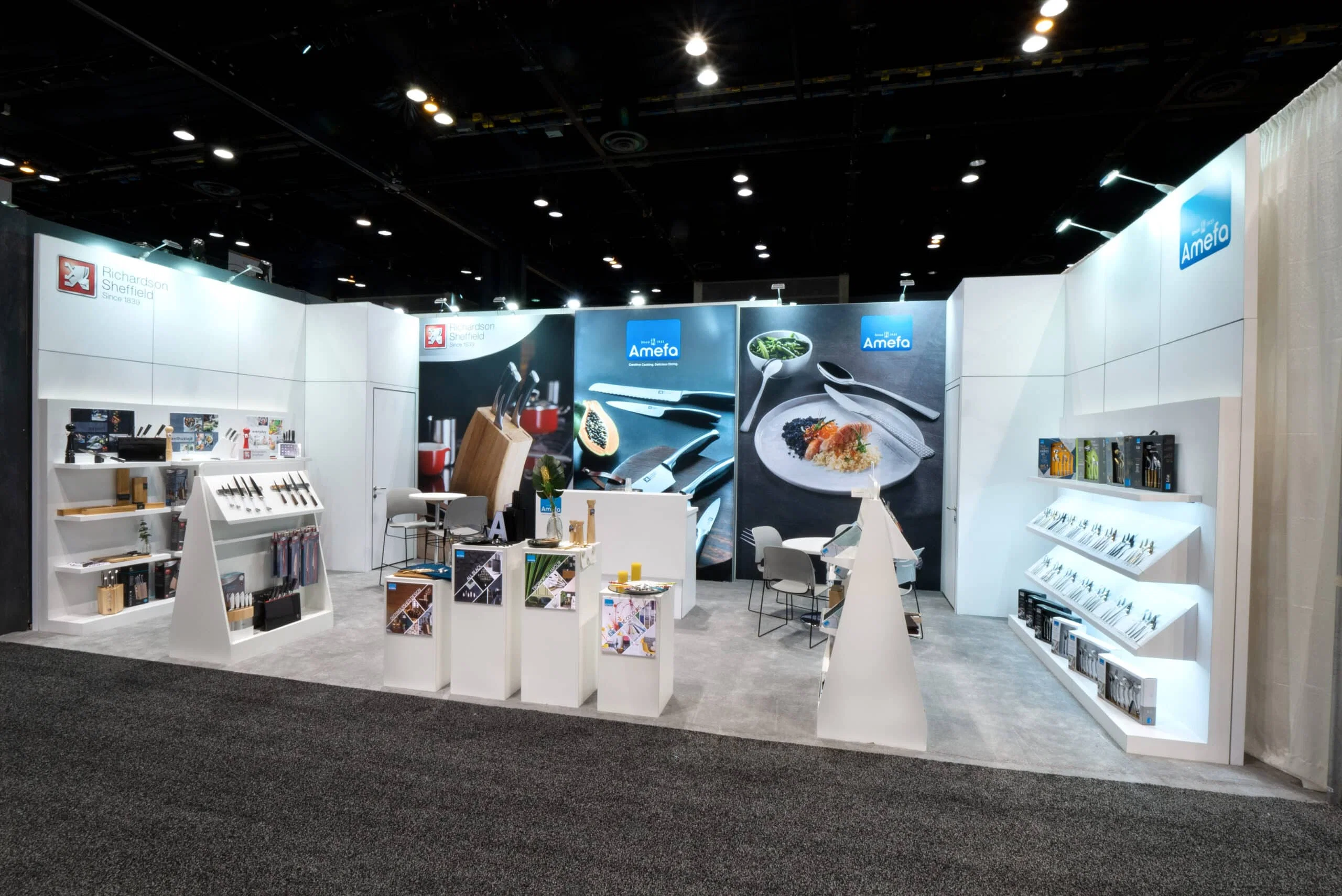
Inline booth displays serve as a cornerstone option for exhibitors participating in trade shows and conferences in Charlotte, North Carolina. These configurations, positioned against a hall’s back wall with a single open side, typically measure ten feet in depth and vary in width from ten to thirty feet. They provide an economical yet effective way to showcase products, services, and brand messaging within the 280,000 square feet of exhibit space available at the Charlotte Convention Center and complementary venues throughout the market.
The Charlotte region’s position as the Southeast’s premier meeting and convention destination, supported by more than 6,400 walkable hotel rooms and extensive breakout facilities, creates consistent demand for well-planned inline exhibits. Exhibitors benefit from the city’s global air access via Charlotte Douglas International Airport, which handled 53.6 million passengers in 2025 with nonstop service to over 188 destinations, facilitating easier participation from national and international teams.
Effective planning for inline booths involves understanding traffic patterns, sight lines, and integration with surrounding exhibits. As an authoritative coordination resource, this guide draws on Charlotte’s established event infrastructure and economic drivers to help organizations develop inline strategies that deliver measurable results at both Uptown and Concord-area events.
Understanding Inline Booth Fundamentals in the Context of Charlotte Events
Inline booths represent one of the most utilized formats in the exhibition industry, particularly in markets like Charlotte that host a mix of large-scale conventions and targeted industry gatherings. By definition, an inline booth shares walls with neighboring exhibitors on one or more sides and opens only to the main aisle. This arrangement allows for linear organization of the show floor, maximizing the number of participants while maintaining clear circulation paths throughout the hall.
In Charlotte, the scale of the Charlotte Convention Center permits both dense inline arrangements and more spacious island exhibits, giving show organizers flexibility in floor plans. The facility’s 154,000 square feet of breakout space further supports programs where inline displays feed into conference sessions or networking areas. Planners must account for column placements and utility floor boxes when selecting booth locations to ensure optimal power and internet access for interactive displays.
Successful inline participation begins with clear objectives. Whether the goal is lead generation, brand awareness, or product launches, the limited footprint demands concise messaging and efficient space utilization. Coordination with show management early in the process helps secure preferred locations along high-traffic aisles, especially important in events tied to Charlotte’s banking and financial services sector where competition for attention is intense.
Design Principles That Drive Engagement at Charlotte Venues
The visual impact of an inline booth depends on several design factors tailored to the specific characteristics of Charlotte venues. High ceilings in the convention center require taller back walls and strategic lighting to draw eyes from a distance. Graphic panels should incorporate bold imagery and clear headlines that communicate value within seconds as attendees walk the aisles.
Material choices play a significant role in both aesthetics and practicality. Lightweight modular systems facilitate reconfiguration between events while allowing for customization that reflects brand standards. For exhibitors in advanced manufacturing or logistics sectors, incorporating product samples or interactive touchpoints within the ten-foot depth requires thoughtful space planning to avoid congestion within the Uptown core or Concord corridor venues.
Lighting remains one of the most effective tools for differentiating an inline presence. A combination of overhead lights, backlit graphics, and focused spotlights can create an inviting atmosphere that encourages visitors to stop. When coordinating across multiple events, selecting reusable components helps maintain consistency while adapting to different venue lighting conditions in locations ranging from Uptown hotels to the Cabarrus Arena & Events Center.
- Utilize vertical space with 8-10 foot backwalls to match venue scale
- Incorporate brand colors that stand out against typical show carpeting
- Integrate video monitors at eye level for product or service explanations
- Ensure all elements comply with venue height and fire safety regulations
- Plan storage areas within the booth for collateral and promotional items
Matching Inline Displays to Charlotte’s Primary Industry Drivers
Charlotte’s economy, led by 19 Fortune 1000 headquarters and strong growth in financial services, advanced manufacturing, and motorsports, creates distinct opportunities for inline exhibitors. Financial institutions often utilize inline booths at recruiting events or client conferences to present services in a professional, approachable manner. The second-largest financial center in the U.S. Draws sophisticated audiences that respond well to clean, technology-enhanced displays.
In the advanced manufacturing and life sciences sectors, inline formats work effectively for demonstrating components, sharing technical information, and scheduling follow-up meetings. With 13 percent five-year workforce growth and increasing foreign direct investment adding more than 8,400 jobs since 2022, these events attract decision-makers looking for practical solutions. Inline booths provide the perfect setting for focused conversations without the overhead of larger custom structures.
Motorsports and automotive programs centered around Charlotte Motor Speedway and the NASCAR Hall of Fame benefit from inline activations that complement larger experiential areas. Suppliers and service providers can maintain a consistent presence along exhibit halls while directing qualified traffic to hospitality suites or trackside demonstrations. Planning these integrations requires alignment between exhibit design and overall event strategy across the region’s 1.7 million labor force.
Navigating Charlotte’s Diverse Venue Options for Inline Exhibits
From the Uptown Convention Core to the Concord / Cabarrus Event Corridor, Charlotte offers a range of settings where inline booths can be deployed effectively. The Charlotte Convention Center serves as the primary location for citywide events, with its extensive exhibit halls accommodating hundreds of inline displays in organized rows. Nearby hotels like the Westin Charlotte, Hilton Charlotte Uptown, and Charlotte Marriott City Center often host smaller programs where inline versions support breakout sessions and sponsor areas.
North of the city, the Concord Convention Center and Cabarrus Arena provide additional capacity for regional shows and consumer-oriented events. These venues frequently feature inline configurations for exhibitors targeting the growing population in the 15-county Charlotte Region. The adaptive reuse spaces such as Camp North End or the Fillmore suit more creative brand activations where inline elements can be incorporated into unique environments.
Each cluster presents different planning parameters. Uptown locations benefit from dense attendee concentrations and walkable amenities, while Concord sites often see higher drive-in attendance from surrounding counties. Understanding these patterns allows for better coordination of materials transport and follow-up strategies across a multi-venue campaign in a market supported by unified CRVA destination management.
- Uptown Core: Ideal for corporate and association events with heavy convention center usage
- Concord Corridor: Suited for motorsports, consumer, and regional manufacturing shows
- Adaptive Reuse Zone: Best for experiential and lifestyle-oriented inline integrations
- South Charlotte: Appropriate for executive and healthcare-focused programs
- Cross-Border Venues: Useful for expanded reach into South Carolina markets
Best Practices for Planning and Coordination
Coordinating an inline booth program in Charlotte begins with early engagement with show organizers and venue management. Developing a comprehensive timeline that accounts for design approval, material fabrication, shipping, installation, and post-event storage helps prevent last-minute complications. Given the city’s job growth momentum that ranked second nationally among large metros by the end of 2025 and its busy event calendar, securing preferred booth locations requires advance planning, often six to twelve months ahead for major conventions.
Successful exhibitors establish clear metrics for success prior to the event. These may include lead volume, qualified conversations, or brand impressions, all of which can be tracked effectively within the compact footprint of an inline display. Digital integration, such as QR codes or appointment-setting tablets, enhances data collection while providing value to attendees from the region’s technology and innovation sectors.
Transportation logistics benefit from Charlotte Douglas International Airport’s extensive connectivity, allowing teams from across the country to converge efficiently. When planning multi-show campaigns, selecting modular components that can be reconfigured between events in different Charlotte submarkets maximizes resource efficiency while maintaining brand consistency across financial, manufacturing, and motorsports programs.
Comparing Inline Booths to Peninsula, Island, and Custom Formats
While inline booths offer accessibility and lower costs, they differ significantly from peninsula, island, and custom exhibit options available in the Charlotte market. Inline formats provide one primary viewing side, requiring all key messaging to face the single open aisle. In contrast, peninsula booths offer three open sides, and islands provide 360-degree access, both of which suit products needing demonstration from multiple angles or larger equipment displays common in manufacturing expos.
The choice between formats often depends on budget, objectives, and the specific event’s floor plan at venues like the Charlotte Convention Center or NASCAR Hall of Fame. For first-time exhibitors or those testing the Charlotte market, inline displays represent a lower-risk entry point that still allows meaningful engagement with key audiences in banking, manufacturing, and motorsports. Larger custom or double-deck exhibits may be reserved for flagship events where maximum visibility is essential within the 600,000-square-foot convention facility.
Many organizations adopt a tiered approach, using inline booths for regional Charlotte shows while deploying more elaborate setups at national events hosted in the city. This strategy optimizes resources across the event portfolio while building on the relationships developed in more intimate inline settings. Coordination teams can help align these choices with overall marketing goals and venue availability throughout the Uptown and Concord areas.
Looking Ahead: Inline Booth Trends in Charlotte’s Evolving Event Scene
As Charlotte continues to attract more international business with over 1,000 international companies and experiences job growth that ranks among the nation’s highest, the expectations for exhibit programs are evolving. Inline displays are incorporating more sustainable materials, interactive technology, and experiential elements to meet attendee demands from a 3.2 million person region. Planners who anticipate these shifts can create displays that remain relevant across multiple seasons of events at the Charlotte Convention Center and surrounding facilities.
The unified destination management structure provided by the CRVA supports consistent standards across venues, making it easier to apply lessons learned from one event to the next. Organizations that document performance data from inline participations gain valuable insights that inform future designs and location selections within the market’s various clusters, including SouthPark, Ballantyne, and University City corridors.
With its blend of corporate headquarters, manufacturing strength, and motorsports heritage, Charlotte offers a dynamic testing ground for inline strategies. By focusing on thoughtful planning, audience alignment, and coordinated implementation, exhibitors can achieve strong returns from these targeted display formats while leveraging the region’s 200-plus restaurants and bars within walking distance of Uptown venues.
Continued investment in the region’s infrastructure, including hotel inventory and venue enhancements, suggests sustained opportunity for well-executed trade show programs of all types, including efficient inline configurations that support both established industries and emerging innovation sectors.
Frequently Asked Questions About Inline Booth Displays in Charlotte
What makes inline booth displays a good choice for events in Charlotte?
Inline booths provide cost-effective access to the Charlotte market’s robust convention activity, allowing exhibitors to connect with professionals from the financial, manufacturing, and motorsports sectors within the Charlotte Convention Center’s extensive exhibit halls and supporting venues.
How does the Charlotte Convention Center accommodate inline exhibits?
The facility offers 280,000 square feet of exhibit space that supports organized rows of inline booths alongside other formats. Its central Uptown location with 6,400 walkable hotel rooms creates high attendee traffic suitable for back-wall displays.
Which industries benefit most from inline booths in the Charlotte region?
Banking and financial services, advanced manufacturing, life sciences, logistics, motorsports, and technology companies all utilize inline formats to engage targeted audiences drawn to Charlotte’s 19 Fortune 1000 headquarters and growing international business community.
What should planners consider when comparing inline to island exhibits in Charlotte?
Inline options work well for focused interactions and lower budgets, while island exhibits provide greater visibility and multi-sided access. The choice depends on event objectives, available space in venues like the NASCAR Hall of Fame or Concord facilities, and overall program strategy.
How can exhibitors optimize traffic for an inline booth in Charlotte venues?
Positioning near main aisles, major entrances, or high-traffic areas such as food concessions increases visibility. Effective graphic design, lighting, and interactive elements encourage attendees from the 3.2 million person region to engage with the display.
Does Charlotte’s event calendar support year-round use of inline displays?
Yes. The combination of the Charlotte Convention Center, hotel conference facilities, Concord event venues, and motorsports assets creates a steady schedule of programs where inline booths can be effectively deployed across multiple seasons and industry verticals.