
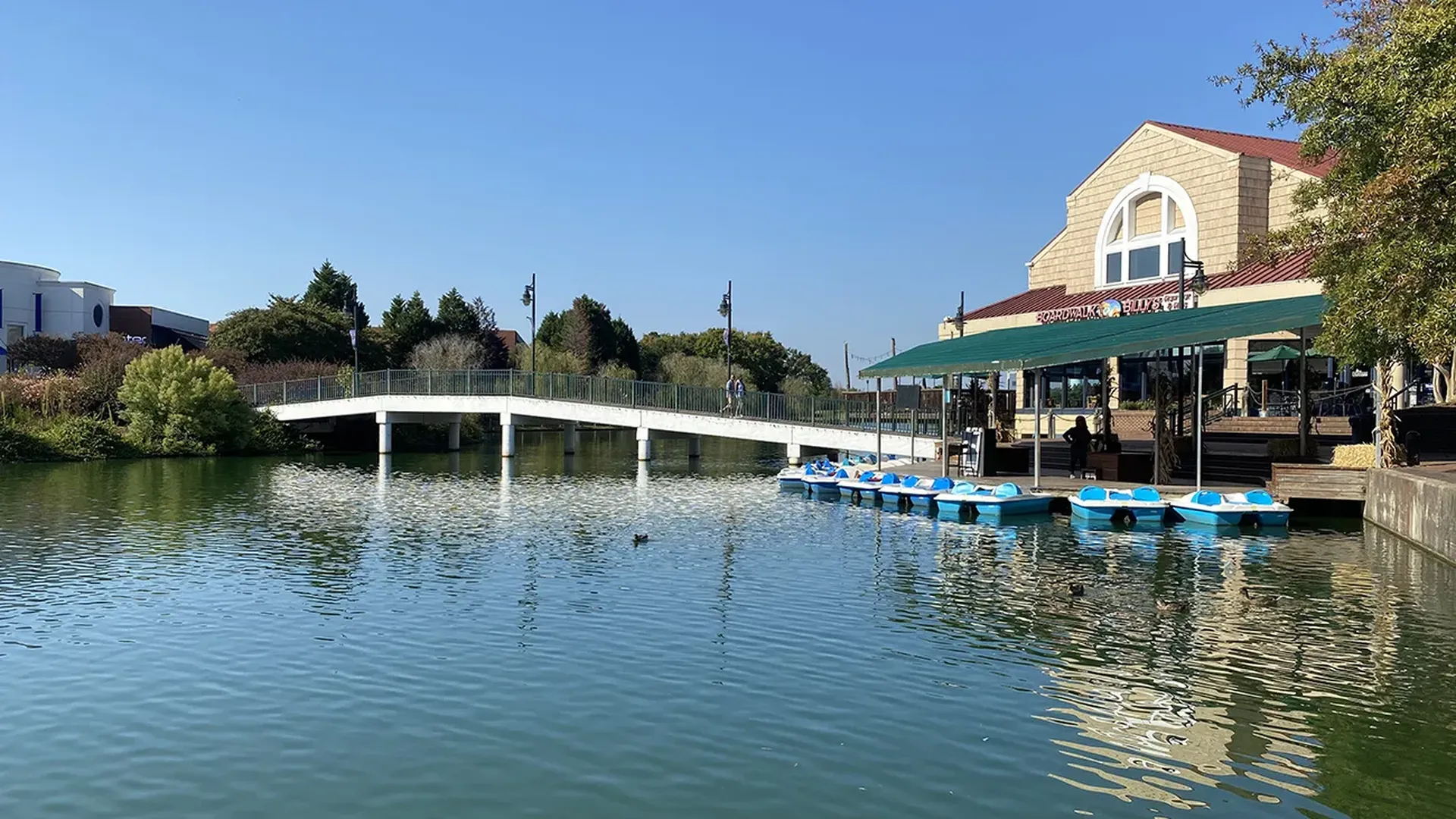
University City forms a key district within the broader Charlotte region, a market that has positioned itself as the Southeast’s premier meetings and convention destination. Planners benefit from access to substantial exhibit and breakout space, extensive hotel inventory, and supporting infrastructure that enables national and regional programs to achieve strong attendance and engagement.
The Charlotte region reports 3.2 million residents, a labor force of 1.7 million, and 13 percent workforce growth over five years. These fundamentals, paired with 19 Fortune 1000 headquarters and more than 1,000 international businesses, create consistent demand for targeted trade shows across manufacturing, technology, aerospace, and financial services sectors.
Effective planning for University City events draws on Charlotte Douglas International Airport’s capacity of 53.6 million passengers in 2025 and nonstop service to over 188 destinations, ensuring exhibitors and attendees can connect efficiently while leveraging the unified destination management provided by regional planners.
Positioning University City Within Charlotte’s Meetings Ecosystem
The Charlotte region maintains strong momentum as a convention destination, supported by official positioning that highlights more than 200 restaurants and bars within walking distance of Uptown venues. University City participates in this ecosystem by serving audiences drawn from the surrounding economic corridors and educational anchors. Trade show planners use this foundation to design programs that align corporate objectives with the market’s growth trajectory and accessibility.
Population and labor statistics underscore the opportunity. With 3.2 million people across the 15-county Charlotte Region and a labor force of 1.7 million that expanded 13 percent over five years, the area supplies both qualified attendees and the operational depth necessary for complex exhibitions. The metro area’s second-place national ranking for job growth among large markets at the end of 2025 further signals rising demand for industry events that facilitate networking and solution sourcing.
Coordination begins with mapping program goals against available infrastructure. This includes understanding how University City’s location integrates with multiple venue clusters, allowing flexibility whether the priority is large-scale exhibits, specialized conferences, or hybrid activations that blend education with experiential elements.
Global Connectivity Through Charlotte Douglas International Airport
Charlotte Douglas International Airport delivered 53.6 million passengers in 2025 while offering nonstop service to more than 188 destinations. This connectivity gives exhibitors and national field teams reliable access that supports compressed timelines common in trade show schedules. Attendees can arrive from major business centers with minimal layovers, preserving energy for exhibit floors, seminars, and relationship-building activities.
Efficient airport logistics reduce one of the largest variables in event planning: travel friction. Programs targeting University City audiences can therefore draw participation from across the United States and international markets where direct flights simplify participation. Planners factor these patterns into date selection and marketing outreach to maximize registration and on-site engagement.
The airport’s scale complements the region’s corporate density. Companies headquartered in Charlotte or maintaining significant operations here frequently send teams to industry events, knowing that return travel remains straightforward even after intensive multi-day programs.
Convention Infrastructure and Venue Options
The Charlotte Convention Center provides a 600,000-square-foot facility that includes 280,000 square feet of exhibit hall space and 154,000 square feet of breakout space, supported by 6,400 walkable hotel rooms. This inventory forms the foundation for events that require substantial floor space, multiple concurrent sessions, and convenient lodging. Additional venues throughout the region expand choices for programs of varying scope and character.
Five distinct venue clusters serve different objectives. The Uptown Convention Core centers on the convention center, NASCAR Hall of Fame, and hotels including the Westin, Hilton Charlotte Uptown, Charlotte Marriott City Center, Omni Charlotte Hotel, and JW Marriott Charlotte. The Concord / Cabarrus Event Corridor offers the Embassy Suites Charlotte Concord, Concord Convention Center, Cabarrus Arena & Events Center, Charlotte Motor Speedway, and Ten Tenths Motor Club.
Adaptive reuse spaces such as Camp North End, the Fillmore, the Underground, Spectrum Center, and Truist Field support creative activations and hospitality functions. The South Charlotte Executive Corridor with the Ballantyne and Harris Conference Center suits polished corporate meetings, while the South Carolina Extension including Rock Hill Sports & Event Center and Anne Springs Close Greenway accommodates hybrid sports-and-lifestyle events.
- Uptown Convention Core for large-scale exhibits and walkable hospitality
- Concord / Cabarrus corridor for regional conventions and drive-in attendance
- Adaptive reuse venues for branded experiences and receptions
- South Charlotte executive venues for focused corporate programs
- York County locations for spillover and lifestyle-driven events
Economic Drivers Supporting Trade Show Demand
Nineteen Fortune 1000 headquarters operate in the Charlotte region across financial services, retail, food services, manufacturing, aerospace, and technology. This concentration produces a steady supply of senior decision-makers who attend trade shows to assess new solutions, renew partnerships, and gather competitive intelligence. Events positioned in or near University City can reach these audiences through targeted promotion tied to sector-specific themes.
Foreign direct investment has created more than 8,400 jobs since 2022, contributing to a total of more than 1,000 international businesses now active in the market. The resulting diversity expands the range of exhibitors and attendees interested in cross-border collaboration, product launches, and supply-chain innovation. Trade show planners incorporate these realities when shaping floor layouts, educational tracks, and sponsorship packages.
Sustained job growth that ranked second nationally among large metros reinforces the value proposition. A growing workforce translates into larger pools of prospective buyers and technical specialists who can be reached efficiently through well-orchestrated exhibitions.
Unified Destination Management and Planning Support
The CRVA operates a unified destination sales, marketing, and venue-management structure that covers the convention center, NASCAR Hall of Fame, Bojangles Entertainment Complex, and related assets. This integration simplifies coordination by providing single-point access to critical information on availability, services, and local requirements. Planners referencing this framework can align their University City programs with established best practices developed for the broader Charlotte market.
Official resources emphasize the city’s strengths as a Southeast meetings leader, including the concentration of hospitality and dining options that enhance attendee satisfaction. Early engagement with these planning tools helps secure appropriate space, manage timelines, and integrate supplementary services that elevate the overall event experience without unnecessary complexity.
The destination’s approach supports both large expos and more focused conferences. Whether the objective is maximum exhibit square footage or intimate breakout sessions, the infrastructure and support systems scale to match program scope.
Strategic Coordination Practices for Measurable Results
Successful University City trade shows require integrated coordination across exhibit design, material flow, attendee registration, digital amplification, and post-event follow-up. Authoritative planning anticipates intersections between these elements and establishes clear timelines that protect budget parameters while delivering intended outcomes. This disciplined method converts market potential into concrete return on investment.
North Carolina’s regulatory environment, including its right-to-work provisions, offers flexibility in labor planning that experienced coordinators factor into budgeting and scheduling. Combined with the region’s venue diversity, this allows customization whether the priority centers on heavy equipment display, technology demonstrations, or high-touch hospitality experiences.
Post-event analysis closes the loop by evaluating attendance against economic indicators, lead quality relative to corporate headquarters density, and overall program resonance within the growing international business community. Insights gained inform future iterations, ensuring continuous improvement in a market that continues to add jobs and attract global investment.
Long-Term Outlook for Events in the University City Area
Charlotte’s trajectory of job creation, foreign investment, and infrastructure development points to continued expansion of the meetings market. University City benefits from this momentum as both a participant in regional growth and a convenient access point for audiences traveling through Charlotte Douglas or staying in Uptown and Concord hotels. Forward-looking planners monitor these indicators to keep programs aligned with evolving business needs.
The presence of multiple venue clusters allows adaptation as priorities shift between pure exhibition, hybrid formats, or experiential activations. Coordination that begins with current data on passenger volumes, convention center specifications, and corporate density produces events that remain relevant and competitive over multiple cycles.
The combination of scale, connectivity, and economic vitality positions the Charlotte region, including University City, as a market where thoughtfully planned trade shows consistently deliver value to exhibitors, sponsors, and attendees alike.
Frequently Asked Questions
How does Charlotte Douglas International Airport benefit trade show planning for University City?
The airport handled 53.6 million passengers in 2025 and provides nonstop service to more than 188 destinations, enabling efficient national and international attendance with reduced travel friction.
What are the specifications of the Charlotte Convention Center?
It is a 600,000-square-foot facility offering 280,000 square feet of exhibit hall space, 154,000 square feet of breakout space, and proximity to 6,400 walkable hotel rooms.
How many Fortune 1000 headquarters are in the Charlotte region?
The region is home to 19 Fortune 1000 headquarters spanning financial services, retail, manufacturing, aerospace, technology, and additional sectors.
What organization manages destination sales and venues in Charlotte?
The CRVA provides a unified structure for destination sales, marketing, and venue management that includes the convention center and supporting facilities.
Which venue clusters are available beyond the Uptown core?
Clusters include the Concord / Cabarrus Event Corridor, adaptive reuse activation zones, South Charlotte executive corridor, and South Carolina extension in York County.
What economic factors support trade show investment in the Charlotte region?
Key factors include 13 percent five-year workforce growth, more than 8,400 jobs added from foreign direct investment since 2022, and more than 1,000 international businesses.