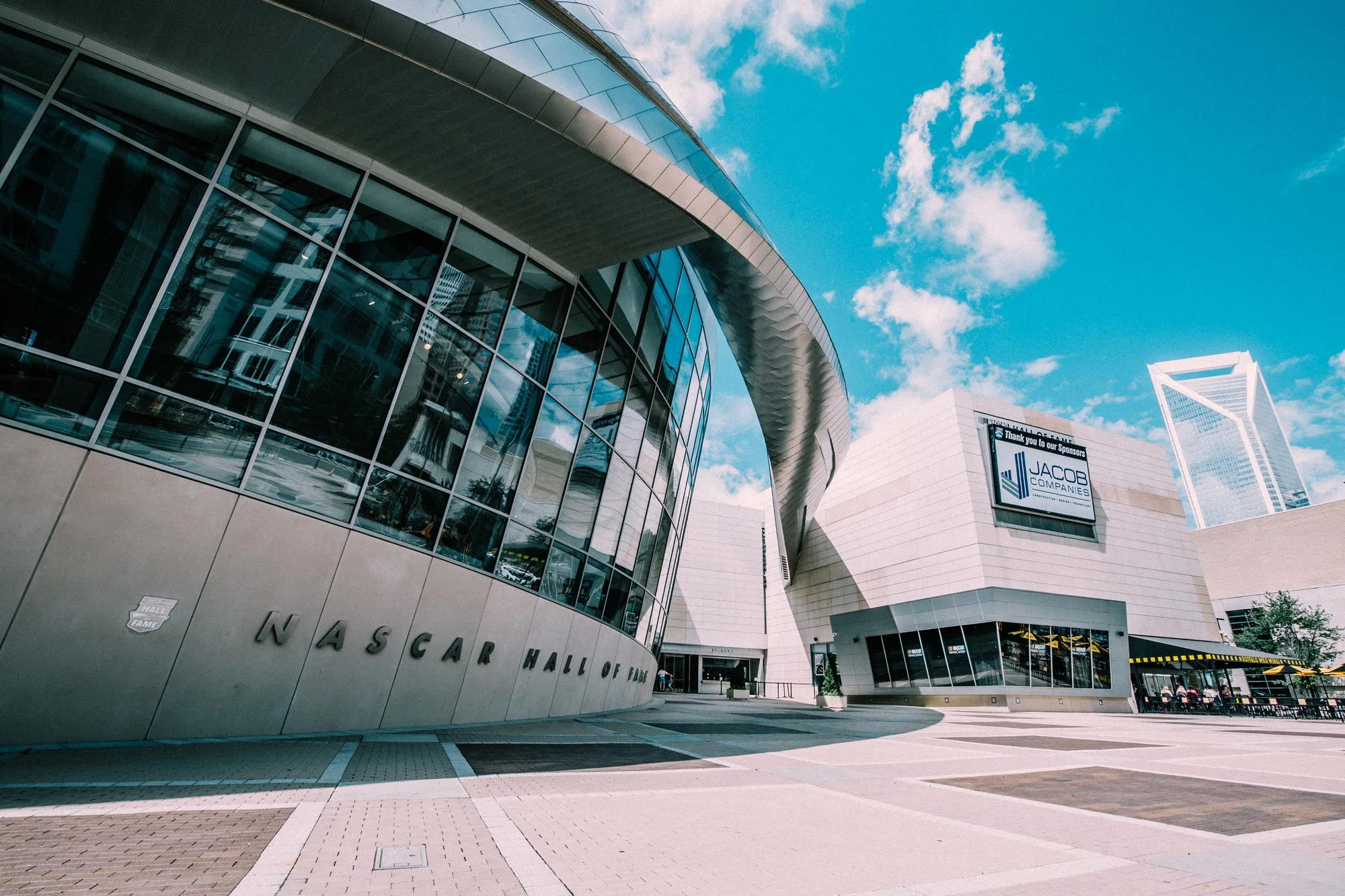
Charlotte’s motorsports prominence and centralized convention assets make the NASCAR Hall of Fame a strategic choice for trade shows that seek to combine education, networking, and immersive activations. The venue sits within the Uptown Convention Core, where the CRVA maintains unified management across the Charlotte Convention Center, multiple hotels, and entertainment facilities.
Global air access through Charlotte Douglas International Airport, which handled 53.6 million passengers in 2025 with nonstop service to more than 188 destinations, supports efficient national and international attendance. The surrounding district offers more than 6,400 walkable hotel rooms and over 200 restaurants and bars, allowing attendees to maximize productive time without logistical friction.
Planners benefit from alignment with the region’s demand drivers, including motorsports, advanced manufacturing, banking, life sciences, logistics, and technology sectors. The Charlotte Region’s 3.2 million population, 1.7 million labor force, and consistent job growth further strengthen the market’s capacity to support high-quality event execution.
Verified venue facts for NASCAR Hall of Fame Trade Show Planning in Charlotte, NC
- Charlotte Meetings says the venue is connected to the Charlotte Convention Center.
- Official destination copy says the Hall offers full-facility rentals and in-house food and beverage.
- Charlotte Meetings positions it for groups from 10 to 2,400.
The Role of the NASCAR Hall of Fame in Charlotte’s Convention Ecosystem
The NASCAR Hall of Fame operates as a core component of Uptown Charlotte’s meeting infrastructure under the CRVA’s unified destination, sales, marketing, and venue-management structure. This coordination with the Charlotte Convention Center and Bojangles Entertainment Complex simplifies scheduling, permitting, and operational alignment for national organizers staging multi-day programs.
Its central location enables smooth integration with surrounding full-service hotels including the Westin Charlotte, Hilton Charlotte Uptown, Charlotte Marriott City Center, Omni Charlotte Hotel, and JW Marriott Charlotte. Planners can therefore design event flows that keep attendees within walking distance of sessions, exhibits, networking functions, and evening hospitality without reliance on extensive shuttle operations.
Official Charlotte Meetings resources highlight the district’s walkability and density of amenities, making the NASCAR Hall of Fame particularly effective for programs that blend exhibit components with sponsor activations and thematic programming. The venue’s motorsports connection adds narrative depth that standard facilities cannot replicate.
Event coordinators who treat the Hall of Fame as part of a larger Uptown experience consistently report higher attendee satisfaction and more organic business conversations that extend beyond the exhibit floor.
- Unified CRVA oversight across connected venues
- Walkable access to major Uptown hotels and dining
- Natural fit for thematic motorsports storytelling
- Support for both standalone and multi-venue programs
Motorsports Demand Drivers and Experiential Event Opportunities
Charlotte’s longstanding connection to NASCAR, Charlotte Motor Speedway, and related assets creates a robust environment for enthusiast events, brand launches, and hospitality programs. The NASCAR Hall of Fame capitalizes on this heritage by offering a setting where exhibitors can demonstrate engineering innovation, performance technology, and competitive culture in an authentic context.
The broader Concord event corridor and Uptown core together support a wide range of automotive and motorsports activations that draw both regional drive-in audiences and national participants. Demand remains steady because the region combines manufacturing depth with a knowledgeable consumer base that values experiential marketing.
Trade show organizers frequently incorporate interactive elements, technical demonstrations, and VIP experiences that leverage the venue’s thematic resonance. This approach differentiates programs from generic convention-center formats and strengthens sponsor ROI through higher engagement metrics.
The market’s 13 percent five-year workforce growth and second-place national ranking for job growth among large metros by the end of 2025 ensure availability of skilled personnel capable of supporting complex technical installations and live programming elements.
- Brand launches targeting racing and automotive audiences
- VIP hospitality tied to executive and sponsor networks
- Interactive exhibits highlighting manufacturing innovation
- Supplier expos connected to advanced manufacturing clusters
Global Air Access and Attendee Logistics
Charlotte Douglas International Airport’s scale and connectivity give the NASCAR Hall of Fame a logistical advantage few Southeast markets can match. With 53.6 million passengers in 2025 and nonstop service to more than 188 destinations, the airport enables efficient travel for exhibitors, speakers, and attendees arriving from across the United States and international markets.
More than 1,000 international businesses now operate in the Charlotte Region, supported by over 8,400 jobs created through foreign direct investment since 2022. This global orientation makes the market practical for multi-city event tours and product launches that require broad geographic representation.
Planners can allocate more resources toward content and experience design rather than complex travel management. The combination of strong air access and walkable Uptown infrastructure reduces overall program friction and improves on-site productivity from the first day through the last.
Corporate Headquarters Depth and Cross-Industry Demand
The Charlotte Region hosts 19 Fortune 1000 headquarters spanning financial services, retail, food services, manufacturing, aerospace, and technology. This concentration generates consistent demand for conferences, recruiting events, supplier exhibitions, and innovation showcases that align well with the NASCAR Hall of Fame’s capabilities.
Banking and financial services form a foundational pillar, with the city recognized as the second-largest financial center in the United States. Technology and corporate innovation sectors further complement this base, supporting events that require both formal presentation space and distinctive hospitality environments.
Life sciences, healthcare, and logistics organizations also contribute to the market’s event pipeline. Each sector benefits from Charlotte’s adaptive meeting inventory and the ability to incorporate experiential elements that reinforce brand positioning within a memorable setting.
The region’s 1.7 million labor force and sustained economic momentum allow organizers to source qualified support across technical, creative, and operational disciplines without seasonal constraints.
- Finance-driven conferences and sponsorship activations
- Manufacturing and logistics supplier networking
- Technology innovation and product demonstration programs
- Healthcare education combined with compliant exhibit execution
Uptown Convention Core Synergies and Walkability Benefits
The Uptown Convention Core clusters the NASCAR Hall of Fame with the Charlotte Convention Center and multiple premium hotels to create one of the Southeast’s most complete meeting destinations. This concentration allows planners to distribute programming across venues while maintaining a single, easily navigable footprint for attendees.
Official Charlotte Meetings materials emphasize the district’s 200-plus restaurants and bars within walking distance, which support informal networking and extended event-related activity after formal sessions conclude. The resulting atmosphere encourages longer dwell times and deeper business relationships.
Exhibit-heavy conferences, ballroom breakouts, and sponsor-focused events perform particularly well in this environment because logistical barriers are minimized. Attendees spend less time in transit and more time engaged with exhibitors, speakers, and peers.
Coordinated planning across the core helps organizations maximize return on investment by layering educational content, product demonstrations, and hospitality in a compact, high-energy district.
Labor Environment and Operational Coordination Best Practices
North Carolina’s right-to-work statutes provide event organizers with scheduling flexibility that supports efficient installation, operation, and dismantle timelines at the NASCAR Hall of Fame. This legal framework helps maintain compliance while allowing adjustments based on program scale and complexity.
Early coordination with destination representatives enables accurate mapping of required services, identification of cross-venue opportunities, and development of realistic production calendars. Treating the venue as one element within the larger Charlotte market rather than an isolated site leads to more cohesive outcomes.
The region’s population and workforce growth trends reinforce the availability of experienced partners capable of delivering technical, logistical, and creative support. Planners who incorporate these market characteristics into their strategies consistently achieve smoother execution and stronger attendee feedback.
Successful programs begin with clear objective setting, thematic alignment where appropriate, and contingency planning that accounts for both the venue’s distinctive character and the surrounding convention infrastructure.
- Align program themes with motorsports heritage when relevant
- Map multi-venue logistics during initial planning stages
- Account for primary attendee travel patterns and feeder markets
- Allocate adequate time for testing experiential components
Frequently Asked Questions About NASCAR Hall of Fame Events
How does the NASCAR Hall of Fame fit into Charlotte’s official meeting offerings?
The venue is managed by the CRVA alongside the Charlotte Convention Center and Bojangles Entertainment Complex as part of a unified destination sales, marketing, and operations structure that simplifies coordination for planners.
Why is the venue well-suited for motorsports and automotive events?
Charlotte’s NASCAR-linked assets and motorsports corridor create natural synergy for enthusiast events, brand launches, VIP hospitality, and experiential builds that leverage authentic racing heritage and regional industry strength.
What role does Charlotte Douglas International Airport play for these events?
The airport handled 53.6 million passengers in 2025 and offers nonstop service to more than 188 destinations, enabling convenient national and international attendance while supporting multi-city event routing.
Can programs combine the NASCAR Hall of Fame with other Uptown venues?
Yes. The Uptown Convention Core’s walkable layout connects the Hall of Fame to the convention center, multiple hotels, and dining options, allowing smooth multi-venue programming without extensive transportation requirements.
Which industries generate the strongest event demand in the Charlotte Region?
Banking and financial services, advanced manufacturing, life sciences and healthcare, logistics, motorsports, and technology and corporate innovation all maintain significant headquarters presence and meeting activity.
How does North Carolina’s labor environment affect trade show planning?
The state’s right-to-work statutes offer scheduling flexibility that helps organizers manage installation, show-site operations, and dismantle phases efficiently while remaining fully compliant with applicable regulations.