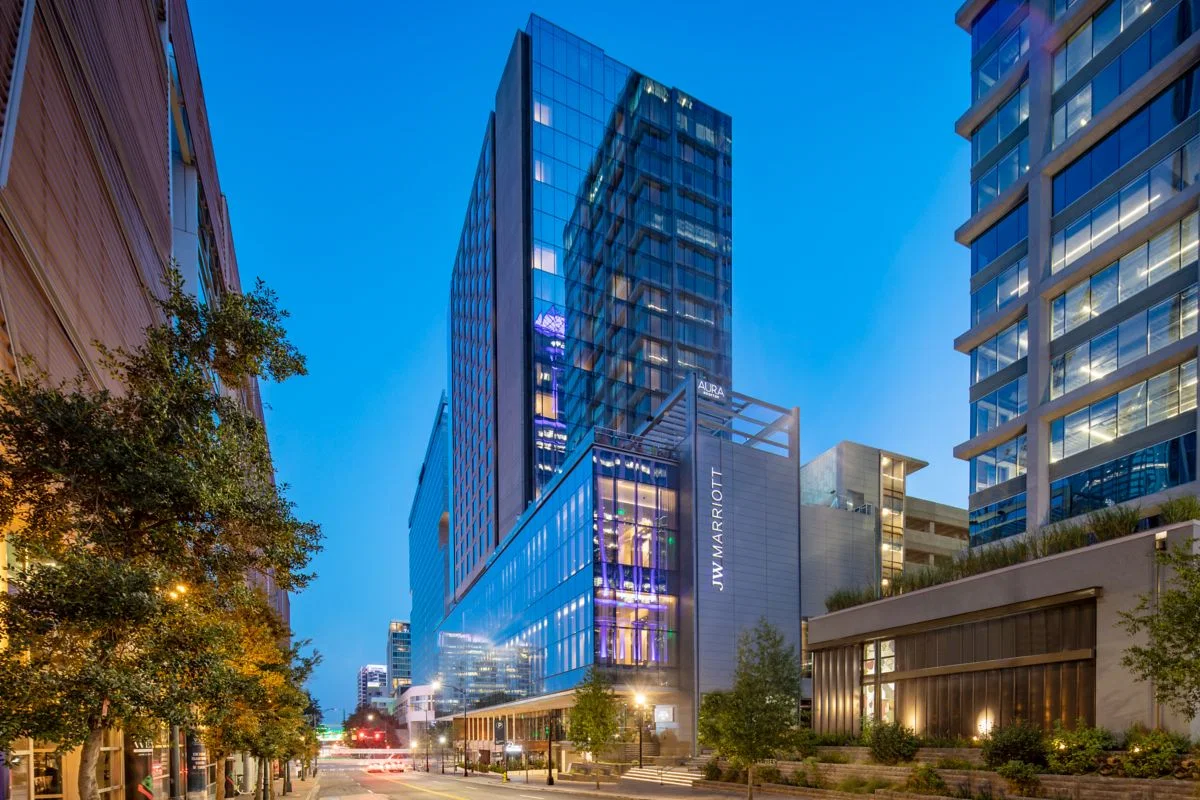
Charlotte’s Uptown core concentrates major convention assets, hotels, and supporting infrastructure into one functional district that planners use to streamline logistics across multi-day events. The JW Marriott Charlotte, positioned on South College Street, serves as a key luxury hospitality node within this cluster. It enables program coordinators to assign high-touch receptions, leadership briefings, and targeted sponsor functions to an environment that complements the scale of nearby exhibit halls without introducing transportation complexity or fragmented attendee journeys.
Official destination data positions Charlotte as the Southeast’s primary meeting market, supported by more than 6,400 walkable hotel rooms, 280,000 square feet of exhibit space at the Charlotte Convention Center, and over 200 restaurants and bars reachable on foot. Global air access through Charlotte Douglas International Airport, which handled 53.6 million passengers in 2025 with nonstop flights to more than 188 destinations, further strengthens the city’s ability to attract national and international audiences. Within this framework the JW Marriott Charlotte functions as a strategic choice when programs require polished settings for C-level engagement or invitation-only components alongside broader convention activity.
The surrounding corporate landscape, led by 19 Fortune 1000 headquarters in financial services, advanced manufacturing, life sciences, logistics, motorsports, and technology, generates consistent demand for events that blend education, exhibition, and premium hospitality. Planners therefore evaluate the JW Marriott Charlotte not in isolation but as an integrated piece of coordinated Uptown programming that leverages the district’s density for improved flow, security, and spontaneous networking.
Verified venue facts for JW Marriott Charlotte: Premium Hospitality Planning in Charlotte’s Uptown Convention District
- Charlotte Meetings includes JW Marriott Charlotte among featured meeting and event spaces in the Uptown convention district.
- The hotel sits on South College Street within the core hotel and convention corridor.
Strategic Placement Inside the Uptown Convention Core
The Uptown convention district groups the Charlotte Convention Center, NASCAR Hall of Fame, the Westin Charlotte, Hilton Charlotte Uptown, Charlotte Marriott City Center, Omni Charlotte Hotel, and the JW Marriott Charlotte into a compact, walkable footprint. This concentration allows event coordinators to distribute program elements according to each venue’s strengths while minimizing transit time between sessions, exhibits, and hospitality functions. The JW Marriott Charlotte’s location on South College Street places it inside the primary cluster that Charlotte Meetings promotes for conventions, conferences, and sponsor-heavy gatherings.
Planners benefit from the ability to keep executive guests, speakers, and key clients in a luxury setting mere blocks from 280,000 square feet of exhibit space and 154,000 square feet of breakout rooms at the convention center. Such adjacency supports tighter daily schedules, reduces the need for shuttles, and creates opportunities for informal interactions that strengthen event outcomes. Charlotte’s official planning resources emphasize this unified district as a competitive advantage for organizers seeking both scale and sophistication.
The district’s density also simplifies security planning, badge continuity, and last-minute adjustments. When an exhibit floor session runs long, nearby hospitality at the JW Marriott Charlotte can begin without significant disruption. This operational flexibility proves especially valuable for programs that combine technical sessions, product demonstrations, and high-value receptions within a single tight timeframe.
- Direct walking access to Charlotte Convention Center and NASCAR Hall of Fame
- Proximity to five additional full-service Uptown hotels
- Immediate access to more than 200 restaurants and bars
- Part of the CRVA’s coordinated venue ecosystem
Alignment with Charlotte’s Primary Industry Demand Drivers
Charlotte maintains durable demand from banking and financial services as the nation’s second-largest financial center. Conferences in this sector frequently require both large-scale exhibition and discreet meeting spaces for executive briefings or investor sessions. The JW Marriott Charlotte’s luxury positioning supports these elevated components while the convention center handles broader registration and display needs.
Advanced manufacturing, life sciences, logistics, technology, and motorsports represent additional growth segments. The region’s 13 percent five-year labor force expansion, 1.7 million workers, and more than 8,400 new jobs from foreign direct investment since 2022 generate steady event pipelines. Planners match the JW Marriott Charlotte to portions of these programs that benefit from polished environments, such as supplier recognition events, medical education dinners, or brand launches tied to Charlotte Motor Speedway activities.
The city’s 19 Fortune 1000 headquarters create opportunities for corporate innovation conferences that blend exhibit halls with invitation-only components. When these events occur in Uptown, the JW Marriott Charlotte provides a natural extension for hospitality that reinforces sponsor relationships and facilitates targeted networking away from the main floor.
Coordinators therefore review each industry calendar against venue capabilities, ensuring the luxury hotel layer enhances rather than duplicates the convention center’s functional strengths.
Airport Connectivity and National Attendee Logistics
Charlotte Douglas International Airport’s 53.6 million passengers in 2025 and nonstop service to more than 188 destinations give exhibitors and attendees unusually efficient national and international reach for a Southeast market. Planners incorporate this advantage when designing multi-city itineraries or recruiting speakers from distant headquarters. The short, predictable transfer from airport to Uptown allows the JW Marriott Charlotte to serve as an effective first-night reception venue or final-day executive debrief location.
With the entire convention core positioned between the airport and additional regional assets in Concord and SouthPark, coordinators can construct efficient daily flows. Attendees arriving for a finance conference, for example, can move directly from aircraft to hotel check-in and then to opening receptions without lengthy ground transportation. This efficiency reduces fatigue and increases productive time on-site.
The airport’s scale also supports exhibitor freight and personnel movements that accompany large trade shows. While the convention center manages primary dock operations, the surrounding hotels including the JW Marriott Charlotte handle lighter hospitality shipments and specialized AV setups for breakout or reception spaces.
- 53.6 million passengers in 2025
- Nonstop service to 188-plus destinations
- Short, reliable transfers to Uptown venues
- Supports both domestic and international attendee mixes
Hospitality and Sponsor Activation Strategies
Successful trade show programs in Charlotte often separate exhibit activity from premium sponsor and executive functions. The JW Marriott Charlotte’s luxury setting allows coordinators to design receptions, private dinners, and briefing sessions that feel distinct yet remain physically connected to the larger event. This separation elevates perceived value for key stakeholders while preserving the convention center’s focus on broad attendee traffic.
Sponsors in motorsports, technology, or life sciences frequently seek environments that match their brand positioning. The hotel’s refined atmosphere supports experiential elements such as product demonstrations in lounge-style settings or invitation-only networking that cannot be replicated on an exhibit floor. Planners sequence these activities to follow main sessions, creating natural progression from education to relationship-building.
Badge policies, timing, and wayfinding must be established early so attendees understand how to move between venues. When executed well, these transitions reinforce the host city’s reputation for smooth, high-caliber events and encourage higher sponsor investment in future years.
Multi-Venue Coordination Best Practices
Charlotte’s event inventory spans Uptown, Concord, South End, and SouthPark corridors. Programs that begin at the convention center often extend to the JW Marriott Charlotte for evening hospitality and may incorporate the NASCAR Hall of Fame for themed activations the following day. Early mapping of these movements against room blocks, AV requirements, and staffing plans prevents bottlenecks and ensures consistent attendee experience.
The CRVA’s unified management of the convention center, NASCAR Hall of Fame, and Bojangles Entertainment Complex simplifies certain permitting and service conversations. Planners layer hotel partners such as the JW Marriott Charlotte into these discussions to maintain continuity across the district. Shared calendars, joint security protocols, and coordinated transportation options become essential tools for programs that span multiple days and venues.
Technology choices also matter. Unified apps or digital signage that display schedules for both the convention center and nearby hotels reduce confusion. When the JW Marriott Charlotte hosts a leadership track, clear directional cues from the main exhibit hall help attendees arrive on time and maintain program energy.
Testing these flows during site visits or earlier smaller events helps refine timing and identify any adjustments needed before peak-season execution.
- Map daily attendee paths between venues early
- Align AV and catering schedules across properties
- Establish consistent badge and security protocols
- Coordinate with CRVA for district-wide efficiencies
Market Momentum Supporting Venue Decisions
Charlotte’s 3.2 million residents, second-place national job growth ranking among large metros in 2025, and addition of more than 1,000 international businesses create sustained demand for professional gatherings. The region’s manufacturing strength, life-sciences footprint, and motorsports corridor generate both regional drive-in attendance and national draw. The JW Marriott Charlotte participates in this ecosystem by supplying the hospitality layer that elevates programs beyond standard conference formats.
Official Charlotte Meetings resources highlight the city’s 200-plus walkable restaurants and bars as a differentiator that supports extended networking. Planners leverage these assets by scheduling JW Marriott Charlotte receptions that flow into downtown exploration, increasing perceived value without additional transportation cost. This combination of infrastructure, corporate density, and lifestyle amenities explains why the Uptown district remains the preferred choice for many national organizers.
As foreign direct investment and headquarters growth continue, the demand for venues capable of hosting both scale and sophistication is expected to rise. The JW Marriott Charlotte’s established position inside the core district positions it as a recurring selection for programs that require differentiated hospitality components.
Practical Execution Guidance for Planners
Early engagement with destination sales resources helps secure preferred dates and identify complementary venues. Because the Uptown district operates as a unified ecosystem, understanding the full calendar prevents conflicts between concurrent events. Planners should also review seasonal patterns driven by financial services earnings cycles and motorsports race weekends when setting timelines.
Budgeting must account for the premium nature of JW Marriott Charlotte functions while recognizing the cost efficiencies gained from walkable logistics. Reduced shuttle requirements, consolidated staff movement, and simplified attendee navigation often deliver measurable savings that offset higher per-person hospitality rates.
Documentation and contingency planning remain critical. Written agreements should detail backup spaces, technology failover options, and communication protocols should weather or other disruptions affect the district. Regular coordination calls among all venue partners keep every element aligned from initial site selection through final post-event review.
- Engage destination resources early for date availability
- Review industry calendars for peak demand periods
- Document contingency plans for each venue segment
- Measure success through both attendance metrics and sponsor feedback
Planning Questions for the JW Marriott Charlotte in Charlotte
How does the JW Marriott Charlotte fit into larger Uptown trade show programs?
It supplies premium hospitality, executive briefings, and sponsor receptions within easy walking distance of the Charlotte Convention Center’s 280,000 square feet of exhibit space and additional Uptown hotels. This placement allows coordinators to separate high-value functions from main exhibit activity while maintaining program continuity.
What industries most frequently use the JW Marriott Charlotte for events in Charlotte?
Financial services, advanced manufacturing, life sciences, logistics, motorsports, and technology programs commonly incorporate the hotel for leadership sessions and sponsor hospitality. These sectors align with the region’s 19 Fortune 1000 headquarters and documented job-growth momentum.
Why is proximity to Charlotte Douglas International Airport important for planners?
The airport’s 53.6 million passengers and nonstop flights to more than 188 destinations simplify national and international attendance. Short transfers to Uptown allow the JW Marriott Charlotte to serve efficiently as arrival or departure hospitality venues without extended ground transportation.
Can the JW Marriott Charlotte support both small executive meetings and larger conference elements?
Its luxury setting is best suited for targeted receptions, C-level briefings, and sponsor events that complement the convention center’s larger exhibit and breakout inventory. Planners typically assign scale-driven activities to the convention center and refined hospitality to the hotel.
How does the Uptown district’s walkability affect event coordination?
More than 6,400 hotel rooms and over 200 restaurants and bars within walking distance reduce shuttle requirements, simplify scheduling, and encourage spontaneous networking. Coordinators gain flexibility to sequence sessions, meals, and receptions across multiple venues without logistical friction.
What role does the CRVA play when planning programs that include the JW Marriott Charlotte?
The Charlotte Regional Visitors Authority provides a unified sales, marketing, and venue-management structure that covers the convention center, NASCAR Hall of Fame, and related assets. Planners use this resource to align hotel partners such as the JW Marriott Charlotte into cohesive district-wide events.