Charlotte has become a compelling destination for food and beverage trade shows, supported by extensive convention infrastructure and a regional economy featuring multiple Fortune 1000 headquarters in food services. The Charlotte Convention Center delivers 280,000 square feet of exhibit hall space within a 600,000-square-foot facility, paired with 154,000 square feet of breakout space and more than 6,400 walkable hotel rooms in Uptown. These assets enable comprehensive events that incorporate product sampling, trend education sessions, supplier matchmaking, and large-scale networking critical to the industry.
Global air access through Charlotte Douglas International Airport, which handled 53.6 million passengers in 2025 with nonstop service to over 188 destinations, simplifies national and international participation for exhibitors transporting specialty equipment or perishable displays. The broader Charlotte Region's 3.2 million residents, 1.7 million labor force, and 13 percent five-year workforce growth create sustained demand for professional gatherings, while foreign direct investment adding more than 8,400 jobs since 2022 and over 1,000 international businesses expand opportunities for global food and beverage brands to engage Southeast markets.
Official positioning by Charlotte Meetings underscores the city's role as the Southeast's premier meeting destination, with more than 200 restaurants and bars within walking distance of Uptown venues providing authentic extensions for hospitality programming, tastings, and experiential elements that elevate food and beverage events beyond standard exhibits.
Why Charlotte Delivers Strong Outcomes for Food and Beverage Trade Shows
The Charlotte Region's economic indicators create a supportive foundation for food and beverage industry events. With 19 Fortune 1000 headquarters spanning food services, manufacturing, retail, and technology, trade show organizers gain direct pathways to influential decision-makers responsible for procurement, innovation, and distribution strategies. This corporate concentration allows events to move beyond generic exhibition to focused business development that reflects current industry challenges such as supply chain resilience and consumer trend adaptation.
Job growth momentum, with the Charlotte metro ranking second nationally among large metros by the end of 2025 according to the CLT Alliance, signals an expanding professional audience eager for education on emerging ingredients, sustainable packaging, and operational efficiencies. The 3.2 million population base across 15 counties combined with 13 percent five-year labor force growth further supports both B2B attendance and potential consumer-day components that can extend event reach and sponsorship value.
Foreign direct investment trends, which have generated more than 8,400 new jobs since 2022 while attracting over 1,000 international businesses, position Charlotte as an effective launchpad for global food and beverage brands seeking Southeast representation. Unified destination management through the CRVA integrates sales, marketing, and venue operations, helping planners promote events within a cohesive regional framework that emphasizes Charlotte's strengths as a convention destination.
These factors together enable food and beverage trade shows to achieve higher ROI through relevant audience density, logistical ease, and natural alignment with the market's existing business rhythms rather than forced positioning.
Optimizing Use of the Charlotte Convention Center for F&B Exhibits
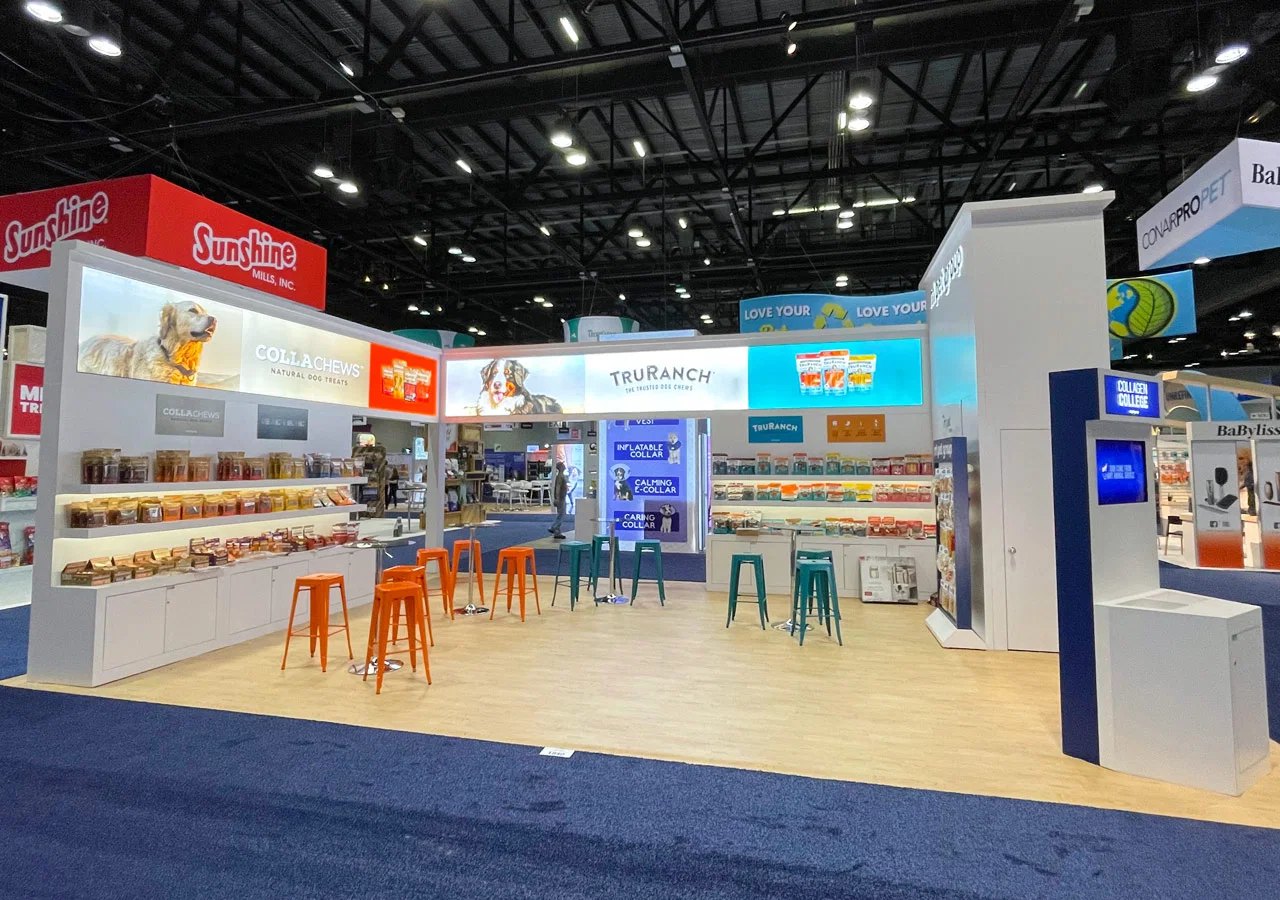
The Charlotte Convention Center functions as the primary anchor for food and beverage trade shows requiring substantial floor space for booth displays, demonstration kitchens, tasting corridors, and educational stages. Its 280,000 square feet of exhibit hall space accommodates the specialized infrastructure needs of the industry, including enhanced electrical capacity for cooking equipment, plumbing considerations for beverage stations, and wide aisles that manage high traffic during peak sampling periods.
Complementing the exhibit halls, the facility's 154,000 square feet of breakout space supports concurrent programming such as trend forecasting seminars, regulatory compliance workshops, and buyer-supplier matchmaking sessions. This flexibility allows organizers to structure multi-day events that balance show floor activity with targeted content delivery, maximizing value for both exhibitors and professional attendees traveling from across the country.
Proximity to more than 6,400 hotel rooms within walking distance eliminates many transportation headaches common at dispersed venues, enabling attendees to move efficiently between sessions, networking events, and hospitality functions. The CRVA's meeting planners guide and supporting services documentation provide clear specifications that facilitate accurate pre-event planning for food safety stations, waste management, and traffic flow.
For events that combine trade show elements with conference components, the center's scale supports citywide conventions while maintaining the intimate breakout environments necessary for meaningful industry conversations.
- 280,000 square feet of column-free exhibit space ideal for large-scale displays
- 154,000 square feet of flexible breakout and meeting rooms
- Direct integration with Uptown hotel inventory exceeding 6,400 rooms
- Support for complex utility requirements typical of live demonstrations
Venue Clusters That Accommodate Varied Food and Beverage Formats
Charlotte's event infrastructure extends beyond the convention center through distinct venue clusters that address different scales and styles of food and beverage programming. The Uptown Convention Core, encompassing the Charlotte Convention Center, NASCAR Hall of Fame, the Westin Charlotte, Hilton Charlotte Uptown, Charlotte Marriott City Center, Omni Charlotte Hotel, and JW Marriott Charlotte, creates a walkable district ideal for headquarters functions, sponsor activations, and evening receptions that leverage the area's 200-plus nearby restaurants.
North of the core, the Concord and Cabarrus County corridor offers the Embassy Suites Charlotte Concord with its convention center, Cabarrus Arena and Events Center, Great Wolf Lodge, and associated hospitality. These facilities provide ample parking and drive-in convenience suited for regional distributor shows, consumer-facing beverage festivals, or hybrid events that combine trade exhibits with experiential elements. Their configuration supports larger equipment displays and staged demonstrations common in foodservice equipment showcases.
Additional options in the adaptive reuse and activation zones, such as Camp North End, along with South Charlotte executive properties like the Ballantyne, allow planners to incorporate unique atmospheres for product launches or VIP tastings. This diversity enables tailored event architectures that match specific objectives, whether securing major contracts at a flagship convention program or building brand affinity through intimate hospitality experiences.
Collectively, these clusters give coordinators the ability to scale programs according to exhibitor budgets and audience profiles while remaining within the practical Charlotte market radius.
- Uptown Core: Convention center plus walkable luxury hotels and dining
- Concord Corridor: Arena, convention facilities, and drive-in accessibility
- South Charlotte: Executive hotels for premium client and leadership events
- Adaptive venues for creative receptions and brand activations
Transportation Advantages That Support National Participation
Superior air connectivity forms a cornerstone advantage for food and beverage trade show coordination in Charlotte. Charlotte Douglas International Airport's 2025 passenger volume of 53.6 million combined with nonstop service to more than 188 destinations reduces friction for exhibitors and attendees arriving from major industry hubs on both coasts and international origins. This access proves especially valuable when transporting temperature-sensitive samples, demonstration equipment, or time-sensitive personnel.
The airport's efficiency integrates with the interstate system and venue clustering to support tight move-in and move-out schedules often required when working with perishable goods or complex booth builds. Planners can develop logistics plans that account for realistic travel times from airport to Uptown or Concord venues, minimizing downtime and ensuring fresh product availability throughout event duration.
For events drawing regional attendance from across the 15-county Charlotte Region and neighboring South Carolina counties, the combination of air travel for long-distance participants and drive-in convenience from locations such as Rock Hill, Huntersville, Mooresville, Gastonia, and Matthews broadens the potential audience without compromising accessibility. This multi-modal strength helps achieve attendance targets that justify investment from major sponsors and exhibitors.
The market's transportation profile therefore enables truly national-scope programming that would be more challenging in destinations with constrained airport capacity or less centralized venue options.
Creating Synergies with Charlotte's Economic and Industry Drivers
Food and beverage events gain additional relevance by aligning with Charlotte's broader demand drivers in advanced manufacturing, life sciences and healthcare, technology, logistics, and motorsports. For example, functional beverages and performance nutrition products can integrate naturally with motorsports-themed activations near Charlotte Motor Speedway, while health-oriented food innovations find receptive audiences within life sciences and healthcare congress audiences.
The region's manufacturing strength, recognized as a top-10 state market, supports supplier expos and distributor events where food processing equipment, packaging solutions, and ingredient technologies take center stage. Technology and corporate innovation campuses provide venues and audiences for events exploring digital transformation in foodservice operations or e-commerce enabled direct-to-consumer models.
International business growth and foreign direct investment create opportunities to position Charlotte events as entry points into the American Southeast market for overseas food and beverage brands. The CRVA's unified destination sales and marketing structure helps amplify these cross-sector connections, ensuring food and beverage programs receive appropriate promotion alongside complementary industry calendars.
This ecosystem approach allows planners to design events with layered value propositions that attract diverse sponsorships while delivering measurable outcomes tied to the region's documented economic momentum and corporate density.
- Cross-sector programming with motorsports for performance beverages
- Alignment with advanced manufacturing for processing and packaging exhibits
- Integration with life sciences for health and wellness focused innovations
- Leveraging international business growth for global brand participation
Strategic Coordination Approaches for Maximum Event Impact
Effective planning for food and beverage trade shows in Charlotte begins with early alignment between event objectives and available venue specifications across the Uptown, Concord, and South Charlotte clusters. Detailed review of floor plans and service capabilities ensures that demonstration areas, sampling zones, and educational spaces receive appropriate utilities, circulation, and adjacency to supporting breakout rooms. This preparation prevents last-minute adjustments that can disrupt attendee flow or compromise product integrity.
Marketing strategies should reflect the varied audience profiles across recommended locations including Ballantyne for executive focus, University City for academic and medical ties, South End for creative activations, and Monroe or Kannapolis for manufacturing connections. Incorporating the market's 13 percent workforce growth and Fortune 1000 headquarters density into outreach helps secure high-quality attendance from both established players and emerging companies.
Programming that extends beyond the exhibit hall to include hospitality at properties such as the Hilton Charlotte Uptown or the Ballantyne, or unique experiences at the NASCAR Hall of Fame, creates memorable touchpoints that strengthen relationships. Attention to the CRVA's meeting planners resources helps coordinate these elements into a smooth visitor journey supported by the destination's 200-plus Uptown dining options.
Post-event evaluation benefits from the region's data-rich environment, allowing organizers to benchmark against economic indicators, attendee travel patterns, and industry trends to refine future iterations. The overall combination of scale, accessibility, and corporate relevance makes Charlotte a strategic choice for food and beverage events seeking both immediate results and sustained market positioning in the Southeast.
Extending Programs into the Full Charlotte Regional Ecosystem
While Uptown Charlotte serves as the primary convention hub, successful food and beverage trade show strategies often incorporate secondary markets to capture broader participation. Locations such as Concord with its dedicated convention and arena facilities, Huntersville and Mooresville along the I-77 corridor, and Rock Hill with its Sports and Event Center expand the practical radius while maintaining connectivity to the central venue inventory. These extensions prove valuable for recruiting regional distributors, engaging manufacturing partners, or hosting satellite hospitality functions.
SouthPark, Ballantyne, and Pineville support premium client engagements and leadership meetings that complement the main exhibition program, particularly for brands targeting executive decision-makers in food retail or foodservice operations. East and west corridor communities including Matthews, Monroe, Gastonia, and Kannapolis contribute additional attendee potential from growing business parks and industrial concentrations that intersect with food supply chains.
This layered geographic approach allows coordinators to design tiered participation models, from core citywide conventions at the Charlotte Convention Center to targeted regional activations that maximize exposure across the 15-county area. The CRVA's integrated management of venues including the convention center and entertainment complexes supports consistent service standards regardless of specific site selection.
By considering the full spectrum of primary and secondary locations identified in regional planning resources, food and beverage events can achieve comprehensive market coverage while benefiting from Charlotte's documented strengths in air access, hotel inventory, workforce growth, and corporate headquarters concentration.
- Concord as key secondary hub with convention center and arena
- Rock Hill and Fort Mill for South Carolina audience extension
- Ballantyne and SouthPark for high-value executive programming
- Huntersville, Mooresville, and Kannapolis for north and manufacturing reach
Frequently Asked Questions About Food and Beverage Trade Show Coordination in Charlotte
What are the primary advantages of hosting food and beverage trade shows in Charlotte?
Charlotte offers 280,000 square feet of exhibit space at the Charlotte Convention Center, more than 6,400 walkable hotel rooms, Charlotte Douglas Airport's 188 nonstop destinations, and a regional economy with Fortune 1000 food services headquarters plus 13 percent workforce growth.
Which venue best suits large-scale food and beverage expos?
The Charlotte Convention Center is the cornerstone venue with its 600,000-square-foot facility and 280,000 square feet of exhibit space, supported by nearby Uptown hotels and the CRVA's unified planning resources for smooth execution of tasting areas, demonstrations, and breakout sessions.
How does airport access enhance food and beverage industry events?
Charlotte Douglas International Airport's 53.6 million passengers in 2025 and nonstop flights to over 188 destinations simplify travel for national exhibitors and attendees, supporting efficient transport of equipment and perishable products essential to successful trade shows.
Can food and beverage events connect with other Charlotte industry sectors?
Yes. Synergies exist with advanced manufacturing for processing technology, motorsports for performance beverages, life sciences for health-focused products, and technology for digital foodservice solutions, all supported by the region's corporate headquarters depth and CRVA coordination.
What hotel and hospitality options support attendees in Charlotte?
Uptown provides more than 6,400 walkable rooms across properties including the Westin Charlotte, Hilton Charlotte Uptown, Charlotte Marriott City Center, Omni Charlotte Hotel, and JW Marriott Charlotte, with over 200 restaurants and bars enhancing networking and experiential programming.
How should planners approach secondary markets around Charlotte?
Secondary locations such as Concord, Ballantyne, Huntersville, Rock Hill, and Mooresville extend reach to manufacturing, executive, and regional audiences while remaining connected to primary Uptown venues, allowing tiered event strategies across the 15-county region.