
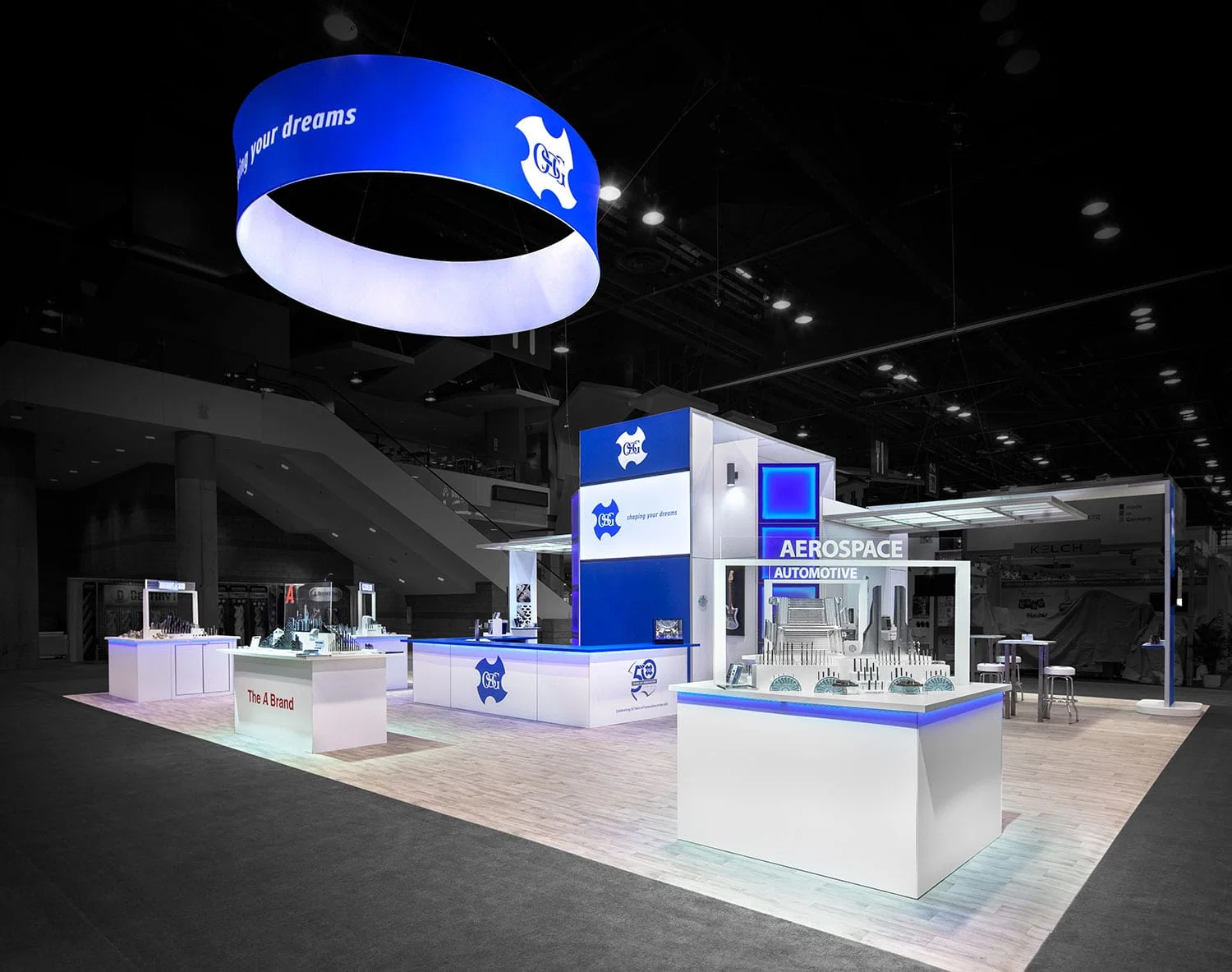
The Charlotte Convention Center supplies 280,000 square feet of exhibit hall space within a 600,000-square-foot facility that also includes 154,000 square feet of breakout and meeting space. More than 6,400 hotel rooms sit within walking distance in the Uptown core, creating a compact, efficient environment for multi-day trade shows. Planners use this inventory to stage events that align with the region’s status as the second-largest financial center in the United States while drawing from a 3.2-million-person metro area that added significant jobs in advanced manufacturing, life sciences, and technology.
Trade show services in this market emphasize precise coordination of floor plans, freight movement, attendee registration, sponsorship integration, and post-event measurement. Charlotte Douglas International Airport’s record of 53.6 million passengers and nonstop flights to more than 188 destinations allows exhibitors and national teams to reach the city efficiently. The surrounding economic momentum—19 Fortune 1000 headquarters, 13 percent five-year workforce growth, and more than 1,000 international businesses—supplies qualified attendees who influence purchasing decisions in banking, aerospace, logistics, and motorsports.
Effective planning translates these assets into measurable outcomes by sequencing every operational element around the strengths of the Uptown convention district, the Concord event corridor, and supporting activation venues. The result is trade show programs that feel both professionally executed and regionally distinctive.
Charlotte Convention Center as the Primary Trade Show Platform
The Charlotte Convention Center functions as the central venue for large-scale trade shows in the Southeast. Its 280,000 square feet of dedicated exhibit space accommodates both island booths and inline configurations while the attached 154,000 square feet of breakout rooms support concurrent education sessions, buyer meetings, and training workshops. Planners coordinate these spaces to create clear sightlines, efficient loading docks, and technology-ready infrastructure that matches the expectations of national exhibitors.
Proximity to more than 6,400 hotel rooms in the Uptown district allows attendees to move between sessions, exhibit floors, and hospitality events without logistical friction. Official destination materials highlight this walkable environment as a competitive advantage that reduces transportation costs and increases time spent at the show. Coordination therefore focuses on aligning show hours, educational programming, and sponsor events with the natural flow of the center-city district.
Successful programs also incorporate the adjacent NASCAR Hall of Fame for evening receptions and VIP experiences that reinforce brand storytelling. This combination of formal exhibit space and specialized hospitality venues gives planners flexible options to meet both business objectives and experiential goals within a single event footprint.
- 280,000 square feet of exhibit hall space
- 154,000 square feet of breakout and meeting space
- 6,400 walkable hotel rooms in the Uptown core
- Direct connection to NASCAR Hall of Fame for hospitality
- Loading docks and freight elevators engineered for heavy equipment
Industry Demand Drivers That Shape Charlotte Trade Shows
Six primary sectors generate consistent trade show activity in the Charlotte region. Banking and financial services remain the most visible, supported by the city’s position as the second-largest financial center in the United States. Events in this vertical often feature technology demonstrations, compliance updates, and recruiting pavilions that attract both corporate buyers and fintech innovators.
Advanced manufacturing, life sciences and healthcare, logistics, motorsports, and technology each contribute distinct requirements. Manufacturing shows emphasize supplier networking and equipment displays. Healthcare events require careful attention to regulatory compliance and educational content. Motorsports programs leverage proximity to Charlotte Motor Speedway and the NASCAR Hall of Fame to create interactive experiences that blend technical exhibits with brand hospitality.
Planners coordinate these programs by matching content, booth specifications, and attendee targeting to the priorities of each sector. The presence of 19 Fortune 1000 headquarters and more than 8,400 new jobs created through foreign direct investment since 2022 supplies a deep pool of decision-makers who attend shows with budget authority and implementation responsibility.
- Banking and financial services – second-largest U.S. Financial center
- Advanced manufacturing – top-10 state market with supplier networks
- Life sciences and healthcare – regional medical and corporate footprint
- Logistics and international business – supported by FDI and airport reach
- Motorsports and automotive – tied to speedway and NASCAR assets
- Technology and corporate innovation – headquarters-driven conference demand
Venue Clusters That Expand Trade Show Options
While the Charlotte Convention Center serves as the flagship location, additional venue clusters allow planners to scale events or create satellite programming. The Concord / Cabarrus County corridor offers the Embassy Suites Concord Convention Center, Cabarrus Arena & Events Center, and proximity to Charlotte Motor Speedway. These venues support regional shows, consumer-facing expos, and drive-in attendance patterns that complement Uptown events.
Adaptive-reuse spaces such as Camp North End, the Fillmore, and Spectrum Center provide distinctive environments for product launches, sponsor lounges, and evening networking that contrast with traditional exhibit halls. South Charlotte locations including the Ballantyne and Harris Conference Center suit executive-focused programs or smaller, high-touch experiences that require polished surroundings and privacy.
This tiered inventory enables planners to route multi-venue schedules that maximize exposure while controlling costs. Coordination involves aligning shuttle routes, shared registration systems, and unified branding across sites so attendees experience a smooth regional event rather than disconnected activities.
- Uptown Convention Core – Charlotte Convention Center and walkable hotels
- Concord / Cabarrus Event Corridor – arena, convention center, and speedway
- Adaptive Reuse / Activation Zone – unique spaces for brand experiences
- South Charlotte Executive Corridor – polished venues for leadership events
- South Carolina Extension – Rock Hill Sports & Event Center for spillover
Logistics and Global Access Advantages
Charlotte Douglas International Airport processed 53.6 million passengers in 2025 and maintains nonstop service to more than 188 destinations. This connectivity reduces travel friction for exhibitors shipping equipment or flying in national sales teams. Planners incorporate flight schedules into move-in and move-out timelines to minimize downtime and overtime charges at the convention center.
The broader Charlotte Region contains 1.7 million people in the labor force and has recorded 13 percent workforce growth over five years. This demographic reality supports both skilled booth staffing and local supplier networks that can be coordinated into event execution. International business activity, evidenced by more than 1,000 global companies and recent foreign direct investment gains, further expands the pool of potential attendees and international exhibitors.
Effective coordination therefore treats logistics as a strategic advantage rather than an operational hurdle. From pre-arrival freight staging to post-show outbound shipping aligned with airport cargo facilities, every step is mapped to the region’s transportation strengths.
Sponsorship Activation and Brand Integration Strategies
Sponsorship activation has become a central revenue and engagement component of Charlotte trade shows. Planners map sponsor objectives against the specific demand drivers of each event—whether financial technology demonstrations at a banking show or interactive vehicle displays at a motorsports-focused program. The NASCAR Hall of Fame and Speedway-adjacent venues supply authentic backdrops that elevate hospitality and experiential elements.
Coordination extends to booth placement, digital wayfinding, and content synchronization so sponsors receive measurable visibility. Registration data, session attendance, and lead scans are combined into unified dashboards that demonstrate return on sponsorship investment. This data-driven approach helps justify premium packages and encourages multiyear commitments.
Brand activation services further blur the line between exhibit and education by creating interactive zones that blend product demonstration with thought leadership. When coordinated correctly, these zones increase dwell time, generate higher quality leads, and reinforce the host organization’s position as an industry convener.
- Align sponsor deliverables with vertical-specific audience priorities
- Utilize NASCAR Hall of Fame for authentic hospitality experiences
- Integrate digital tools for real-time engagement tracking
- Create hybrid exhibit-education zones to increase interaction
- Combine multiple data sources into unified ROI reports
Measuring Results and Planning for Continued Growth
Post-show analytics have evolved from simple lead counts to sophisticated attribution models that link exhibit activity to pipeline value and closed-won revenue. Planners in Charlotte use the region’s corporate density to conduct follow-up within short geographic distances, accelerating sales cycles that begin on the show floor. Tools that capture booth traffic, session participation, and content downloads supply the raw data for these reports.
The Charlotte Region’s sustained job growth, expanding international business base, and unified destination marketing through the CRVA create favorable conditions for year-over-year event expansion. Planners monitor workforce trends, new headquarters announcements, and venue infrastructure upgrades to adjust show scale, target segments, and educational programming in advance of market shifts.
Long-term coordination also includes contingency planning around peak hotel nights, freight schedules, and competing events in the Southeast corridor. By treating each trade show as part of a multi-year regional strategy rather than an isolated occurrence, organizers maximize both immediate results and cumulative market presence.
Practical Coordination Considerations for Planners
Successful trade show execution in Charlotte begins with early alignment between exhibit specifications, educational content, and the chosen venue’s technical capabilities. Floor plans must account for column spacing, ceiling heights, and utility locations at the Charlotte Convention Center while leaving clear pathways that comply with safety regulations. Early coordination with the CRVA’s unified planning structure helps secure preferred dates and adjacent hotel room blocks.
Technology integration requires advance testing of Wi-Fi capacity, power distribution, and audiovisual systems capable of supporting both static displays and interactive demonstrations. Registration platforms should feed directly into CRM systems so sales teams can act on leads while the show’s energy remains fresh. Transportation coordination, including airport shuttles and intra-city movement between Uptown and Concord venues, prevents attendee fatigue.
Finally, documentation of all timelines, vendor responsibilities, and budget checkpoints creates a reproducible framework that improves with each successive event. The combination of strong infrastructure and disciplined planning turns Charlotte into a market where trade shows consistently deliver strategic value.
- Secure preferred dates through the CRVA planning structure
- Test all technology and power requirements in advance
- Integrate registration data with existing CRM platforms
- Map intra-market transportation between venue clusters
- Document every process to refine future iterations
Frequently Asked Questions About Trade Show Services in Charlotte
How much exhibit space does the Charlotte Convention Center offer?
The Charlotte Convention Center provides 280,000 square feet of exhibit hall space inside a 600,000-square-foot facility. It also includes 154,000 square feet of breakout space and sits near more than 6,400 walkable hotel rooms.
Which industries generate the strongest trade show demand in Charlotte?
Banking and financial services, advanced manufacturing, life sciences and healthcare, logistics, motorsports, and technology drive consistent activity. The region’s 19 Fortune 1000 headquarters and ongoing job growth supply qualified attendees across these sectors.
How does Charlotte Douglas International Airport benefit trade show exhibitors?
The airport handled 53.6 million passengers in 2025 and offers nonstop service to more than 188 destinations. This connectivity simplifies national team travel and freight movement, allowing tighter move-in schedules and reduced logistics costs.
What secondary markets complement Uptown Charlotte for trade shows?
The Concord / Cabarrus corridor with its convention center, arena, and motor speedway, plus South Charlotte executive venues and adaptive-reuse spaces such as Camp North End, expand options for varied event formats and attendance patterns.
What role does sponsorship activation play in Charlotte trade shows?
Sponsorship activation integrates brands into educational content, hospitality at the NASCAR Hall of Fame, and interactive exhibit zones. Data captured during the event demonstrates clear ROI and supports multiyear partnerships.
How should planners measure success for a Charlotte trade show?
Modern measurement combines lead volume, session attendance, content downloads, and pipeline attribution. The region’s corporate density allows faster follow-up, shortening the time between show interaction and closed business.