
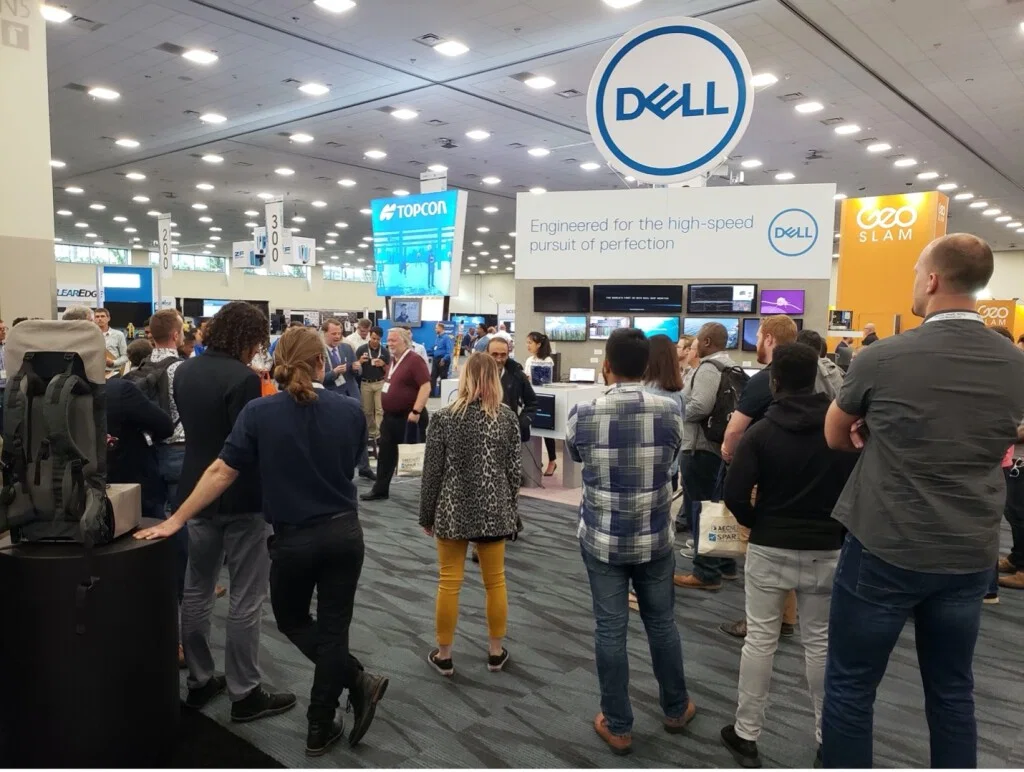
Charlotte has solidified its position as the Southeast's leading conference destination through a combination of substantial convention facilities, a concentrated urban core, and a robust economy powered by 19 Fortune 1000 headquarters. The Charlotte Convention Center provides 600,000 square feet of total space, including 280,000 square feet of exhibit hall capacity and 154,000 square feet of breakout rooms, enabling multi-track educational programs, workshops, and networking sessions that meet the needs of national associations and corporate gatherings. Official Charlotte Meetings resources emphasize the market's ability to support both large-scale conventions and targeted industry conferences within a walkable Uptown district containing more than 6,400 hotel rooms.
Global connectivity through Charlotte Douglas International Airport, which processed 53.6 million passengers in 2025 with nonstop service to more than 188 destinations, simplifies attendee travel for events drawing participants from across the country and select international markets. This infrastructure pairs with strong job growth, a 1.7 million-person labor force, and 13 percent five-year workforce expansion to create reliable demand across key sectors. Planners coordinate programs that align with the region's dominant industries while utilizing the CRVA's unified destination management framework for streamlined venue access and support services.
Conference coordination in Charlotte extends beyond the primary Uptown core to secondary clusters in Concord, SouthPark, Ballantyne, and adaptive-reuse districts. This diversified inventory allows precise matching of event scale, audience demographics, and experiential requirements, whether for financial services leadership summits, life sciences education programs, technology innovation forums, or motorsports-adjacent gatherings. The result is a market that supports comprehensive planning from initial site evaluation through detailed logistical execution and post-event measurement.
Charlotte Convention Center as the Foundation for Multi-Track Conferences
The Charlotte Convention Center functions as the central resource for conferences requiring flexible configurations and substantial square footage. Its 280,000 square feet of exhibit hall space readily accommodates poster sessions, resource exhibits, and interactive demonstrations that frequently complement formal educational tracks. Adjacent 154,000 square feet of dedicated breakout space supports concurrent sessions, roundtables, and committee meetings without compromising flow or attendee experience.
Planners benefit from the facility's integration within the Uptown event district, where the Westin Charlotte, Hilton Charlotte Uptown, Charlotte Marriott City Center, Omni Charlotte Hotel, and JW Marriott Charlotte lie within easy walking distance. This proximity enables tight scheduling between keynote addresses, specialized workshops, and informal networking opportunities while reducing the transportation burden on participants. Official floor plans and service documentation from Charlotte Meetings allow precise pre-planning of room sets, technology requirements, and traffic patterns.
The center's scale aligns with Charlotte's role as a premier meeting destination, supporting programs that range from two-day executive conferences to week-long association congresses. Its location also places attendees near more than 200 restaurants and bars, facilitating organic extensions of the formal agenda through dinners, receptions, and spontaneous discussions that strengthen overall event outcomes.
- 600,000 total square feet supporting diverse session formats
- 280,000 square feet of exhibit and display space
- 154,000 square feet of configurable breakout and meeting rooms
- Direct adjacency to major Uptown hotel properties
- Proximity to extensive dining and entertainment options
Industry Demand Drivers and Sector-Specific Conference Alignment
Charlotte's conference calendar reflects the depth of its corporate and innovation economy. As the second-largest financial center in the United States, the market consistently hosts banking and financial services events focused on regulatory compliance, leadership development, fintech innovation, and executive networking. These programs typically require sophisticated audiovisual systems, multiple breakout configurations, and hospitality spaces that the convention center and surrounding hotels readily supply.
Life sciences and healthcare represent another major driver, generating demand for clinical education meetings, patient advocacy forums, and industry congresses that benefit from compliant facilities and proximity to regional medical infrastructure. Advanced manufacturing conferences address supply chain optimization, workforce development, and technology integration, while technology and corporate innovation events leverage the headquarters concentration to explore emerging trends in adaptable spaces.
Motorsports and automotive sectors add distinctive programming tied to Charlotte Motor Speedway and related assets, creating opportunities for conferences that blend technical sessions with experiential hospitality. Logistics and international business activity, supported by foreign direct investment and the airport's global reach, brings events requiring efficient multi-city routing and facilities equipped for diverse attendee populations. The region's overall economic momentum, including second-place national job growth ranking and more than 8,400 FDI-related jobs added since 2022, sustains steady demand across these categories.
Coordination involves mapping session content to these industry realities, selecting venues that enhance relevance, and designing experiences that deliver measurable professional value while capitalizing on local strengths.
Venue Cluster Strategy for Optimal Conference Placement
Successful conference coordination requires strategic selection among Charlotte's distinct venue clusters. The Uptown Convention Core, led by the Charlotte Convention Center and supported by a dense concentration of full-service hotels including the Westin, Hilton, Marriott, Omni, and JW Marriott properties, serves large-scale, multi-day programs that benefit from walkability, nightlife, and immediate access to dining. This cluster minimizes logistical complexity while maximizing networking potential.
The Concord and Cabarrus County corridor expands options through the Embassy Suites and Concord Convention Center, Cabarrus Arena & Events Center, Great Wolf Lodge, and Charlotte Motor Speedway-adjacent venues. This area suits regional conferences, drive-in audiences, and programs that incorporate motorsports hospitality or require larger outdoor or arena components. Its position north of the city center provides an alternative footprint when Uptown inventory is constrained.
Adaptive reuse and activation zones featuring Camp North End, the Fillmore, the Underground, Spectrum Center, and Truist Field deliver distinctive environments for innovation-focused or creatively oriented conferences where atmosphere contributes directly to engagement. South Charlotte's executive corridor, including the Ballantyne and Harris Conference Center, supports smaller, high-touch leadership meetings and specialized programs that prioritize privacy and polished hospitality away from the convention core.
Planners also consider South Carolina extensions such as the Rock Hill Sports & Event Center when programs target cross-border audiences or benefit from hybrid sports-and-business formats. This diversified portfolio enables precise alignment between event objectives, audience profiles, and physical settings.
- Uptown Convention Core for maximum density and walkability
- Concord Corridor for motorsports integration and secondary capacity
- Adaptive Reuse Zone for experiential and creative formats
- South Charlotte Executive Corridor for premium, focused programs
- York County extensions for broader geographic reach
Airport Connectivity and Attendee Travel Optimization
Charlotte Douglas International Airport constitutes a decisive advantage for conference planners. The facility's 53.6 million passengers in 2025 and nonstop service to more than 188 destinations enable efficient access for attendees arriving from virtually any domestic market and numerous international origins. This connectivity reduces planning friction for national associations and corporate events that draw mixed geographic participation.
Centralized Uptown venue concentration further simplifies ground logistics, allowing most attendees to move between airport, hotel, and conference sessions with minimal transfers. When programs utilize Concord or South Charlotte locations, direct interstate access via I-77 and I-85 supports straightforward routing for both individual travelers and organized transportation. The CRVA's integrated planning resources help synchronize these elements into a cohesive attendee journey.
Conference site selection frequently highlights the airport's scale when targeting sectors such as financial services, life sciences, technology, and logistics, where participants place high value on predictable, low-stress travel. Planners coordinate arrival patterns, shuttle schedules if needed, and departure logistics to maximize productive time on-site while minimizing fatigue and disruption.
- 53.6 million annual passengers as of 2025
- Nonstop flights serving more than 188 destinations
- Centralized access supporting both individual and group travel
- Integration with Uptown hotel and venue district
- Strong interstate connections to secondary market clusters
Sponsorship Activation and Hospitality Integration
Contemporary conferences in Charlotte treat sponsorship as an integrated strategic element rather than an add-on. The market's motorsports assets, including the NASCAR Hall of Fame and Charlotte Motor Speedway, provide compelling venues for branded hospitality, VIP receptions, product demonstrations, and experiential activations that complement educational programming. These opportunities enhance sponsor visibility while delivering memorable touchpoints for attendees.
Coordination requires careful scheduling to ensure activations enhance rather than compete with core conference content. Whether deploying sponsor lounges within the convention center's exhibit areas, hosting dinners at adaptive venues such as Camp North End, or arranging track-side experiences in Concord, planners balance spatial requirements, timing, and audience flow to maximize engagement across all stakeholder groups.
The depth of corporate headquarters in financial services, retail, manufacturing, and technology creates a fertile sponsorship environment. Programs frequently incorporate multiple activation tiers that align with attendee journey mapping, room block utilization, and overall event themes. This integrated approach elevates conference ROI for sponsors while reinforcing the host market's distinctive identity.
Coordinated Timeline and Execution Best Practices
Effective Charlotte conference planning follows a disciplined timeline that begins with clear definition of objectives, target attendance, and success metrics. Early venue evaluation draws on official Charlotte Meetings data, floor plans, and cluster descriptions to select the optimal location, whether the convention center for broad programming or the Ballantyne for specialized executive formats. Detailed specifications guide technology, furnishing, and service requirements.
Mid-stage coordination addresses attendee travel leveraging airport data, hotel room blocks across Uptown and secondary markets, and integration of sponsorship activations. The CRVA's unified structure for sales, marketing, and venue management simplifies permitting, marketing collateral, and operational handoffs. Hybrid capabilities receive attention when programs target both in-person and virtual participants, particularly within technology and innovation sectors.
Final execution focuses on smooth flow between sessions, networking opportunities, and hospitality elements, taking full advantage of the walkable Uptown district and its 200-plus dining and entertainment venues. Post-conference analysis reviews attendance patterns, sponsor performance, attendee feedback, and logistical efficiency to refine approaches for subsequent events. This iterative process capitalizes on Charlotte's sustained economic growth and evolving venue inventory to deliver continuously improving outcomes.
Throughout the timeline, coordination remains grounded in verified market data regarding square footage, hotel inventory, airport statistics, and industry drivers rather than assumptions, ensuring realistic planning parameters and achievable results.
- Early alignment of objectives with venue cluster capabilities
- Detailed mapping of session flow against available square footage
- Integration of airport schedules and ground transportation
- Balanced incorporation of sponsorship and educational elements
- Post-event measurement tied to defined success criteria
Frequently Asked Questions About Conference Services in Charlotte
What is the primary facility for large conferences in Charlotte?
The Charlotte Convention Center serves as the anchor with 600,000 total square feet, including 280,000 square feet of exhibit space and 154,000 square feet of breakout space, supported by more than 6,400 walkable hotel rooms in the Uptown district.
How does the airport enhance conference planning in Charlotte?
Charlotte Douglas International Airport handled 53.6 million passengers in 2025 and offers nonstop service to more than 188 destinations, facilitating efficient national and select international attendance for conferences across multiple industries.
Which industries generate the strongest conference demand in the market?
Banking and financial services lead as Charlotte ranks as the second-largest financial center in the U.S. Additional demand comes from life sciences and healthcare, advanced manufacturing, technology and innovation, logistics, and motorsports sectors.
Are there viable alternatives to the Uptown convention core?
Yes. The Concord and Cabarrus corridor offers convention centers, arenas, and motorsports venues, while South Charlotte locations such as the Ballantyne support executive programs. Adaptive reuse spaces and Rock Hill options provide further flexibility depending on program goals.
Can conferences incorporate sponsorship activations effectively?
Charlotte's venues, particularly the NASCAR Hall of Fame and Speedway-adjacent properties, support integrated sponsorship hospitality, branded experiences, and VIP programming that align with educational content and enhance overall event value.