
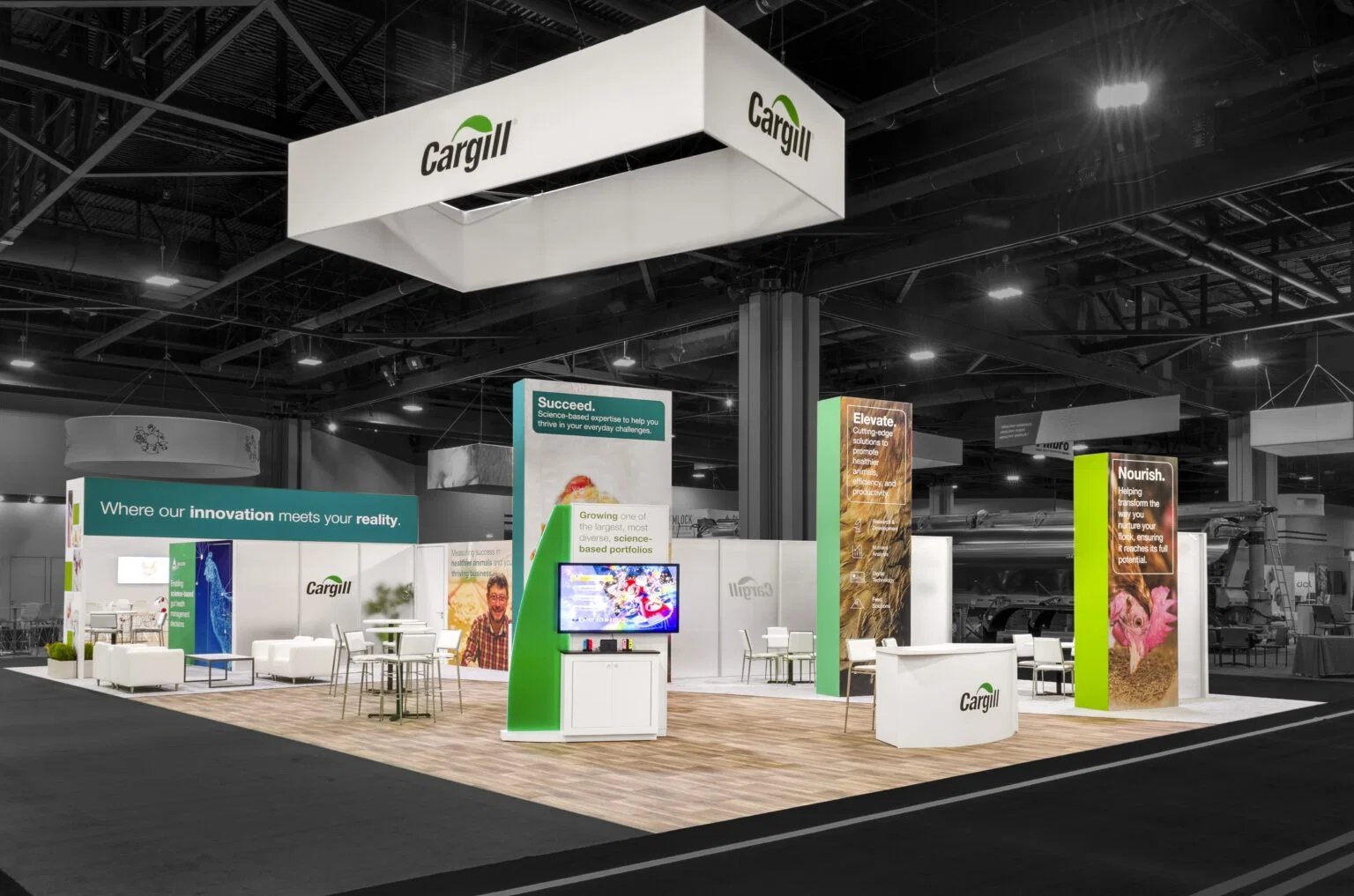
Charlotte has solidified its role as the Southeast’s leading convention destination, led by the Charlotte Convention Center’s 280,000 square feet of exhibit hall space and 154,000 square feet of breakout space. Supported by more than 6,400 walkable hotel rooms and over 200 restaurants and bars in Uptown, the city hosts events that reward carefully planned custom exhibit builds. The CRVA’s unified destination, sales, marketing, and venue-management structure creates a stable platform for exhibitors seeking to engage professional audiences drawn from across the region and nation.
Nineteen Fortune 1000 headquarters in financial services, retail, food services, manufacturing, aerospace, and technology generate consistent demand for sophisticated brand environments. The Charlotte region’s 3.2 million residents, 1.7 million-member labor force, and 13 percent five-year workforce growth further expand the pool of decision-makers who attend these events. Charlotte Douglas International Airport’s 53.6 million passengers in 2025 and nonstop service to more than 188 destinations simplify the movement of materials and personnel, supporting strategic custom exhibit programs that span multiple shows.
As a planning and coordination resource, the focus remains on aligning custom exhibit decisions with Charlotte’s specific market signals: its true convention inventory, corporate headquarters depth, foreign direct investment momentum, and varied venue clusters ranging from the Uptown Convention Core to the Concord/Cabarrus corridor and adaptive reuse spaces.
Mapping Custom Exhibits to Charlotte’s Primary Venue Clusters
The Uptown Convention Core, centered on the Charlotte Convention Center, NASCAR Hall of Fame, and major hotels such as the Westin, Hilton Charlotte Uptown, Charlotte Marriott City Center, Omni Charlotte Hotel, and JW Marriott Charlotte, demands custom exhibits built for scale and visibility. With 280,000 square feet of contiguous exhibit space and extensive walkable amenities, these venues support national shows where custom builds must deliver strong sightlines, professional meeting spaces, and integration with formal ballroom environments.
The Concord/Cabarrus Event Corridor offers a different profile. Locations including Embassy Suites Charlotte Concord, Concord Convention Center, Cabarrus Arena & Events Center, Great Wolf Lodge Concord, and Charlotte Motor Speedway suit regional conventions, consumer shows, and enthusiast programs. Custom exhibit builds planned for this cluster often prioritize interactivity and accessibility for drive-in attendance while maintaining brand consistency with larger Uptown appearances.
Adaptive Reuse and Activation Zone venues such as Camp North End, the Fillmore, the Underground, Spectrum Center, and Truist Field require exhibits that complement unique architectural character. These spaces favor experiential custom designs that support product launches, receptions, and sponsor activations where atmosphere carries equal weight with square footage.
- Uptown Core: formal, large-scale convention focus
- Concord Corridor: regional and enthusiast-driven events
- Activation Zone: creative and atmosphere-focused programs
- South Charlotte: executive and polished hospitality
- South Carolina Extension: hybrid sports and lifestyle events
Corporate Audience Considerations for Custom Exhibit Strategy
The presence of 19 Fortune 1000 headquarters across multiple sectors requires the builds that project sophistication and facilitate substantive conversations. Financial services, manufacturing, aerospace, and technology companies set high standards for booth environments, making strategic design choices essential for credibility and engagement in the Charlotte market.
Foreign direct investment has added more than 8,400 jobs since 2022, bringing over 1,000 international businesses into the region. This diversity expands the audience profile and encourages custom exhibits that can address both domestic and global business perspectives within the same footprint. The Charlotte metro’s second-place national ranking for job growth among large metros at the end of 2025 signals continued expansion of this professional base.
Planning therefore begins with audience mapping. Custom builds should incorporate demonstration areas, private consultation spaces, and technology that align with the decision-making processes common among Charlotte’s corporate attendees, ensuring every element supports measurable business outcomes.
Logistics Coordination for Custom Exhibit Programs in Charlotte
Effective the builds depend on precise logistics planning, including shipping, advance warehouse coordination, drayage, and material handling timed to Charlotte venue schedules. The city’s central Southeast location and superior air connectivity through Charlotte Douglas International Airport reduce many transit variables for national exhibitors.
The CRVA’s unified management of the convention center, NASCAR Hall of Fame, and Bojangles Entertainment Complex provides a predictable operational backdrop. Coordination resources help align custom exhibit timelines with broader show requirements, minimizing conflicts during move-in and move-out at any of the region’s venue clusters.
Long-term asset management further influences build decisions. Exhibits engineered for durability and modularity can be reconfigured for repeated use across Charlotte’s growing calendar of events, improving return on investment while reducing repeated fabrication costs.
- Early alignment of shipping and drayage schedules
- Integration with venue-specific move-in windows
- Focus on multi-event reusability and storage planning
- Coordination with exhibitor-appointed contractors
Technology and Graphics Integration in Charlotte Custom Builds
Modern Charlotte events frequently incorporate advanced audiovisual elements. The builds are increasingly planned with LED walls, video systems, interactive displays, and targeted lighting to stand out within the convention center’s expansive halls or the more intimate adaptive venues.
A regional labor force of 1.7 million supports availability of technical expertise. Early coordination between design, fabrication, and production partners ensures technology integrates cleanly into the physical structure and performs reliably throughout the show schedule.
High-quality graphics and digital components must be developed with the Charlotte audience in mind. Whether communicating complex financial products or aerospace innovations, these elements should deliver clear messaging that resonates with the knowledgeable professionals who attend regional events.
Labor Coordination Within North Carolina’s Right-to-Work Framework
North Carolina’s right-to-work statute creates a flexible labor environment that affects installation, dismantle, and supervision of custom exhibits. This framework allows exhibitors greater choice in contractor selection and can streamline on-site operations at venues ranging from the Charlotte Convention Center to Cabarrus Arena.
Combined with the region’s 13 percent workforce growth and deep labor pool, the statute supports efficient coordination of skilled personnel needed for complex custom builds. Planning resources help map labor requirements to each event’s scale and the specific venue cluster involved.
Understanding these regulations early assists with accurate budgeting and scheduling. Whether managing a large Uptown installation or a specialized activation at Camp North End, proper labor alignment keeps the focus on audience engagement rather than operational friction.
Strategic Planning Process for Long-Term Success in Charlotte
Successful custom exhibit programs in Charlotte begin with clear definition of objectives, target corporate segments, and venue specifications. This assessment draws on the city’s convention inventory, corporate headquarters concentration, and varied event clusters to shape every subsequent decision.
Design and fabrication considerations follow, emphasizing scalability, transportability, and integration with technology that performs across multiple Charlotte venues. Coordination then extends to logistics, labor, graphics production, and post-show asset management to maintain consistency across the market’s annual calendar.
Measurement completes the cycle. Tracking lead quality, meeting volume, and brand impressions within the 280,000-square-foot convention center environment or specialized corridor venues provides data for refining future builds. This disciplined approach treats custom exhibits as strategic assets rather than one-off expenses.
The result is a coordinated program that leverages Charlotte’s infrastructure, audience depth, and destination appeal for sustained competitive advantage.
- Audience and objective assessment
- Venue-specific design adaptation
- Integrated logistics and labor planning
- Technology and graphics alignment
- Post-event measurement and refinement
Common Questions About Custom Exhibit Builds for Charlotte Events
What makes Charlotte a strong market for investment in custom exhibit builds?
The combination of the Charlotte Convention Center’s 280,000 square feet of exhibit space, 19 Fortune 1000 corporate headquarters, 13 percent workforce growth, and Charlotte Douglas International Airport’s extensive connectivity creates consistent demand for high-quality brand environments. The CRVA’s unified management further supports predictable event planning across multiple venue types.
How do Charlotte’s venue clusters influence custom exhibit specifications?
Uptown venues favor large-scale, formal designs with strong sightlines. Concord/Cabarrus locations suit interactive and enthusiast-oriented builds. Adaptive reuse spaces call for experiential approaches that match unique architecture. South Charlotte and Rock Hill venues support polished executive or hybrid sports-and-lifestyle programs. Early cluster identification shapes scale, materials, and technology choices.
How does North Carolina’s right-to-work status affect custom exhibit coordination?
The statute provides a flexible labor environment that increases contractor options and can simplify scheduling for installation and dismantle. When combined with the region’s 1.7 million labor force, it supports efficient on-site execution while allowing exhibitors to maintain control through exhibitor-appointed contractors.
What role does Charlotte Douglas International Airport play in custom exhibit success?
The airport’s 53.6 million passengers in 2025 and nonstop flights to more than 188 destinations ease movement of exhibit components, specialized equipment, and team members. This connectivity reduces logistical risk for national and international exhibitors bringing custom builds into the Charlotte market.
Should this work for Charlotte prioritize reusability?
Yes. With a growing events calendar supported by the convention center, corporate headquarters, and multiple venue clusters, durable modular designs allow reconfiguration across shows. This approach improves return on investment while maintaining brand consistency in a market that rewards repeated high-quality presence.
How can exhibitors measure ROI on custom builds in the Charlotte market?
Focus on lead quality and volume from the region’s Fortune 1000 and growing professional base, meeting counts within the 280,000-square-foot exhibit environment, and brand impressions across Uptown, Concord, or activation venues. Tracking performance against defined objectives provides clear data for future planning.