
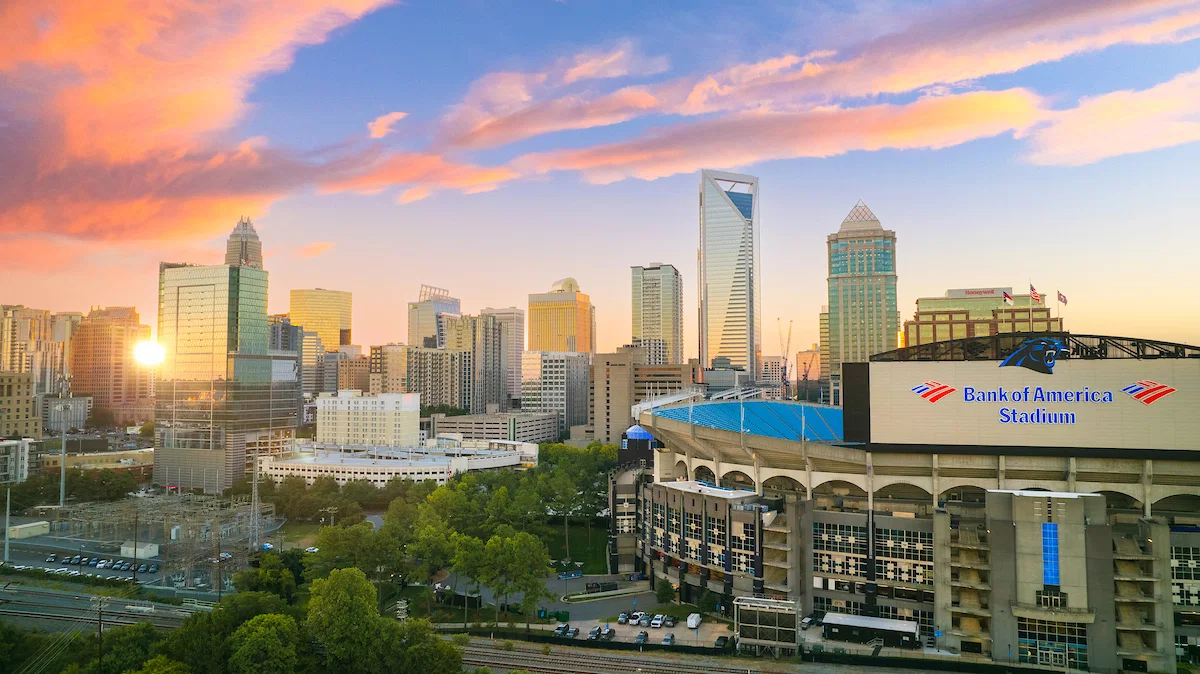
Uptown Charlotte operates as the primary convention and exhibition district in a market that continues to expand its meeting infrastructure. The area consolidates substantial exhibit and meeting space with immediate access to thousands of hotel rooms and hundreds of dining options, creating an environment where planners can coordinate efficient attendee experiences without extensive external logistics. This centralization supports conventions, trade shows, and hybrid corporate programs that benefit from proximity between sessions, exhibits, and networking opportunities.
The Charlotte Convention Center provides the foundational capacity with its 600,000-square-foot structure, including 280,000 square feet of exhibit hall space and 154,000 square feet of breakout space. Paired with more than 6,400 walkable hotel rooms and over 200 nearby restaurants and bars, the district enables smooth transitions throughout multi-day events. Official destination resources emphasize this walkability as a core advantage for both planners and participants in the Southeast's growing meetings landscape.
Coordination efforts in Uptown Charlotte focus on aligning venue specifications, attendee flow, and market context to produce successful outcomes. Drawing on established economic indicators and infrastructure details, planning resources help organizers navigate the district's capabilities while integrating broader regional growth factors that drive attendance and sponsorship potential.
Uptown Charlotte as the Southeast Convention Anchor
The district functions as the central node for convention activity in a region that has seen sustained population and job expansion. Official materials from Charlotte Meetings position Uptown as the heart of the city's meeting offerings, highlighting its ability to support exhibit-heavy events alongside breakout sessions and sponsor functions. This concentration reduces coordination complexity by keeping the majority of event elements within a compact, pedestrian-friendly zone that encourages organic interaction among attendees.
Planners benefit from the district's established infrastructure that accommodates both large trade shows and more focused conferences. The presence of multiple hotel properties directly adjacent to primary venues allows for strategic room block distribution and minimizes transportation requirements between lodging, exhibit halls, and evening programming. Such attributes make Uptown Charlotte a practical choice for national organizers seeking efficient Southeast destinations.
Market signals reinforce this positioning, with the CRVA providing a unified structure for sales, marketing, and venue oversight that includes the convention center and adjacent attractions. This framework supports consistent standards across events while allowing customization to specific industry needs.
- Primary hub for conventions and exhibit-focused programs
- Supports ballroom breakouts and sponsor activations
- Benefits from dense urban nightlife and amenities
Charlotte Convention Center Specifications and Capabilities
As the flagship facility in Uptown, the Charlotte Convention Center delivers 600,000 square feet of total space, with 280,000 square feet dedicated to exhibit halls and 154,000 square feet allocated for breakout and meeting rooms. These dimensions accommodate a wide range of trade show formats, from booth-based exhibitions to theater-style presentations and interactive demonstrations. Floor plans and service documentation allow planners to configure layouts that maximize visibility and traffic flow within the halls.
The center's design integrates with surrounding infrastructure to support full-event programming without requiring off-site shuttles for core activities. Coordination typically involves detailed review of space allocations to ensure exhibit areas, registration zones, and session rooms align with expected attendance patterns. This precision helps prevent bottlenecks and enhances overall operational efficiency during peak event days.
Official resources outline the facility's flexibility for both large-scale conventions and segmented conferences, making it suitable for industries that require substantial display space alongside educational programming. Planners reference these specifications early in the site selection process to confirm alignment with event objectives and growth projections.
- 600,000 total square feet
- 280,000 square feet of exhibit hall space
- 154,000 square feet of breakout and meeting space
Walkable Hotel Infrastructure and Hospitality Options
More than 6,400 hotel rooms sit within walking distance of the Charlotte Convention Center, distributed across several full-service properties that include the Westin, Hilton Charlotte Uptown, Charlotte Marriott City Center, Omni Charlotte Hotel, and JW Marriott Charlotte. This inventory supports strategic room block management across different price tiers and amenity levels, allowing coordination teams to match accommodations to attendee segments such as exhibitors, speakers, and general participants.
The pedestrian connectivity between these hotels and the convention center simplifies daily schedules and reduces the need for additional transportation coordination. Planners often map primary routes and gathering points to facilitate smooth movement during morning arrivals, midday transitions, and evening dispersals. This proximity also enables impromptu networking that can extend the value of formal programming.
Hospitality options within the district further strengthen event appeal by providing on-site restaurants, lounges, and meeting spaces that can host smaller receptions or overflow sessions. These elements allow for integrated planning that keeps the majority of activity contained within the Uptown footprint.
Global Connectivity Through Charlotte Douglas International Airport
Charlotte Douglas International Airport processed 53.6 million passengers in 2025 and maintains nonstop service to more than 188 destinations, delivering strong national and international access for a Southeast market. This connectivity supports attendance from across the United States and key global markets, enabling exhibitors to bring field teams and corporate leadership with minimal transit complications. Planning timelines frequently incorporate flight patterns to optimize arrival windows and reduce jet lag factors for international participants.
The airport's scale contributes to reliable scheduling for both inbound and outbound travel, which proves valuable for events with tight multi-day agendas. Coordination resources often include guidance on ground transportation options between the airport and Uptown hotels to ensure timely starts for registration and opening sessions. Such logistics planning helps maintain attendee satisfaction throughout the event lifecycle.
Combined with the region's expanding international business presence, this air access positions Uptown Charlotte as an increasingly viable location for trade shows targeting broader audiences. Economic reports note more than 1,000 international businesses now operating in the area, adding depth to potential attendee pools.
- 53.6 million passengers handled in 2025
- Nonstop flights to over 188 destinations
- Key Southeast gateway for national and global travel
Economic Momentum and Corporate Demand Drivers
The Charlotte region includes 3.2 million people and a labor force of 1.7 million that has expanded by 13 percent over five years, creating a substantial base for both local participation and corporate event attendance. Nineteen Fortune 1000 headquarters span sectors including financial services, retail, manufacturing, aerospace, and technology, generating consistent demand for industry-specific trade shows and supplier conferences held in Uptown venues.
Recent performance metrics show the Charlotte metro ranked second nationally for job growth among large metros by the end of 2025, alongside the addition of more than 8,400 jobs from foreign direct investment since 2022. These factors contribute to a dynamic business environment that supports sponsorship opportunities and targeted attendee recruitment for events coordinated in the district.
Planners reference these economic indicators when developing outreach strategies and justifying site selection to stakeholders. The combination of corporate density, workforce growth, and international business expansion creates a supportive context for events that seek both regional and national draw.
Destination planners maintain a unified approach through the CRVA that aligns venue management with these market realities, helping ensure that Uptown programming reflects current economic opportunities.
- 3.2 million regional population
- 1.7 million in the labor force with 13 percent growth
- 19 Fortune 1000 headquarters
- Second nationally in large-metro job growth
Complementary Venues and Activation Opportunities
The Uptown Convention Core extends beyond the main exhibit facility to include the NASCAR Hall of Fame, which provides thematic backdrops suitable for certain industry events and hospitality functions. Additional activation-oriented spaces such as Camp North End, the Fillmore, the Underground, Spectrum Center, and Truist Field offer alternatives for receptions, product launches, and branded experiences that complement primary programming at the convention center.
These venues allow coordination of multi-site events while remaining within the broader Uptown radius, preserving the convenience of limited transportation needs. Planning involves careful scheduling to maintain thematic continuity and efficient attendee movement between locations. Such integration expands the range of experiences available without leaving the district's core advantages.
Adaptive reuse and entertainment venues prove particularly effective for sponsor activations and evening events where atmosphere contributes significantly to engagement. Official venue documentation supports planners in matching these spaces to specific event segments for optimal impact.
- NASCAR Hall of Fame for thematic programming
- Camp North End and Spectrum Center for activations
- The Fillmore and Truist Field for entertainment hybrids
Strategic Coordination Approaches for Successful Outcomes
Effective planning for Uptown Charlotte events begins with thorough analysis of venue floor plans, capacity specifications, and service options to align physical assets with program goals. This includes detailed mapping of exhibit layouts, session sequencing, and traffic patterns to optimize flow and minimize wait times. Coordination frameworks emphasize early integration of these technical details with broader event objectives.
Market context informs outreach and content development, leveraging the region's corporate headquarters concentration and economic growth to shape attendee acquisition and sponsorship strategies. Timing decisions consider the annual calendar of regional events to secure favorable dates and avoid conflicts with competing draws.
Logistical coordination also addresses registration systems, technology requirements, and post-event evaluation methods that capture actionable insights. By maintaining focus on data-driven adjustments, planners can refine approaches across multiple events in the district.
The overall methodology treats Uptown Charlotte as a sophisticated environment where precise alignment of infrastructure, audience profiles, and programming produces measurable results for trade show organizers and exhibitors.
Frequently Asked Questions About Uptown Charlotte Events
What are the primary specifications of the Charlotte Convention Center?
The facility totals 600,000 square feet, including 280,000 square feet of exhibit hall space and 154,000 square feet of breakout and meeting space. It serves as the anchor for conventions, trade shows, and conferences in the Uptown district.
How many hotel rooms are accessible by foot in Uptown Charlotte?
More than 6,400 hotel rooms are located within walking distance of the Charlotte Convention Center, spread across properties including the Westin, Hilton Charlotte Uptown, Charlotte Marriott City Center, Omni Charlotte Hotel, and JW Marriott Charlotte.
What level of air access does Charlotte Douglas International Airport provide?
The airport handled 53.6 million passengers in 2025 and offers nonstop service to more than 188 destinations, supporting efficient national and international attendance for Uptown events.
Which corporate and economic factors influence demand in Uptown Charlotte?
The region features 19 Fortune 1000 headquarters, 13 percent five-year workforce growth, and second-place national ranking for job growth among large metros, alongside substantial foreign direct investment.
What dining and entertainment options exist near the convention center?
More than 200 restaurants and bars are located within walking distance in Uptown, providing diverse options that support networking, sponsor events, and attendee dining throughout trade shows and conferences.
Which venues complement the Charlotte Convention Center in Uptown?
Complementary sites include the NASCAR Hall of Fame for thematic events and activation spaces such as Camp North End, the Fillmore, Spectrum Center, and Truist Field for receptions and branded experiences.