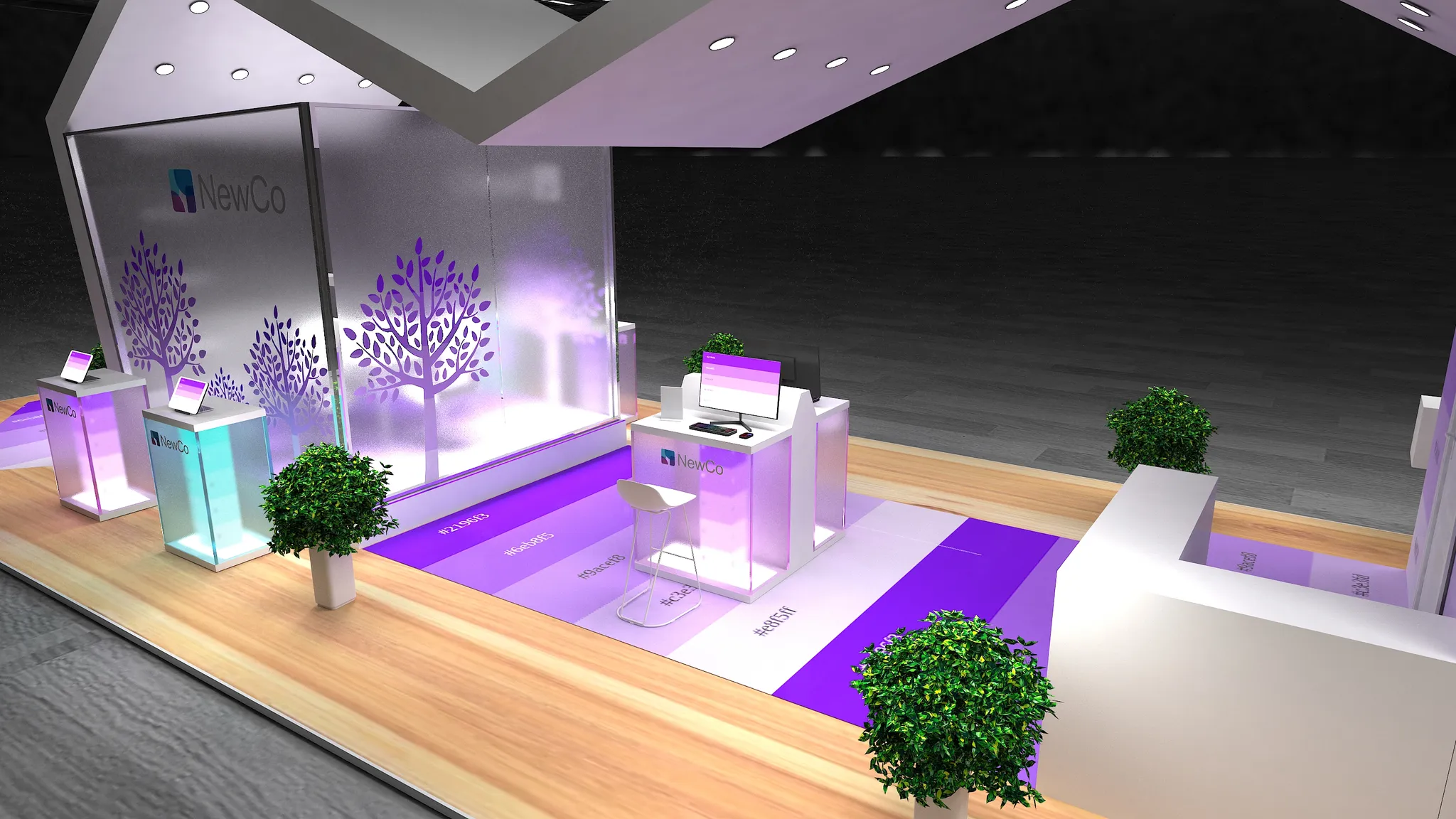
An island exhibit booth stands apart as a freestanding structure open on all four sides, eliminating the constraints of back walls or neighboring exhibits. This format allows complete control over visitor flow and creates powerful first impressions in busy exhibit halls. In Charlotte, where the convention center provides 280,000 square feet of exhibit space, island configurations help exhibitors stand out amid sophisticated audiences drawn from the region's 19 Fortune 1000 headquarters and growing international business community.
Charlotte's position as the Southeast's premier meeting destination, supported by global air access through Charlotte Douglas International Airport with service to over 188 destinations, makes island exhibits particularly effective for national and international exhibitors. The format supports immersive experiences that align with the needs of banking and financial services conferences, advanced manufacturing showcases, and motorsports activations near Charlotte Motor Speedway.
Planning an island exhibit requires careful attention to dimensions, structural integrity, lighting, and digital integration to maximize return on investment. Coordination resources help align these elements with the specific requirements of venues across Uptown Charlotte, Concord, and surrounding areas in the 15-county region.
Understanding Island Exhibit Booths
Island exhibit booths represent one of the most flexible and impactful formats available to exhibitors. Unlike inline or peninsula options that have one or more sides against walls or adjacent displays, island booths are completely surrounded by aisles. This setup provides attendees with unobstructed views and multiple entry points, encouraging natural exploration of the space. In Charlotte's dynamic event environment, where conventions draw professionals from across the Southeast and beyond, this openness translates into higher engagement rates and more meaningful interactions with audiences from diverse sectors.
The typical island booth occupies a minimum of 400 square feet, though many programs in the area utilize larger dimensions to create distinct functional zones. These might include central product showcases, perimeter branding walls, internal meeting spaces, and technology stations. The absence of a back wall means every surface must contribute to the overall narrative, requiring thoughtful design that maintains visual coherence from every angle. Structural elements must be self-supporting, and all graphics, lighting, and audiovisual components require careful placement for optimal effect regardless of visitor position.
Successful island exhibits also consider height and scale. Many venues in the Charlotte area, including the primary convention facility with its substantial ceiling clearances, allow for tall structures, towers, or even multi-level configurations that add visual drama and additional usable space. Planning these elements early helps avoid last-minute adjustments and ensures compliance with all safety and operational requirements common to large-scale events in a market with strong convention infrastructure.
- Self-supporting structures visible from all directions
- Multiple functional zones within a single footprint
- Comprehensive graphic and lighting programs
- Integrated technology for demonstrations and data capture
Why Island Booths Excel in the Charlotte Market
Charlotte has emerged as a leading destination for meetings and conventions in the Southeast, supported by extensive convention infrastructure and a strong corporate base. The Charlotte Convention Center offers 280,000 square feet of exhibit space, providing an ideal setting for island booths that can command attention in these large environments. With the city hosting events across banking, manufacturing, healthcare, and motorsports, exhibitors need formats that convey innovation and accessibility to audiences drawn from 1.7 million in the regional labor force.
The region's economic momentum, including its ranking for job growth among large U.S. Metros and significant foreign direct investment that has added more than 8,400 jobs since 2022, brings diverse audiences to local events. Island booths facilitate the kind of open, inclusive experiences that resonate with these groups. Attendees arriving via the airport's nonstop service to more than 188 destinations can approach from any direction, making the format particularly suitable for product launches, educational demonstrations, and networking areas that align with the professional nature of Charlotte events.
Furthermore, the concentration of venues in the Uptown core and the Concord corridor allows for coordinated multi-event strategies. An island booth designed for the convention center can be adapted for use at facilities in Cabarrus County or hospitality functions at area hotels. This versatility maximizes value across the annual event calendar in a region supported by unified destination management.
Design Strategies for Effective Island Exhibits
Effective design for island booths begins with a clear understanding of event objectives and audience behavior. Traffic flow should be intuitive, guiding visitors through key messaging areas without congestion. Central elements often serve as focal points, while perimeter features draw people in from the aisles. In Charlotte, where many events feature technical or financial content from the second-largest U.S. Financial center, designs frequently incorporate clean lines, interactive screens, and comfortable seating to facilitate in-depth conversations.
Material selection plays a critical role in creating impressive yet manageable structures. Lightweight yet durable options, high-resolution graphics, and strategic lighting create visual impact that works from every approach. Digital integration, including video walls and interactive stations, helps exhibitors present complex information in engaging ways that suit the innovation-driven sectors prominent in the Charlotte economy, from advanced manufacturing to technology and life sciences.
Collaboration during the design phase ensures the booth meets both creative and practical requirements. Early renderings and models allow stakeholders to evaluate the experience from all angles before fabrication begins. This process helps optimize the layout for the specific square footage allocated and the anticipated attendee volume at Charlotte events hosted across the convention center, adaptive reuse spaces, and regional venues.
- Create clear pathways for natural movement through the space
- Balance branding elements with functional interaction zones
- Ensure every surface contributes to the 360-degree experience
- Integrate digital tools that support sector-specific content delivery
Coordinating with Charlotte Area Venues
The Charlotte Convention Center serves as the cornerstone for many island booth programs, with its extensive exhibit halls designed for large-scale trade shows and association meetings. Planners must account for floor specifications, utility connections, and height allowances when designing island structures. The facility's central Uptown location, surrounded by walkable hotels including the Westin, Hilton, Marriott, and Omni properties, enhances convenience for both exhibitors and attendees at major events.
Additional opportunities exist throughout the greater Charlotte region. The Concord and Cabarrus County area offers venues such as the Cabarrus Arena and Events Center, Embassy Suites Concord Convention Center, and spaces adjacent to Charlotte Motor Speedway. These locations often appeal to motorsports-related programs and regional events. Adaptive reuse venues like Camp North End and other activation spaces provide unique atmospheric settings for more experiential island booth designs that complement the market's diverse event mix.
Each venue presents distinct specifications that influence booth engineering, setup, and dismantling. Early review of available floor plans and technical information prevents complications. The destination's unified planning framework helps streamline coordination across different facilities, allowing exhibitors to maintain consistency in their island booth presentations whether in the Uptown core, SouthPark, University City, or secondary markets like Huntersville, Monroe, or Rock Hill.
Applications Across Charlotte's Key Industries
Charlotte's status as the second-largest financial center in the United States creates substantial demand for island exhibits at banking and finance conferences. These booths often feature secure meeting areas, interactive data visualizations, and professional hospitality zones that reflect industry standards. The open format allows institutions to showcase new technologies and services while hosting discussions in an accessible yet controlled environment that aligns with the expectations of executive audiences.
In advanced manufacturing, logistics, and international business, island booths provide space for equipment demonstrations, supply chain models, and workforce presentations. The region's manufacturing strength, logistics advantages through the airport, and addition of more than 1,000 international businesses make these interactive displays particularly valuable. Life sciences and healthcare exhibitors utilize the format to present educational content and engage with professionals in compliant, open settings suitable for the market's medical and research footprint.
The motorsports and automotive sector, supported by NASCAR Hall of Fame, Charlotte Motor Speedway, and related assets, benefits from island booths that can incorporate vehicle displays, simulation experiences, and engagement zones. Technology and corporate innovation companies leverage the same format for product launches and partnership development, taking advantage of the market's headquarters density, 13 percent five-year workforce growth, and innovation economy to connect with decision-makers from across the 15-county region.
- Financial services: data visualization paired with client meeting spaces
- Manufacturing and logistics: hands-on equipment and process demonstrations
- Motorsports: experiential vehicle and technology showcases
- Life sciences and technology: educational and interactive presentation areas
Project Planning and Timeline Management
Successful island exhibit programs in Charlotte follow a structured planning timeline that accounts for the complexity of freestanding designs. Initial concept development, objective setting, and budgeting are followed by detailed design reviews, material selection, fabrication, and pre-event testing. This schedule allows sufficient time for refinements and approvals while aligning with the event calendars at major venues like the Charlotte Convention Center and supporting facilities.
Coordination involves clear documentation and communication with all parties responsible for transportation, installation, and on-site management. Developing contingency plans for potential changes in attendee numbers or event specifications helps maintain program integrity. The consistent event activity in Charlotte, driven by corporate growth and convention momentum, rewards those who treat island booths as long-term marketing assets rather than one-off projects.
Post-event analysis forms a critical part of the planning cycle. Evaluating metrics such as attendee traffic patterns, engagement duration, lead quality, and brand recall helps refine future iterations. In a market with strong demand drivers across six key industries and a growing population base, data-driven adjustments ensure island exhibits continue to deliver value as the Charlotte region expands its position as a premier Southeast destination for meetings and trade shows.
Emerging Trends Shaping Island Exhibits in Charlotte
As Charlotte continues its economic expansion with notable job growth and foreign investment, island exhibit design continues to evolve toward greater modularity and technological integration. Emerging approaches emphasize reusable components that can be reconfigured across multiple events in the Uptown core, Concord corridor, or South Charlotte venues. This adaptability supports sustainable practices while addressing the varied requirements of finance, manufacturing, and technology exhibitors active in the market.
Sustainability considerations now influence material choices, lighting solutions, and construction methods for many programs. Designs that incorporate energy-efficient systems, responsibly sourced materials, and end-of-life recycling options align with corporate responsibility goals common among the region's headquarters companies. The scale of island booths provides ample opportunity to integrate these features prominently without compromising the immersive experiences attendees expect.
Hybrid engagement capabilities are increasingly incorporated into island designs. Elements that support both live and virtual participation through smooth streaming, interactive digital interfaces, and content capture tools help exhibitors reach broader audiences. This trend is especially relevant in a market with strong technology and innovation sectors, global air connectivity, and a unified destination management structure that facilitates sophisticated events.
Frequently Asked Questions About Island Exhibit Booths in Charlotte
What defines an island exhibit booth compared to other formats?
An island exhibit booth is a freestanding structure fully accessible from all four sides with no shared walls. This allows for 360-degree visibility and flexible traffic flow, making it well-suited for the large exhibit halls at the Charlotte Convention Center and other regional venues where visibility and engagement are priorities.
Which Charlotte industries commonly use island exhibit booths?
Banking and financial services, advanced manufacturing, life sciences and healthcare, logistics and international business, motorsports and automotive, and technology and corporate innovation sectors all utilize island booths. These formats support the demonstration, networking, and branding needs driven by the region's 19 Fortune 1000 headquarters and economic growth.
What venue factors should be considered for island booths in Charlotte?
Key considerations include the 280,000 square feet of exhibit space at the Charlotte Convention Center, ceiling heights for tall or multi-level structures, utility access, and load capacities. Secondary venues in Concord, Cabarrus County, and adaptive spaces offer additional options with their own specifications that influence design and coordination.
When should planning begin for an island exhibit in the Charlotte market?
Planning ideally starts nine to twelve months in advance to accommodate concept development, design approvals, fabrication, and venue coordination. This timeline supports the complexity of 360-degree structures and aligns with the active convention calendar across Uptown Charlotte and surrounding areas.
Can island booths incorporate multi-level or technology elements?
Yes, larger island configurations can include double-deck elements, towers, integrated video walls, interactive stations, and streaming capabilities when engineered to meet venue requirements. These features enhance engagement for Charlotte events in technical, financial, and experiential sectors.
Why is Charlotte a suitable market for island exhibit programs?
Charlotte combines major convention infrastructure, a growing corporate base, global airport access, and diverse demand drivers including finance, manufacturing, and motorsports. The 3.2 million person region with strong job growth supports consistent events where high-visibility, open-format exhibits deliver strong results.