
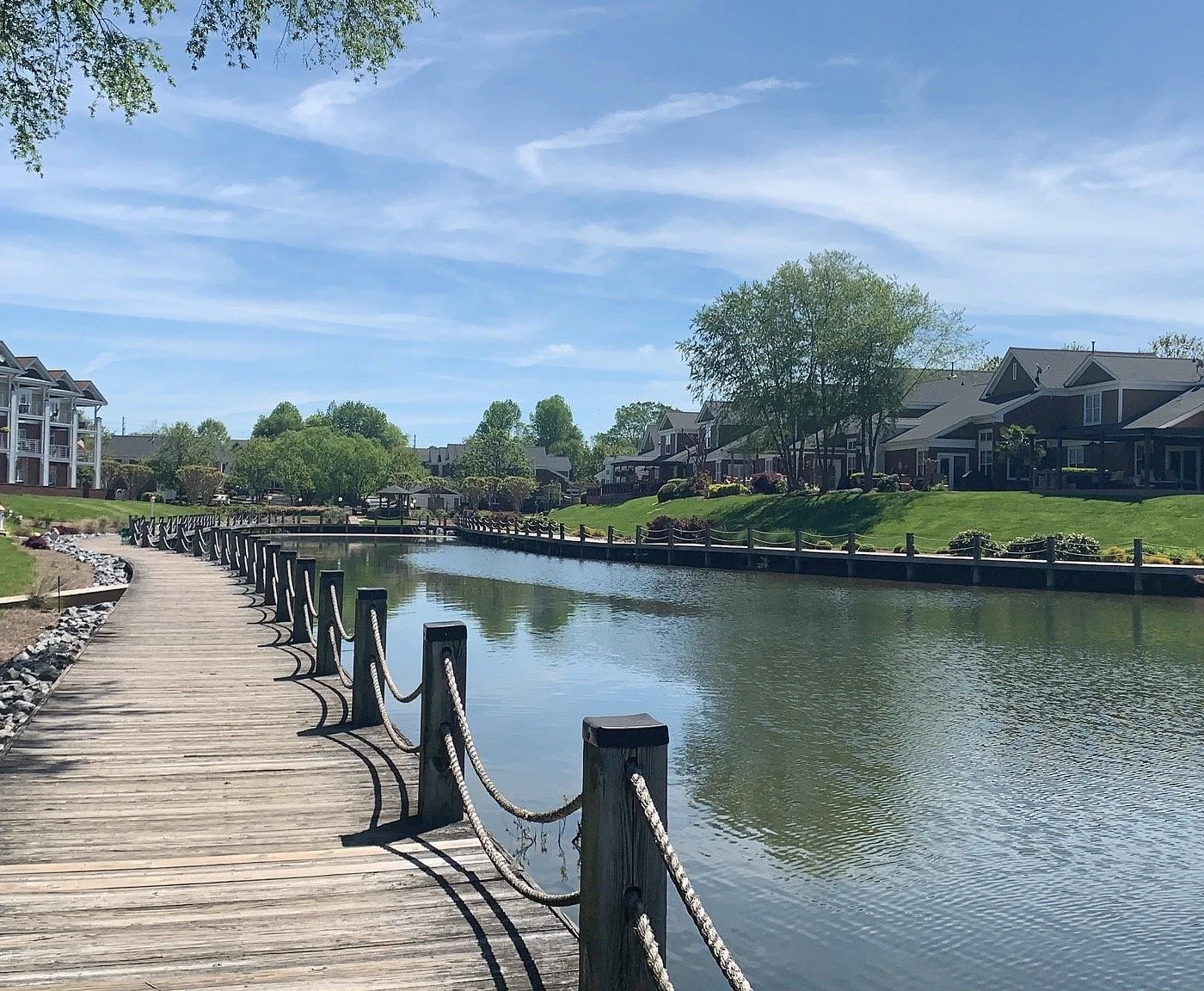
Cornelius occupies a distinctive supporting position in the Charlotte events ecosystem as part of the Lake Norman zone. This northern community supplies additional lodging, leisure, and audience reach for programs anchored in the region's primary convention inventory. Planners gain from the ability to combine waterfront appeal with direct access to major facilities in Concord and Uptown Charlotte, creating balanced attendee experiences that serve both regional and national audiences.
The broader Charlotte Region encompasses 3.2 million people and 1.7 million in the labor force, with 13 percent workforce growth over five years. Nineteen Fortune 1000 headquarters span financial services, manufacturing, aerospace, and technology, generating sustained demand for trade shows, product launches, conferences, and branded activations. Global connectivity through Charlotte Douglas International Airport, which handled 53.6 million passengers in 2025 with nonstop service to more than 188 destinations, further strengthens the market's ability to attract out-of-town exhibitors and delegates.
Effective coordination translates these market fundamentals into successful outcomes. By aligning event objectives with verified venue specifications, transportation networks, and economic drivers, planners can optimize logistics, control costs, and deliver measurable results across the northern Charlotte corridor.
Cornelius Within the Expanding Charlotte Events Footprint
The Charlotte market extends across multiple distinct zones, including Uptown convention inventory, south-market executive corridors, Concord and Cabarrus demand centers, Lake Norman support areas, and extensions into South Carolina. Cornelius functions as a practical component of the Lake Norman support zone, enabling programs that require overflow capacity or benefit from the area's recreational and hospitality infrastructure. This distributed geography allows planners to source attendees from both the 3.2 million residents of the 15-county region and the growing number of international businesses now exceeding 1,000 in the area.
Official regional reporting underscores consistent expansion. The Charlotte Region added more than 8,400 jobs from foreign direct investment since 2022 while ranking second nationally for job growth among large metros by the end of 2025. These indicators translate into higher volumes of trade shows, buyer summits, and industry conferences that frequently seek locations offering both professional facilities and appealing off-program activities. Cornelius supplies one element of that mix without requiring programs to abandon the scale of dedicated convention infrastructure located farther south.
Coordination at this scale involves mapping audience origins, hotel room blocks, and transportation flows against specific venue capabilities. The result is an event footprint that respects both the relaxed character of Lake Norman and the operational rigor demanded by national exhibitors.
- Lake Norman support role within documented 34-location market distribution
- Access to audiences across 15 counties and multiple Fortune 1000 employers
- Balanced programming that pairs leisure amenities with convention-grade execution
- Documented foreign direct investment supporting international exhibitor interest
Airport Connectivity Advantages for National and International Exhibitors
Charlotte Douglas International Airport represents a significant logistical asset for events that include Cornelius in their planning. The facility processed 53.6 million passengers in 2025 and maintains nonstop routes to more than 188 destinations. This connectivity reduces travel friction for exhibitors, speakers, and attendees arriving from across the United States and key international markets, supporting tighter schedules and lower overall transportation costs.
For trade show organizers, reliable air access directly influences booth staffing decisions and the feasibility of last-minute adjustments. Teams can coordinate shipments and personnel movement with greater confidence when the primary airport sits within a reasonable drive of both Cornelius lodging options and primary venues. The airport's scale also signals broader market maturity, reinforcing Charlotte's standing as the Southeast's premier meeting and convention destination according to official positioning by Charlotte Meetings.
Effective planning incorporates flight pattern analysis, ground transportation timing, and contingency protocols. When aligned correctly, these elements allow exhibitors to focus on engagement rather than logistics while still capitalizing on the full depth of the Charlotte Region's 1.7 million labor force and expanding corporate base.
Proximity to Major Venue Clusters Serving the Northern Corridor
Cornelius sits within practical driving distance of several documented venue clusters that define Charlotte's event capacity. The Concord / Cabarrus Event Corridor supplies specialized facilities well suited to regional conventions, consumer shows, enthusiast events, and corporate hospitality. Key locations include the Embassy Suites Charlotte Concord / Concord Convention Center, Cabarrus Arena & Events Center, Great Wolf Lodge Concord, Charlotte Motor Speedway, and Ten Tenths Motor Club. These assets accommodate both exhibit-heavy programs and experiential formats that align with drive-in attendance patterns common to the northern sector.
Farther south, the Uptown Convention Core provides true convention inventory through the Charlotte Convention Center, which totals 600,000 square feet with 280,000 square feet of exhibit hall space and 154,000 square feet of breakout space. More than 6,400 hotel rooms lie within walking distance, supported by 200-plus restaurants and bars. Additional adaptive reuse and activation venues such as Camp North End, the Fillmore, and Spectrum Center offer atmospheric alternatives for receptions, sponsor events, and brand experiences where environment carries equal weight with square footage.
South Charlotte executive venues and the South Carolina Extension round out the ecosystem, supplying options scaled for training sessions, smaller conferences, sports-and-events hybrids, and polished client entertainment. Professional coordination maps these assets against program goals, audience profiles, and budget parameters to produce cohesive multi-venue strategies.
- Concord Convention Center and Cabarrus Arena for regional-scale events
- Charlotte Convention Center offering 280,000 square feet of exhibit space
- Activation venues including Camp North End and Spectrum Center
- South Carolina Extension at Rock Hill Sports & Event Center for hybrid programs
Economic and Corporate Drivers Shaping Event Demand
Nineteen Fortune 1000 headquarters located in the Charlotte Region create concentrated demand for targeted industry exhibitions, supplier summits, and innovation showcases. These companies operate across financial services, retail, food services, manufacturing, aerospace, and technology, each requiring platforms to engage customers, partners, and talent. The 13 percent five-year workforce growth and national leadership in job creation further amplify the need for professional gathering spaces that can accommodate both established enterprises and emerging players.
Foreign direct investment has produced more than 8,400 new jobs since 2022, expanding the pool of international businesses now operating in the market to more than 1,000. This globalization supports trade shows with cross-border participation and exhibits that address sophisticated supply-chain and technology themes. Cornelius planners benefit from the ability to position events near Lake Norman while still drawing on the full corporate density anchored in Charlotte proper.
The CRVA's unified destination sales, marketing, and venue-management structure streamlines coordination across these economic realities. Official planners guides emphasize this integrated approach, which includes oversight of the convention center, NASCAR Hall of Fame, and Bojangles Entertainment Complex. Such centralization helps maintain consistency even when programs span multiple northern and central locations.
- 19 Fortune 1000 headquarters driving B2B exhibition demand
- 13 percent five-year labor force growth supporting attendee pools
- More than 8,400 FDI-created jobs since 2022
- Unified CRVA structure for destination-wide program alignment
Logistical Coordination Best Practices for Northern Market Programs
Successful events in the Cornelius area require precise alignment of transportation, lodging, exhibit scheduling, and audience flow. Professional planning resources evaluate the specific square footage, loading dock, and breakout requirements published for each venue, then match those specifications against exhibitor needs and expected attendance. This process prevents common pitfalls such as insufficient power, mismatched dock schedules, or overlooked permitting timelines.
Because the market mixes true convention inventory with adaptive and specialized spaces, coordination extends beyond single-venue execution. Programs may begin with executive sessions at a Concord property, transition to exhibit hours at the Cabarrus Arena, and conclude with hospitality activations at Lake Norman-area properties. Detailed timelines, stakeholder communication protocols, and contingency mapping ensure smooth handoffs between locations.
North Carolina's established right-to-work framework provides additional operational flexibility for labor arrangements, though all staffing decisions remain the responsibility of the exhibiting or organizing entity. Coordination expertise focuses instead on schedule optimization, material handling best practices, and metrics that tie directly to return on investment.
Developing a Measurable Event Strategy for Cornelius and Charlotte
Strategic planning begins with clear definition of objectives, whether lead generation, brand awareness, product education, or channel development. Market data on corporate density, workforce growth, and air connectivity then informs audience targeting and messaging frameworks. Venue selection follows, prioritizing facilities whose documented capabilities most closely match required square footage, ceiling height, and breakout capacity.
Post-event evaluation draws on the same regional signals used in initial planning. Attendance patterns, engagement metrics, and qualified lead volume can be benchmarked against the 3.2 million regional population and the specific industries represented by the 19 Fortune 1000 companies. This closed-loop approach supports continuous improvement across successive programs in the northern Charlotte corridor.
The Charlotte Meetings organization positions the city as the Southeast's premier convention destination, providing an authoritative backdrop for any event that incorporates Cornelius. Coordination resources help translate that positioning into concrete tactics that deliver measurable business outcomes while respecting the distinct character of Lake Norman communities.
- Objective setting informed by documented economic and demographic signals
- Venue mapping against published floor plans and capacity data
- Metrics tied to regional job growth and corporate headquarters density
- Iterative refinement using verified market intelligence
Why Coordinate Events Through Established Charlotte Market Resources
The complexity of combining Lake Norman support logistics with Uptown and Concord convention requirements favors experienced planning partners familiar with the full regional footprint. Such resources maintain current knowledge of venue specifications, airport procedures, hotel inventory fluctuations, and destination-wide initiatives managed by the CRVA. This knowledge base reduces planning cycles and minimizes unforeseen costs.
Exhibitors and corporate event managers gain most when coordination extends from initial site selection through final reporting. The process incorporates the latest data on passenger volumes at Charlotte Douglas, exhibit hall dimensions at the convention center, and demand drivers across the 15-county region. The outcome is a program that feels simultaneously localized to Cornelius and fully integrated with Charlotte's broader convention infrastructure.
Frequently Asked Questions
How does Cornelius support larger Charlotte trade shows?
Cornelius functions as part of the documented Lake Norman support zone, supplying additional lodging and audience access for events anchored at the Charlotte Convention Center or Concord/Cabarrus venues. Its location enables hybrid programs that combine northern hospitality with Uptown convention scale.
What is the capacity of the Charlotte Convention Center?
The facility totals 600,000 square feet, including 280,000 square feet of exhibit hall space and 154,000 square feet of breakout space, with more than 6,400 walkable hotel rooms according to official Charlotte Meetings data.
Why is Charlotte Douglas International Airport important for Cornelius events?
The airport handled 53.6 million passengers in 2025 and offers nonstop service to more than 188 destinations, providing exhibitors and national attendees strong connectivity within a short drive of Cornelius and Lake Norman.
Which venues are most relevant near Cornelius?
The Concord / Cabarrus Event Corridor, including the Embassy Suites Charlotte Concord, Concord Convention Center, Cabarrus Arena & Events Center, and Charlotte Motor Speedway, serves as the primary cluster for programs incorporating the northern Charlotte market.
What economic factors drive event demand in this region?
The Charlotte Region features 19 Fortune 1000 headquarters, 13 percent five-year workforce growth, 8,400 new jobs from foreign direct investment since 2022, and a national second-place ranking for job growth among large metros.
How does the CRVA support event planning?
The Charlotte Regional Visitors Authority maintains a unified destination sales, marketing, and venue-management structure that covers the convention center and multiple entertainment venues, streamlining coordination across the market.