
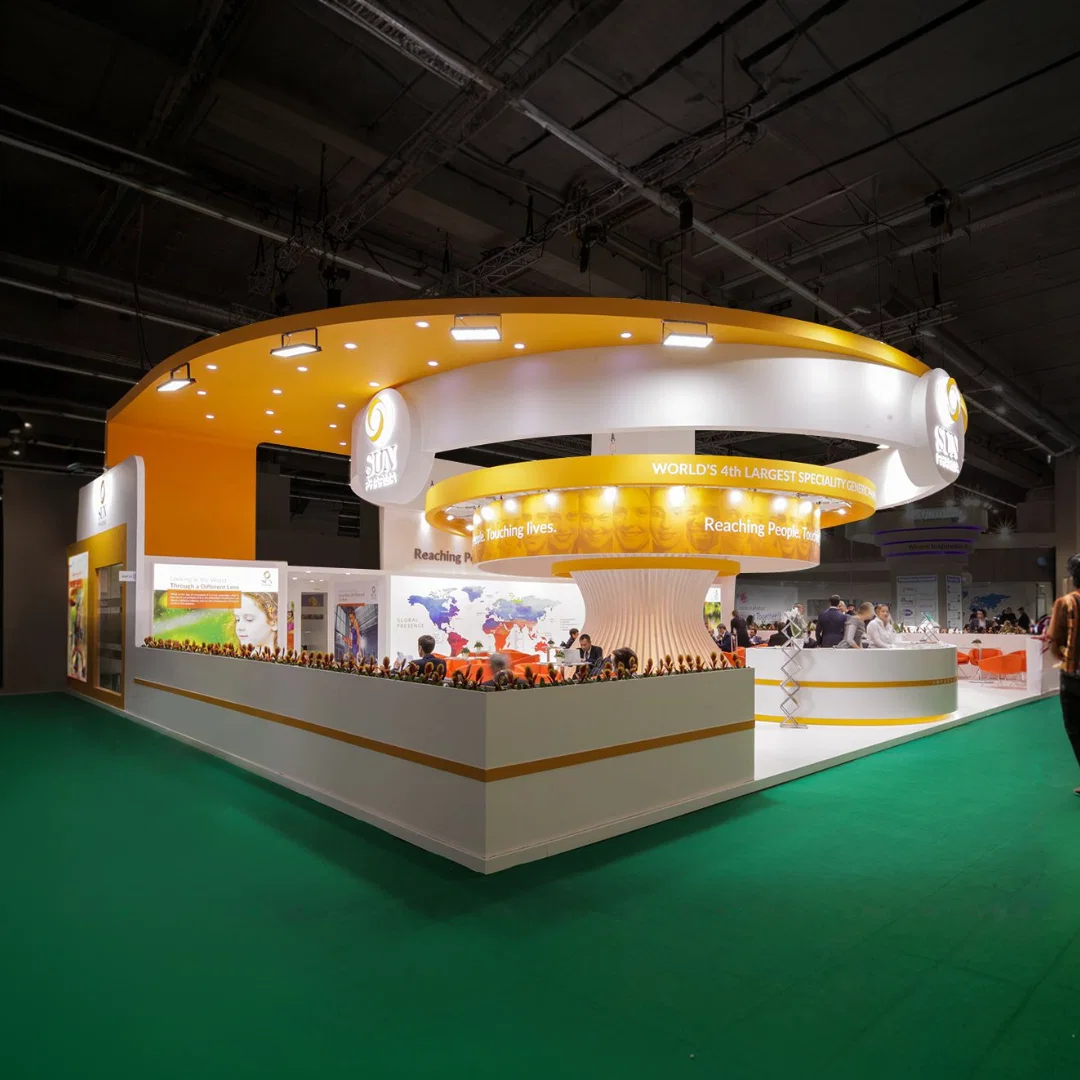
Lighting design serves as a cornerstone of impactful exhibit strategies, shaping how attendees perceive and interact with your brand at trade shows. In Charlotte, where the convention center provides 280,000 square feet of exhibit space and the region has 19 Fortune 1000 company headquarters, effective illumination can be the difference between being noticed and being overlooked.
As an authoritative planning and coordination resource, Trade Show Services of Charlotte guides exhibitors through the process of developing lighting concepts that align with specific venue requirements, event objectives, and budgetary parameters. We focus on strategic approaches that leverage the unique characteristics of Charlotte’s diverse event venues.
From the Uptown Convention Core to the Concord/Cabarrus Event Corridor and beyond, each location presents distinct opportunities for creative lighting applications that enhance visibility, create atmosphere, and support interactive experiences that deliver measurable results.
The Strategic Importance of Lighting in Trade Show Exhibits
Professional lighting design does more than simply make an exhibit visible. It creates visual hierarchy, emphasizes key messages, and evokes emotional responses that reinforce brand storytelling. In a market like Charlotte, which ranked second nationally for job growth among large metros by the end of 2025 and continues to attract foreign direct investment adding more than 8,400 jobs since 2022, exhibitors face sophisticated audiences who expect high-production presentations that reflect corporate standards.
The right lighting can guide attendee flow, highlight product innovations, and differentiate your booth from competitors within large exhibit halls. With over 1,000 international businesses now operating in the Charlotte region and a labor force of 1.7 million supported by 13 percent five-year workforce growth, lighting becomes an important tool for communicating innovation and attention to detail across diverse audiences.
Effective planning considers not only the aesthetic impact but also practical factors such as power consumption, heat generation, and maintenance requirements throughout multi-day events. This comprehensive approach ensures that lighting contributes positively to overall exhibit performance and return on investment while respecting the operational realities of Southeast conventions.
Charlotte’s position as the Southeast’s premier meeting and convention destination, supported by the CRVA’s unified destination sales, marketing, and venue-management structure, means events are held to high standards where quality lighting coordination is often expected by both organizers and attendees.
Charlotte Convention Center and Venue-Specific Lighting Factors
The Charlotte Convention Center’s substantial 280,000 square feet of exhibit hall space along with 154,000 square feet of breakout space requires the designs that can compete effectively with the venue’s baseline illumination while maintaining compliance with all regulations. Planning expertise helps exhibitors understand how to supplement existing systems without creating glare or hot spots that could detract from the visitor experience in these expansive environments.
Beyond the main convention center, Charlotte offers a range of distinctive venues including the NASCAR Hall of Fame, Cabarrus Arena & Events Center, adaptive reuse spaces at Camp North End, and the Concord Convention Center. Each presents different ceiling heights, architectural features, and ambient light conditions that must inform lighting strategy development for optimal results.
With 6,400 walkable hotel rooms near the Uptown core and more than 200 restaurants and bars within walking distance, events in Charlotte often extend beyond the exhibit hall into hospitality suites, receptions, and evening functions where consistent the design plays an equally important role in maintaining brand coherence across multiple touchpoints.
The region’s 3.2 million population, global air access via Charlotte Douglas International Airport with nonstop service to more than 188 destinations, and 53.6 million passengers handled in 2025 facilitate broader coordination of lighting concepts that can incorporate specialized equipment sourced from anywhere in the national network.
Core Elements of Successful Exhibit Lighting Design
Successful lighting plans typically incorporate multiple layers including ambient lighting for overall visibility, accent lighting to draw focus to specific areas or products, and special effects that add drama and interest. Planning these layers requires careful consideration of how they interact with exhibit architecture, graphics production, and displayed products to create unified visitor experiences.
Color temperature selection significantly affects how brands, products, and graphics appear under illumination. Cooler tones may convey technology and precision while warmer tones create approachability and comfort. These choices should align with brand identity, key messages, and the specific objectives for Charlotte events where corporate decision makers from finance, manufacturing, aerospace, and technology sectors are prevalent.
Advancements in LED technology have expanded creative possibilities while reducing energy demands, heat output, and long-term operational costs. Modern systems offer programmable controls that allow for dynamic changes throughout the day or in response to different programming elements such as presentations or interactive demonstrations.
Integration with other exhibit components is crucial for success. Lighting must work harmoniously with audio-visual production, video integration, graphic elements, and spatial design to avoid conflicts and instead amplify the complete brand environment presented to attendees.
- Ambient lighting for general booth illumination
- Accent lighting to highlight key products and messages
- Task lighting for demonstration and interaction areas
- Decorative and effects lighting for atmosphere creation
Coordinating Lighting with Broader Trade Show Logistics
The design cannot be developed in isolation from other aspects of exhibit planning including logistics, shipping, installation and dismantle coordination, electrical requirements, and general contracting. Early integration ensures that all elements align with show schedules and venue guidelines common across Charlotte’s convention calendar and related regional events.
The city’s strong logistics infrastructure, supported by exceptional global air access through Charlotte Douglas International Airport, facilitates the movement of specialized lighting equipment when needed for particular exhibits. This connectivity benefits national and international exhibitors who coordinate components from across the country or overseas.
Working within the ecosystem of general contractors, exhibitor-appointed contractors, and venue management requires clear communication regarding power availability, rigging points, access schedules, and safety protocols. Planning resources help prepare comprehensive documentation that supports smooth coordination across all parties involved.
Charlotte’s business-friendly environment, including right-to-work statutes and continued economic momentum with strong job growth, contributes to efficient event operations. This allows greater focus to remain on strategic elements like the design rather than operational complications.
Budgeting and Timeline Planning for Lighting Projects
Developing realistic budgets for the design involves balancing creative aspirations with practical constraints of specific events. Costs can include equipment sourcing, design development, programming time, integration testing, transportation coordination, and related planning activities. Early planning allows for optimization of these investments within overall exhibit budgets.
Timelines should account for concept development, iterative design approval, technical specifications, testing phases, delivery coordination, installation windows, and rehearsal periods. In Charlotte’s active event calendar featuring the convention center, arena spaces, and specialized venues, securing appropriate scheduling requires advance coordination with all stakeholders.
Return on investment calculations should consider both direct metrics like lead generation and engagement levels as well as indirect benefits such as enhanced brand perception, photography and videography quality, and social media amplification. Sophisticated lighting often delivers value that extends far beyond the show floor through increased memorability.
With the Charlotte region’s continued economic momentum, including substantial job growth, corporate headquarters concentration across multiple industries, and foreign direct investment, investing thoughtfully in quality the design represents a strategic decision that can yield competitive advantages across multiple events and years.
Evaluating and Optimizing Lighting Performance
Post-event evaluation provides valuable insights for future improvements and optimization. Metrics might include attendee dwell time, interaction rates with illuminated displays, unaided recall of brand messages, and qualitative feedback regarding the overall exhibit atmosphere created through lighting. These data points help refine approaches over successive shows.
Documentation of what performed well and what could be improved creates institutional knowledge that benefits subsequent exhibits in Charlotte and other markets. This iterative approach is particularly valuable for companies maintaining an ongoing presence in the Southeast’s premier convention destination with its diverse venue options.
Technology continues to evolve rapidly, with new options for interactive lighting controls, projection mapping, sustainable solutions, and tighter integration with video and AV production regularly becoming available. Staying informed about these developments allows for increasingly sophisticated applications in future trade shows.
The combination of Charlotte’s convention destination scale, corporate headquarters depth, logistical advantages through the airport, and supportive business climate creates an ideal environment for testing and refining lighting approaches that can then be successfully deployed in other markets nationwide.
- Track detailed engagement and traffic metrics
- Collect structured attendee feedback on experience
- Analyze quality of photography and video results
- Compare outcomes against predefined objectives
Common Questions About Lighting Design for Exhibits
What makes lighting design particularly important for exhibits in Charlotte?
Charlotte’s growing status as a convention destination with 280,000 square feet of exhibit space at the Charlotte Convention Center, 19 Fortune 1000 headquarters, and strong job growth creates higher competition for attendee attention. Strategic lighting coordination helps exhibits stand out, supports brand storytelling, and creates memorable experiences that align with the expectations of sophisticated corporate audiences in the region.
How should lighting plans account for different Charlotte venues?
Each venue presents unique considerations including the Charlotte Convention Center’s large halls, Cabarrus Arena’s different scale, adaptive spaces like Camp North End, and Uptown hotels. Planning begins with thorough assessment of ceiling heights, existing illumination, power infrastructure, and architectural features to develop lighting strategies that respect each location while advancing specific brand objectives.
What role does LED technology play in modern exhibit lighting?
LED systems are preferred for their energy efficiency, minimal heat generation, long lifespan, and advanced controllability. Programmable LED solutions enable dynamic effects, color changes, and integration with interactive elements or AV production, delivering both visual impact and operational sustainability that aligns with many corporate values represented by businesses in the Charlotte region.
How is exhibit lighting coordinated with other trade show elements?
Lighting planning integrates with booth design, graphics production, audio-visual systems, logistics, installation coordination, and overall project management. This ensures all components work together cohesively rather than in competition, creating unified brand environments that maximize attendee engagement across Charlotte’s diverse event venues and program types.
What factors should be considered when budgeting for this work?
Budgets should account for design development, equipment sourcing or rental, programming, testing, transportation coordination, integration with other exhibit components, and evaluation activities. Early planning helps balance these elements against expected returns, considering the scale of Charlotte events and the region’s corporate density and economic growth patterns.
How can the program support broader event sustainability goals?
Through energy-efficient LED technology, programmable systems that reduce power usage during non-peak times, designs that minimize material waste, and approaches that extend equipment lifespan, lighting coordination can align with sustainability objectives. This is increasingly relevant for the many international and Fortune 1000 companies active in the Charlotte market.