
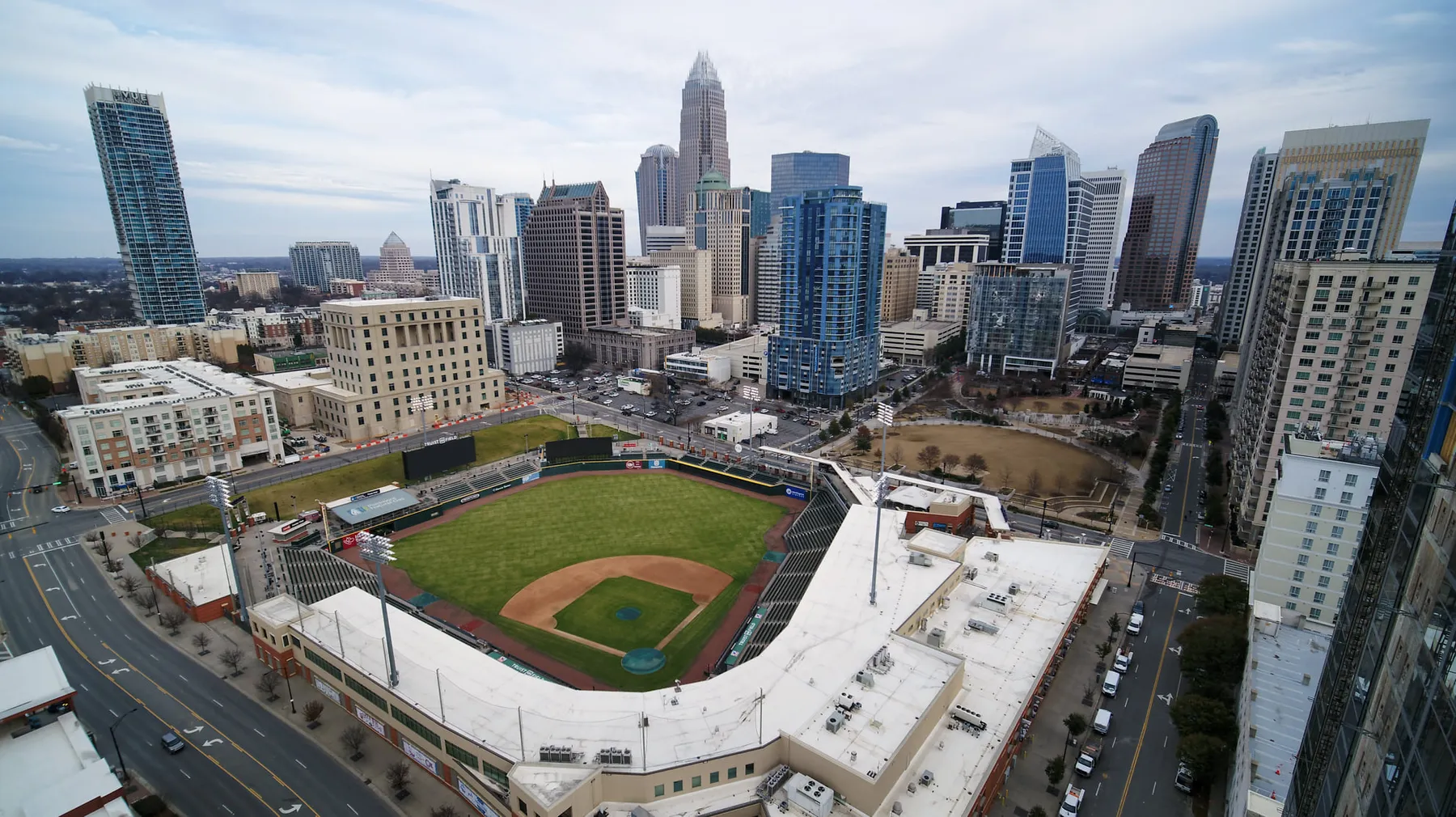
Charlotte Meetings identifies Truist Field as a specialized venue suited for programs that prioritize atmosphere alongside function. The ballpark setting enables events to leverage skyline views and an energetic sports context rather than relying solely on conventional ballroom configurations. This makes it a strategic selection for hospitality components that enhance larger conventions or serve as standalone brand experiences in a market led by the Charlotte Convention Center and supported by extensive Uptown infrastructure.
Positioned within the Adaptive Reuse and Activation Zone, Truist Field aligns with other distinctive sites including Spectrum Center and the Fillmore. The cluster addresses demand for receptions, launches, and sponsor activations where the environment itself drives engagement and memorability. Charlotte's official resources highlight how such venues complement the region's 280,000 square feet of exhibit space at the convention center and more than 6,400 walkable hotel rooms, allowing planners to construct comprehensive itineraries across Uptown and adjacent districts.
Global connectivity through Charlotte Douglas International Airport, which managed 53.6 million passengers in 2025 with nonstop flights to over 188 destinations, facilitates attendance from across the United States and beyond. Combined with 19 Fortune 1000 headquarters and consistent job growth that ranked second nationally among large metros, the market supplies both audience depth and corporate demand that benefit from Truist Field's unique characteristics for financial services, motorsports, technology, and manufacturing-related gatherings.
Verified venue facts for Truist Field Charlotte: Planning Guide for Sponsor Experiences and Hospitality Programs
- Truist Field is listed by Charlotte Meetings as a special event venue in the Charlotte market.
Truist Field as a Specialized Venue in the Charlotte Market
Truist Field functions effectively for events that gain impact from a professional ballpark atmosphere rather than standard indoor formality. Charlotte Meetings documentation positions the venue for sponsor experiences, outdoor receptions, team events, and hospitality-led gatherings. Its characteristics become advantageous when the program objective includes creating lasting impressions through setting and context instead of square footage alone.
The ballpark contributes to a broader inventory that mixes large-scale convention facilities with activation-friendly spaces. This variety supports the full spectrum of Charlotte demand ranging from association conferences to corporate brand programs. Planners reference the venue when seeking differentiation that resonates with audiences from sectors influenced by the region's economic profile, including advanced manufacturing and life sciences that value compliant yet engaging environments.
Official market overviews emphasize how Truist Field fits programs where atmosphere matters as much as logistics. The sports context introduces elements of excitement and familiarity that can strengthen networking, recognition, and recall. When incorporated thoughtfully, it extends the range of experiences available within a destination known for both scale and specialized options.
- Sponsor experiences
- Outdoor receptions
- Team events
- Hospitality-led gatherings
- Skyline view integration
Infrastructure and Connectivity Advantages
Charlotte Douglas International Airport provides exceptional access with 53.6 million passengers recorded in 2025 and direct service to more than 188 destinations. This connectivity streamlines travel for national exhibitor teams, speakers, and attendees who may participate in programs that include Truist Field as a hospitality or activation site. The airport's capacity supports efficient multi-day schedules that combine main sessions at the Charlotte Convention Center with specialized events elsewhere.
The CRVA's unified structure for destination sales, marketing, and venue oversight creates a coordinated planning environment. This framework assists with integration across the Uptown core, which concentrates the convention center, NASCAR Hall of Fame, and multiple full-service hotels including the Westin Charlotte, Hilton Charlotte Uptown, and Charlotte Marriott City Center. Such concentration reduces transit times and simplifies attendee movement between formal meetings and experiential components at venues like Truist Field.
More than 200 restaurants and bars within walking distance of Uptown add dining and networking options that enhance programs. When events extend to Truist Field in the South End area, planners can maintain momentum by leveraging the city's compact districts and established transportation patterns. The 15-county region's 3.2 million residents and 1.7 million labor force further ensure sufficient local participation potential for public-facing or industry-specific activations.
Alignment with Major Industry Demand Drivers
Motorsports and automotive interests find natural synergy with Truist Field given the venue type and proximity to Charlotte Motor Speedway. The market's established racing infrastructure supports brand launches, VIP hospitality, enthusiast events, and experiential builds that translate effectively to a ballpark setting. Planners coordinate these programs to capitalize on the region's reputation while maintaining focus on measurable engagement outcomes.
Banking and financial services, identified as the second-largest U.S. Concentration in this sector, generate consistent need for executive hospitality and sponsor events. Truist Field offers an alternative to hotel ballrooms for client receptions and relationship development that reinforce corporate positioning. Similar applications exist for technology and corporate innovation programs that require venues capable of supporting product storytelling and interactive sessions.
Advanced manufacturing, life sciences, and logistics sectors also utilize the venue for targeted components within larger trade show or conference calendars. The Charlotte Region's addition of more than 8,400 jobs from foreign direct investment since 2022 and presence of over 1,000 international businesses expand the range of themes and international participation that can be accommodated. This economic depth provides a stable base for events that incorporate Truist Field's distinctive appeal.
Each sector benefits when planners match venue attributes to audience expectations and content goals. The ballpark environment can amplify messages related to performance, teamwork, or innovation while the surrounding market infrastructure handles the operational requirements of national-scale programs.
- Motorsports and automotive
- Banking and financial services
- Technology and corporate innovation
- Advanced manufacturing
- Life sciences and healthcare
- Logistics and international business
Venue Cluster Integration and Multi-Site Strategies
Truist Field belongs to the Adaptive Reuse and Activation Zone alongside Camp North End, the Fillmore, the Underground, and Spectrum Center. This grouping targets programs where atmosphere and uniqueness contribute as much to success as capacity. Planners use the cluster to design experiences that contrast with or complement the formal inventory found in the Uptown Convention Core or Concord / Cabarrus Event Corridor.
The Uptown core contains the Charlotte Convention Center with its 600,000 square feet of total space, NASCAR Hall of Fame, and multiple headquarters hotels. Programs frequently begin with general sessions or exhibits in these facilities before transitioning to Truist Field for receptions or sponsor activations. This sequencing maximizes the strengths of each location while minimizing attendee friction through the compact geography.
Concord and Cabarrus County assets such as the Embassy Suites Concord Convention Center, Cabarrus Arena and Events Center, and Charlotte Motor Speedway offer additional scale and thematic alignment for motorsports-focused extensions. South Charlotte and South Carolina extension venues provide further options for executive or regional audiences. The overall framework allows comprehensive coverage across Mecklenburg, Cabarrus, Union, and York counties without requiring separate destination contracts.
- Adaptive Reuse and Activation Zone
- Uptown Convention Core
- Concord / Cabarrus Event Corridor
- South Charlotte Executive Corridor
- South Carolina Extension venues
Coordination Best Practices for Successful Outcomes
Effective planning at Truist Field starts with precise alignment between event objectives and the venue's documented strengths in hospitality and experiential execution. Coordinators assess audience profiles, content flow, and desired outcomes to determine optimal placement within the overall program calendar. This includes evaluating how the sports setting and outdoor elements will support engagement metrics and brand objectives.
Integration with supporting market resources ensures all operational aspects receive appropriate attention. Charlotte's destination management approach provides access to established networks for technical production, catering, transportation, and regulatory compliance. Timing considerations account for potential overlap with the venue's primary sports calendar and broader regional event schedules to secure suitable availability.
Measurement protocols focused on attendee feedback, interaction levels, and post-event recall help validate the choice of Truist Field. Data gathered from programs in this setting informs future refinements across the Charlotte market. The combination of strong economic indicators, including 13 percent five-year workforce growth and second-place national job growth ranking, suggests continued expansion of opportunities for sophisticated hospitality executions.
- Align objectives with venue attributes
- Sequence with convention center activities
- Account for sports calendar constraints
- Leverage unified CRVA destination support
- Track engagement and satisfaction metrics
Regional Growth Factors Expanding Event Potential
Charlotte's economic trajectory creates favorable conditions for sustained event activity at venues like Truist Field. The CLT Alliance reports a labor force of 1.7 million across the 15-county region with notable gains in foreign direct investment and international business presence. These factors translate into broader demand for both large-scale conventions and targeted hospitality programs that utilize specialized settings.
The second-largest financial center status in the United States, combined with strengths in advanced manufacturing, life sciences, and technology, generates recurring requirements for differentiated experiences. Truist Field contributes by offering an engaging alternative for activations that reinforce corporate messages in memorable surroundings. As the market continues to attract corporate headquarters and talent, the need for versatile planning resources grows accordingly.
Official Charlotte Meetings materials underscore the value of a unified planning structure that encompasses the convention center, stadium hospitality assets, and activation zones. This integrated approach allows organizers to scale programs efficiently while maintaining focus on quality and impact. Future utilization of Truist Field will likely expand as more national and international groups recognize the market's infrastructure advantages and distinctive venue mix.
Developing Comprehensive Event Strategies
Successful incorporation of Truist Field requires viewing it as one element within a larger Charlotte destination strategy rather than an isolated choice. Planners map attendee journeys that balance education, networking, and experiential components across multiple sites. The ballpark's role typically centers on high-impact hospitality that reinforces themes established in convention sessions or exhibit halls.
Resource allocation focuses on maximizing the venue's inherent strengths while addressing any limitations through complementary services available in the market. This balanced methodology has proven effective for organizations seeking to differentiate their programs in a competitive Southeast meetings landscape. The presence of extensive hotel inventory and robust transportation options further supports smooth multi-venue operations.
Long-term planning benefits from ongoing monitoring of market signals including airport growth, corporate expansion, and workforce development. These elements collectively position Charlotte to host increasingly sophisticated events that utilize the full spectrum of venues from formal convention facilities to distinctive sports and activation sites such as Truist Field.
Frequently Asked Questions About Truist Field Event Planning
What types of events work best at Truist Field?
Truist Field is documented as effective for sponsor experiences, outdoor receptions, team events, and hospitality-led gatherings. The sports-venue setting with skyline views supports programs where atmosphere contributes significantly to attendee engagement and brand impact.
How does Truist Field integrate with the Charlotte Convention Center?
The venue serves as a strong complement for hospitality and activation segments of larger programs based at the Charlotte Convention Center. Its placement in the Adaptive Reuse and Activation Zone allows smooth transitions between formal exhibit and meeting spaces and more experiential environments.
Which industries align well with events at Truist Field in Charlotte?
Motorsports and automotive, banking and financial services, technology and corporate innovation, advanced manufacturing, life sciences, and logistics sectors all find suitable applications. The region's 19 Fortune 1000 headquarters and economic growth patterns support diverse corporate hospitality needs.
What market infrastructure supports programs including Truist Field?
Charlotte Douglas International Airport offers nonstop service to more than 188 destinations. The CRVA provides unified destination management, while Uptown supplies over 200 restaurants and bars plus 6,400 walkable hotel rooms that facilitate multi-day event schedules.
Is Truist Field appropriate for large-scale trade show exhibits?
The ballpark is primarily positioned for experiential and hospitality functions rather than primary exhibit space. It performs most effectively as part of broader strategies that utilize the Charlotte Convention Center or other venues for larger displays while reserving Truist Field for receptions and activations.
How does Charlotte's growth affect planning at Truist Field?
Strong job growth, foreign direct investment, and workforce expansion create increasing demand for distinctive venues. These factors, combined with the market's convention infrastructure, support more frequent and sophisticated use of Truist Field for targeted corporate and association programs.