
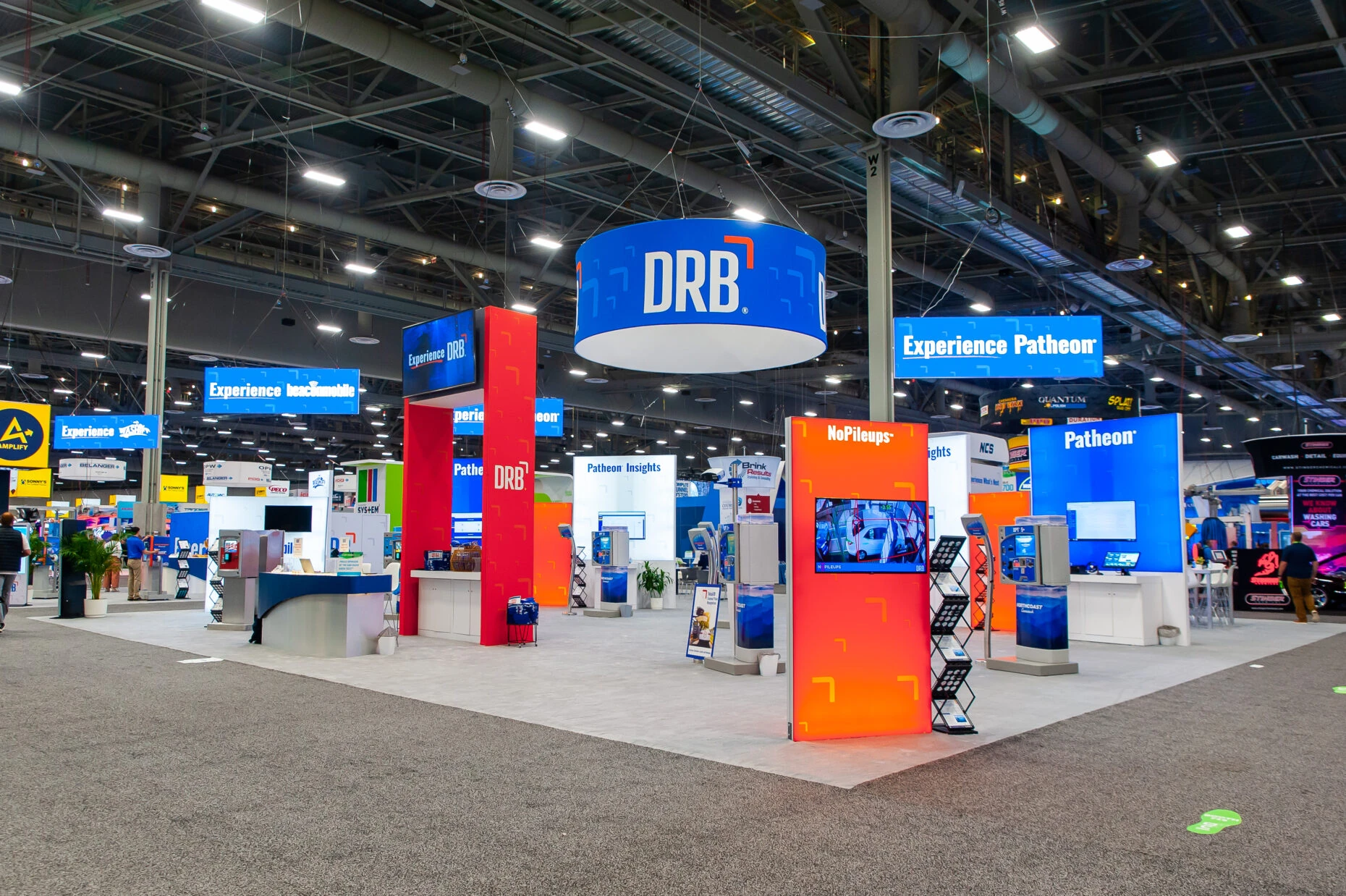
The Charlotte market offers a distinctive setting for demo and theater environments, supported by the Charlotte Convention Center’s 280,000 square feet of exhibit space and the region’s mix of corporate headquarters, convention infrastructure, and motorsports venues. These purpose-built spaces enable exhibitors to showcase innovations through real-time demonstrations, educational theater sessions, and interactive experiences that align with the expectations of national and international attendees arriving through Charlotte Douglas International Airport.
From financial technology presentations in Uptown to product simulations near Charlotte Motor Speedway, successful demo and theater builds integrate with broader event goals while respecting venue parameters and audience flow patterns. The region’s 13 percent five-year workforce growth and status as the second-largest U.S. Financial center create sustained demand for environments that turn passive observers into active participants.
Planning these environments requires careful attention to sightlines, technical infrastructure, industry relevance, and integration with surrounding exhibit space to maximize impact within Charlotte’s convention core, Concord corridor, and adaptive-reuse activation zones.
Strategic Role of Demo and Theater Environments in the Charlotte Market
Charlotte’s position as the Southeast’s premier meeting and convention destination is reinforced by more than 6,400 walkable hotel rooms near the convention center and a corporate base that includes 19 Fortune 1000 headquarters. In this environment, demo and theater setups serve as powerful tools for differentiation, allowing brands to move beyond collateral and deliver experiential proof points that resonate with decision-makers in banking, life sciences, and advanced manufacturing.
The region’s second-place national ranking for job growth among large metros and the addition of over 8,400 jobs from foreign direct investment since 2022 have expanded the pool of attendees who expect substantive, educational, and interactive content. Theater environments provide controlled settings for product explanations, case study presentations, and expert panels, while adjacent demo stations enable hands-on interaction that reinforces key messages.
Effective planning begins with clear definition of objectives: whether the goal is lead generation through scheduled demonstrations, thought leadership via theater programming, or brand immersion that complements nearby sponsor activations at venues such as the NASCAR Hall of Fame.
- 19 Fortune 1000 headquarters driving corporate event demand
- Second-largest U.S. Financial center supporting fintech demonstrations
- Top-10 manufacturing market in the state for industrial demos
- Strong motorsports sector creating opportunities for experiential theaters
- Global air access via Charlotte Douglas International Airport
Industry Applications Across Charlotte’s Primary Demand Drivers
Banking and financial services constitute a major pillar of Charlotte’s economy, creating demand for sophisticated demo environments that illustrate compliance platforms, digital banking tools, and data visualization technologies. Theater formats work particularly well here, offering seated environments where presenters can walk through complex regulatory scenarios or platform capabilities without the distractions of open exhibit floors.
Advanced manufacturing and logistics sectors benefit from live demonstrations of robotics, supply-chain solutions, and precision equipment. The presence of more than 1,000 international businesses and robust logistics activity tied to the airport makes Charlotte an ideal market for product launches that combine theater overviews with immediately adjacent working demonstrations.
Motorsports and automotive represent a unique strength, with Charlotte Motor Speedway and related assets providing context for high-impact demo and theater programs. These environments often blend technical presentations with experiential elements that leverage the region’s racing heritage while maintaining professional focus for corporate and supplier audiences.
Technology, life sciences, and healthcare complete the picture, supporting compliant demonstration spaces and educational theaters that address innovation cycles, clinical applications, and enterprise solutions within the framework of major conventions and executive programs.
Venue Considerations for Demo and Theater Implementation
The Charlotte Convention Center serves as the primary venue for large-scale demo and theater environments, offering 280,000 square feet of contiguous exhibit space and 154,000 square feet of breakout space that can accommodate both dedicated theaters and integrated demonstration zones. Nearby hotels including the Westin Charlotte, Hilton Charlotte Uptown, and Charlotte Marriott City Center provide additional options for smaller, more intimate theater setups that complement main hall programming.
The Concord and Cabarrus County corridor expands possibilities with the Embassy Suites Concord Convention Center, Cabarrus Arena and Events Center, and proximity to Charlotte Motor Speedway. These locations support drive-in attendance patterns and larger experiential builds suited to automotive and enthusiast demonstrations.
Adaptive-reuse spaces such as Camp North End, the Fillmore, and Spectrum Center offer distinctive atmospheres for creative theater and demo concepts where environment contributes to brand storytelling. South Charlotte locations including the Ballantyne provide polished settings for executive-focused demonstration programs away from the convention core.
Each venue cluster presents distinct planning parameters regarding ceiling heights, power availability, loading access, and adjacency to meeting rooms that must be factored into successful demo and theater coordination.
- Uptown Convention Core for maximum accessibility and hotel integration
- Concord corridor for motorsports-adjacent and arena-scale activations
- Adaptive reuse venues for atmospheric brand experiences
- South Charlotte executive locations for premium client demonstrations
Design and Technical Planning Fundamentals
Successful Charlotte the environments balance visibility, acoustics, and functionality within the constraints of convention infrastructure. Theater layouts must account for average audience sizes at financial services and manufacturing events while ensuring clear sightlines from all seating positions and appropriate lighting separation from surrounding exhibit activity.
Technical infrastructure planning encompasses projection systems, sound reinforcement, camera capture for hybrid audiences, and reliable connectivity that supports both live demonstrations and simultaneous streaming. The region’s technology-forward corporate base expects smooth execution that reflects the sophistication of the solutions being presented.
Material selection, modular staging, and flexible configurations allow programs to scale from intimate 20-person executive sessions at Ballantyne properties to larger theater presentations within the convention center’s expansive halls. Integration with overall exhibit design ensures that demo areas enhance rather than compete with primary branding elements.
Audience Engagement and Traffic Flow Strategies
Charlotte events draw diverse national and international audiences who move efficiently between sessions, exhibit floors, and hospitality functions. The environments must therefore incorporate clear wayfinding, strategic placement relative to main aisles, and scheduling that avoids conflicts with high-traffic periods at the convention center.
Effective engagement begins with content calibration to attendee profiles, whether they are procurement specialists evaluating manufacturing solutions or financial executives assessing technology platforms. Theater programming should offer substantive educational value while demo stations provide tactile interaction that reinforces presentation takeaways.
Queue management, capacity planning, and post-session pathways help maintain smooth circulation throughout larger shows. In motorsports-adjacent programs near Concord, engagement strategies may also incorporate experiential elements that capitalize on the region’s automotive enthusiasm without compromising professional focus.
Measurement frameworks should track both quantitative metrics such as session attendance and qualitative outcomes including lead quality and message retention to refine future Charlotte programs.
- Strategic placement near high-traffic convention aisles
- Content tailored to specific corporate and association audiences
- Hybrid capabilities supporting remote participants via airport-connected travel
- Queue and capacity systems for popular demonstration times
Coordination Best Practices for Charlotte Programs
Coordinating the environments across Charlotte’s varied venues requires detailed advance planning that accounts for the unified destination management structure provided by the CRVA. Timelines should align with convention center booking cycles, hotel function space availability, and transportation logistics facilitated by the region’s extensive interstate network and airport capacity.
Cross-functional alignment among exhibit designers, technical specialists, content developers, and event staff ensures consistent execution whether the program occurs in Uptown, SouthPark, University City, or the Cabarrus County corridor. Documentation of technical requirements, power needs, and dimensional specifications helps prevent last-minute adjustments that can impact program effectiveness.
The market’s continued growth in both convention activity and corporate headquarters presence suggests increasing competition for premium demonstration slots and theater time. Early coordination with appropriate venue partners and service providers positions programs for optimal placement and support.
Emerging Opportunities in Charlotte’s Event Landscape
Charlotte’s innovation economy, adaptive-reuse development, and expanding life-sciences footprint create new contexts for the environments that blend physical and digital elements. Hybrid formats that accommodate both in-person attendees from across the 15-county region and remote participants continue to gain importance as national events utilize the city’s strong air access.
Sustainability considerations, experiential integration with sponsor activations, and data-driven personalization represent evolving expectations among Charlotte event planners. Venues such as the NASCAR Hall of Fame and adaptive spaces like Camp North End offer distinctive backdrops that can elevate demonstration storytelling when properly coordinated.
As the region maintains its momentum in job creation and foreign investment, the demand for sophisticated the environments that communicate complex value propositions efficiently will only increase. Forward-looking planning that anticipates these trends helps exhibitors maintain competitive advantage in one of the Southeast’s most dynamic markets.
Frequently Asked Questions
How large are typical demo and theater environments at the Charlotte Convention Center?
Configurations range from compact 20-by-30-foot demonstration pods suitable for hotel ballrooms to dedicated 60-by-80-foot theater and demo combinations within the convention center’s 280,000 square feet of exhibit space. The specific footprint depends on overall show size, expected audience, and integration with surrounding exhibits.
Which Charlotte industries benefit most from live demonstration environments?
Advanced manufacturing, motorsports and automotive, technology and corporate innovation, banking and financial services, and life sciences all utilize demo and theater formats. Each sector leverages these environments to communicate technical specifications, compliance capabilities, or performance characteristics that benefit from live presentation.
What venue options exist beyond the Charlotte Convention Center for theater-style exhibits?
Options include Uptown hotels such as the Westin Charlotte, Hilton Charlotte Uptown, and Charlotte Marriott City Center for smaller programs, the Concord Convention Center and Cabarrus Arena for larger regional events, and adaptive venues like Camp North End or the Fillmore for distinctive atmospheric presentations.
How does Charlotte’s motorsports presence influence demo and theater planning?
The proximity of Charlotte Motor Speedway and NASCAR-related assets creates natural opportunities for experiential demonstrations and theater presentations that incorporate automotive technology, performance data, and brand heritage. These programs often blend technical content with engaging demonstration elements suited to both enthusiast and corporate audiences.
What role does air access play in planning Charlotte demo environments?
Charlotte Douglas International Airport’s nonstop service to more than 188 destinations and 53.6 million passengers in 2025 enables exhibitors to bring specialized demonstration equipment and technical teams from across the country. This accessibility supports more ambitious demo concepts that might be logistically challenging in markets with more limited connectivity.
When should planning begin for this work in Charlotte?
Complex programs benefiting from the convention center’s exhibit space or coordinated multi-venue activations typically require 9 to 18 months of lead time. Simpler hotel-based theater setups can be coordinated within 4 to 6 months, though earlier planning improves options for premium locations and technical support.