
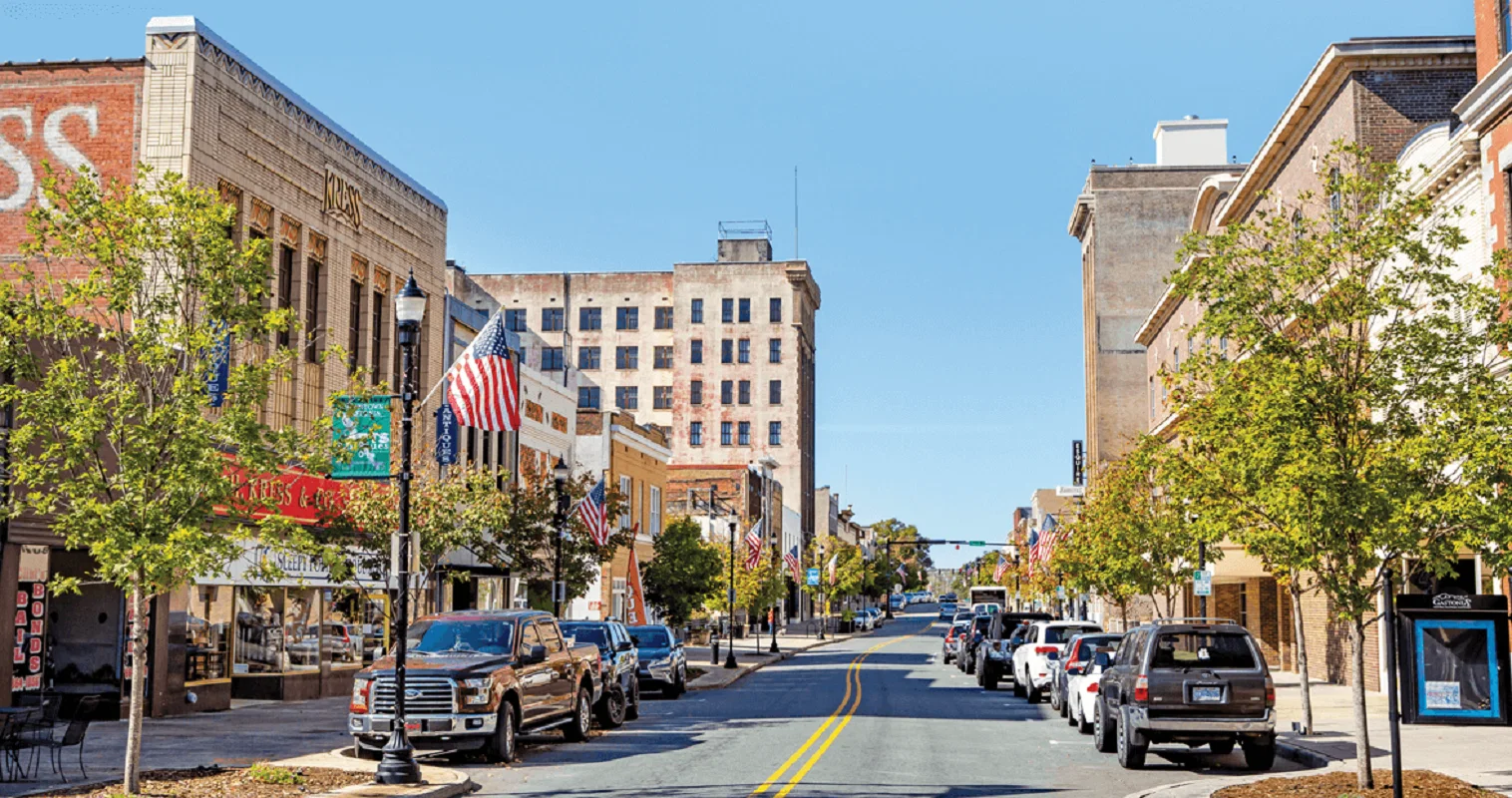
Gastonia occupies a strategic position inside the 15-county Charlotte Region, an area reporting 3.2 million residents and 1.7 million people in the labor force with 13 percent growth over five years. This economic expansion across manufacturing, technology, aerospace, and professional services generates consistent demand for trade shows that deliver qualified leads, stakeholder relationships, and brand visibility. Market data from the CLT Alliance and Charlotte Meetings underscores how companies throughout Gaston County can leverage the region’s convention assets without requiring speculative assumptions about on-the-ground operations.
As an authoritative planning and coordination resource, Trade Show Services of Charlotte translates verified statistics and venue specifications into actionable event frameworks. The focus remains on Charlotte Douglas International Airport’s scale, the Charlotte Convention Center’s documented capacity, and the diversified venue clusters that serve audiences across the metro area. This approach equips Gastonia exhibitors and organizers with realistic timelines, space calculations, and attendee projections drawn exclusively from official sources such as the CRVA’s meeting planners guide and CLT Alliance progress reports.
By aligning program objectives with the region’s job-growth ranking, foreign-direct-investment gains, and 19 Fortune 1000 headquarters, planners can maximize return on trade show investment while navigating the full spectrum of exhibition, conference, and activation formats available in the Charlotte market.
Gastonia’s Placement Inside the Expanding Charlotte Regional Economy
Official portraits of the Charlotte Region compiled by the CLT Alliance describe steady expansion that directly benefits organizations located in Gaston County. Population of 3.2 million, a labor force of 1.7 million, and 13 percent workforce growth over five years create a deep pool of potential attendees and decision-makers for trade shows. Nineteen Fortune 1000 companies headquartered across financial services, retail, manufacturing, aerospace, and technology generate ongoing demand for industry exhibitions that facilitate networking and partnership development.
Foreign direct investment has added more than 8,400 jobs since 2022, while the count of international businesses now exceeds 1,000. These figures translate into measurable opportunities for Gastonia companies seeking to exhibit at events that attract both domestic and global participants. The second-place national ranking for job growth among large U.S. Metros at the close of 2025 further signals sustained corporate activity that supports consistent trade show calendars.
Planners should reference these macroeconomic signals when forecasting attendance, selecting exhibit scale, and budgeting for follow-up campaigns. North Carolina’s business-friendly statutes, including right-to-work provisions, reinforce an environment that encourages investment in marketing initiatives such as well-coordinated exhibitions. The result is a market where strategic alignment between Gastonia interests and Charlotte’s documented strengths produces reliable outcomes.
Effective coordination therefore begins with mapping specific corporate objectives against the region’s verified growth metrics rather than assumptions about localized execution.
Global Connectivity Through Charlotte Douglas International Airport
Charlotte Douglas International Airport serves as the primary gateway for exhibitors and attendees traveling to trade shows that include Gastonia participation. In 2025 the airport processed 53.6 million passengers while maintaining nonstop routes to more than 188 destinations worldwide. This connectivity simplifies national and international logistics, allowing companies in Gastonia to reduce travel friction and focus resources on booth performance and relationship building.
Official airport data highlight its role as an unusually robust Southeast hub, enabling field teams and prospects to reach Charlotte from virtually any major market with minimal layovers. Planners use these statistics to build accurate arrival and departure windows that align with move-in schedules and educational sessions. The combination of air access and regional roadways creates efficient patterns for both drive-in audiences from Gaston County and fly-in participants from farther afield.
When developing event timelines, coordination teams reference published passenger volumes and route maps to anticipate peak periods and avoid bottlenecks. This data-driven method supports higher attendance rates and smoother onsite experiences without reliance on unverified operational claims. The airport’s scale also benefits larger programs that incorporate multiple stakeholder groups arriving on staggered schedules.
By centering transportation planning on documented airport capabilities, Gastonia organizations gain a competitive advantage in attracting high-value prospects who value convenience and reliability.
Charlotte Convention Center Specifications and Supporting Infrastructure
The Charlotte Convention Center functions as the cornerstone of Uptown’s convention inventory with a total facility size of approximately 600,000 square feet. This includes 280,000 square feet of contiguous exhibit hall space and 154,000 square feet of flexible breakout and meeting rooms. More than 6,400 hotel rooms located within walking distance allow attendees to move efficiently between sessions, networking events, and hospitality functions without extensive ground transportation.
Charlotte Meetings documentation details these specifications along with floor plans that enable precise booth layouts, aisle configurations, and electrical requirements. Planners working with Gastonia exhibitors consult these resources to calculate accurate square footage needs and to sequence installation and dismantle timelines. The center’s design supports both large-scale industry trade shows and mid-sized corporate conferences that benefit from centralized Uptown amenities.
Official guides also note more than 200 restaurants and bars within easy reach, enhancing delegate satisfaction and extending the event’s networking window into evening hours. This concentration of dining and entertainment options contributes to stronger recall and relationship development for brands exhibiting from locations such as Gastonia. Coordination strategies therefore integrate venue data with attendee experience mapping to optimize every program element.
Complementary Uptown venues including the NASCAR Hall of Fame and multiple full-service hotels expand programming possibilities for receptions, sponsor activations, and educational tracks that complement the main exhibit floor.
- 600,000 total square feet with 280,000 square feet of exhibit space
- 154,000 square feet of breakout and meeting space
- More than 6,400 walkable hotel rooms in the Uptown district
- Integration with walkable dining and entertainment options
Venue Clusters Extending Options Across the Charlotte Market
Beyond the Uptown core, five distinct venue clusters provide tailored environments for differing program scales and audience profiles. The Concord / Cabarrus Event Corridor offers the Embassy Suites Charlotte Concord, Concord Convention Center, Cabarrus Arena & Events Center, and Charlotte Motor Speedway, ideal for regional consumer shows, enthusiast gatherings, and drive-in attendance patterns that resonate with Gaston County participants. These facilities support larger parking capacity and experiential elements suitable for automotive or lifestyle brands.
The Adaptive Reuse / Activation Zone, featuring Camp North End, the Fillmore, the Underground, Spectrum Center, and Truist Field, delivers distinctive atmosphere for product launches, sponsor hospitality, and branded experiences where environment carries equal weight with square footage. South Charlotte’s executive corridor, led by the Ballantyne and Harris Conference Center, suits polished training sessions, client meetings, and smaller conferences that prioritize professionalism and proximity to the airport.
The South Carolina Extension through Rock Hill Sports & Event Center and Anne Springs Close Greenway accommodates hybrid sports, lifestyle, and outdoor-oriented programs that draw audiences from York County and adjacent areas. Each cluster is supported by publicly available floor plans, amenity lists, and capacity charts that allow planners to match technical requirements against documented capabilities.
Selecting the optimal cluster requires cross-referencing event objectives, target demographics, and logistical considerations. Coordination resources simplify this process by presenting side-by-side comparisons grounded exclusively in official venue data rather than anecdotal assertions.
- Uptown Convention Core for large-scale exhibits and walkable hospitality
- Concord / Cabarrus Corridor for regional consumer and enthusiast events
- Adaptive Reuse Zone for experiential activations and unique atmospheres
- South Charlotte Executive Corridor for focused corporate meetings
- South Carolina Extension for sports, lifestyle, and outdoor programs
Economic Indicators Guiding Trade Show Strategy and Investment
The Charlotte Region’s economic profile supplies critical context for budgeting and forecasting. Second-place national job growth among large metros, 13 percent labor-force expansion, and 8,400 new positions from foreign direct investment since 2022 indicate rising corporate activity that fuels both exhibit demand and attendee quality. With 19 Fortune 1000 headquarters and more than 1,000 international businesses, the market supports trade shows spanning multiple verticals and geographic reach.
CRVA’s unified destination structure manages sales, marketing, and operations for the convention center, NASCAR Hall of Fame, and Bojangles Entertainment Complex, creating consistency that planners can rely upon when building multi-year calendars. This centralized approach helps Gastonia organizations anticipate citywide event density and avoid scheduling conflicts that could dilute attendance.
North Carolina’s statutory environment further encourages business investment, allowing exhibitors to allocate resources confidently toward booth design, lead-generation tools, and follow-up systems. When coordination teams incorporate these indicators into pre-event planning, the resulting programs demonstrate stronger alignment between investment and expected return.
Regular review of updated CLT Alliance and Charlotte Meetings data ensures that strategies evolve in step with actual market conditions rather than outdated assumptions.
Integrated Coordination Practices for Reliable Program Execution
Successful trade shows serving Gastonia require meticulous alignment across venue selection, transportation scheduling, audience development, and measurement frameworks. Authoritative planning resources emphasize reference to published floor plans, capacity charts, and service menus so every decision rests on concrete specifications. This discipline prevents scope creep, controls costs, and improves the accuracy of ROI projections.
Exhibitors benefit when timelines account for realistic travel windows from Gastonia to Uptown or Concord, hotel room blocks, and drayage considerations derived from official convention center guidelines. Organizers of multi-location road shows can use the diversified cluster options to test messaging variations and refine audience targeting before committing to larger national events.
Post-event coordination includes structured lead capture, timely follow-up sequences, and performance reporting that ties back to the original objectives informed by regional economic data. By maintaining this closed-loop approach, companies convert trade show activity into sustained pipeline growth.
The emphasis remains on transparency, documentation, and continuous improvement drawn from the Charlotte market’s verified strengths in meetings infrastructure and business momentum.
Preparing for Continued Growth in Gaston County Event Participation
As the Charlotte Region sustains its upward trajectory in employment, foreign investment, and corporate headquarters density, Gastonia organizations can anticipate expanding opportunities to exhibit, sponsor, and attend high-caliber trade shows. The combination of global air access, substantial convention inventory, and diversified venue clusters creates a resilient platform that accommodates both established industries and emerging sectors.
Forward-looking coordination involves scenario planning that incorporates alternative venue clusters should primary dates at the Charlotte Convention Center reach capacity. Early engagement with published planners guides and floor-plan resources allows sufficient lead time for custom build-outs, technology integration, and staff training.
Market signals also suggest increasing demand for hybrid experiences that blend physical exhibits with digital extension, leveraging the region’s technology-friendly business climate. Planning teams help translate these trends into practical tactics that maintain focus on measurable business outcomes.
By grounding every recommendation in the same authoritative sources used by destination marketing organizations, Gastonia stakeholders receive consistent, defensible guidance that supports long-term success across multiple trade show cycles.
Frequently Asked Questions About Gastonia Trade Show Planning
How far is Gastonia from the primary Charlotte convention facilities?
Gastonia lies within the greater Charlotte Region and connects to Uptown via established regional roadways, placing it in reasonable proximity to the Charlotte Convention Center, airport, and supporting hotel inventory. Exact travel times vary by traffic and should be verified against current mapping tools during planning.
What are the documented capacities of the Charlotte Convention Center?
The facility encompasses approximately 600,000 square feet overall, including 280,000 square feet of exhibit hall space and 154,000 square feet of breakout and meeting space, supported by more than 6,400 walkable hotel rooms according to official Charlotte Meetings resources.
Which airport statistics should planners consider for Gastonia exhibitors?
Charlotte Douglas International Airport recorded 53.6 million passengers in 2025 and offers nonstop service to more than 188 destinations, providing strong national and international access that benefits companies located throughout the Charlotte Region including Gastonia.
How many venue clusters serve the broader Charlotte market?
Five primary clusters are documented: Uptown Convention Core, Concord/Cabarrus Event Corridor, Adaptive Reuse/Activation Zone, South Charlotte Executive Corridor, and the South Carolina Extension. Each offers distinct capabilities referenced in official venue guides.
What economic indicators support trade show activity in the region?
The 15-county Charlotte Region reports 3.2 million people, 1.7 million in the labor force with 13 percent five-year growth, 19 Fortune 1000 headquarters, second-place national job growth ranking, and more than 8,400 jobs added through foreign direct investment since 2022.
What type of guidance does a planning and coordination resource provide?
Guidance centers on interpreting verified venue specifications, economic data, floor plans, and destination marketing information to align event objectives, audience profiles, and logistical requirements for programs that serve Gastonia and the surrounding Charlotte market.