
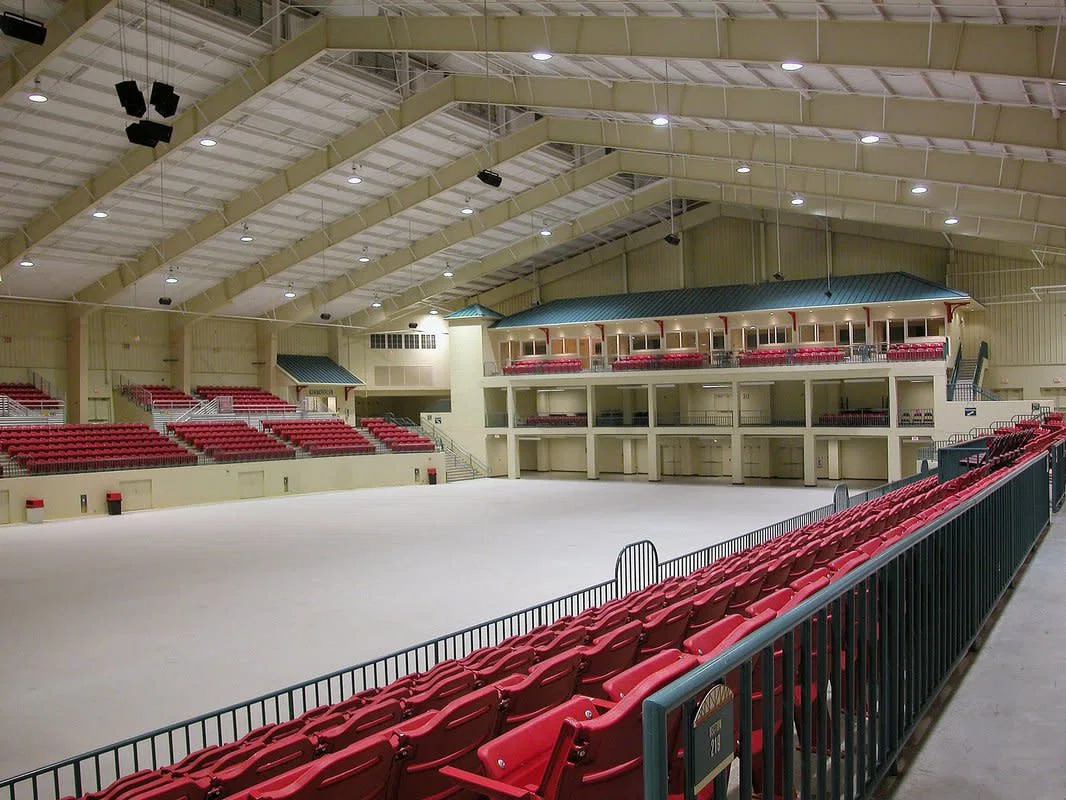
The Cabarrus Arena & Events Center provides a versatile platform for trade show organizers and event coordinators seeking adaptable space north of Charlotte's primary Uptown district. As a key component of the Concord and Cabarrus County event infrastructure, the arena supports programs that benefit from its capacity to accommodate exhibits, audience seating, demonstrations, and interactive elements simultaneously. Its documented history of hosting more than 175 events across nearly 400 event days each year illustrates operational reliability and broad appeal across multiple event categories.
This facility aligns with the regional framework that positions Concord as a complementary hub to Charlotte's convention core. Proximity to assets such as the Charlotte Motor Speedway and associated hospitality options enables planners to develop comprehensive programs that draw on the area's motorsports heritage and growing corporate presence. Coordinators can leverage the arena's established systems to execute events that serve audiences from across the 15-county Charlotte region, where workforce expansion and industry diversification create sustained demand for targeted exhibitions and industry gatherings.
Effective planning at the Cabarrus Arena & Events Center centers on matching program objectives with the venue's infrastructure for audio-visual delivery, rigging, catering, and accessibility. By focusing on these operational realities, coordinators ensure that trade shows, community expos, and hybrid conferences achieve measurable outcomes while benefiting from the venue's managed environment and support framework.
Verified venue facts for Cabarrus Arena & Events Center in Concord: Event Planning and Coordination Resources
- Official venue info says the complex hosts more than 175 events across nearly 400 event days each year.
- Cabarrus Arena describes itself as a flexible multipurpose facility for business meetings, consumer shows, sporting events, entertainment, and social functions.
- Official amenities sections highlight event-planning support, AV capabilities, professional rigging systems, in-house SAVOR catering, on-site parking, and ADA accessibility.
Venue Overview and Core Operational Attributes
The center operates as a flexible multipurpose facility capable of transitioning between business meetings, consumer-focused exhibitions, sporting competitions, entertainment productions, and various social functions. This adaptability stems from intentional design elements that allow event coordinators to reconfigure floor plans according to specific program demands. Within the Charlotte market, the arena functions as an important secondary venue that extends options beyond the concentrated Uptown convention assets, particularly for programs requiring larger footprints or specialized overlays.
Operational data underscores the venue's effectiveness and consistent utilization. Records show the arena supports more than 175 distinct events each year, resulting in nearly 400 active event days. This volume demonstrates not only demand but also the management expertise required to maintain quality across diverse programming. For trade show planners, such metrics offer reassurance when selecting venues that can sustain intensive schedules without compromising service standards or attendee experience.
Event coordination at this location benefits from documented planning support that helps translate conceptual requirements into executable layouts. The venue maintains systems for professional rigging and audio-visual integration that enable sophisticated exhibit designs and presentation environments. These resources allow coordinators to focus on strategic elements such as audience flow, exhibitor placement, and content delivery rather than basic infrastructure limitations.
- Documented support for business meetings, consumer shows, sporting events, and entertainment
- Consistent annual activity exceeding 175 events and approaching 400 event days
- Integrated planning assistance for program development and execution
- Professional systems for rigging, AV, and technical production
- In-house catering partnership with SAVOR for hospitality management
Event Types Best Suited for the Cabarrus Arena
Consumer shows represent a primary use case for the center, where flexible space accommodates vendor exhibits, product demonstrations, and public attendance flows. The venue's configuration options support the kind of open layout that encourages browsing and interaction while still allowing for structured programming segments. Coordinators often select this location when targeting regional audiences who prefer drive-in convenience combined with a professionally managed environment.
Mixed-use conventions and community expos also align effectively with the arena's capabilities. These programs frequently incorporate exhibition components alongside educational sessions, networking areas, and special events. The facility's scale enables planners to allocate space for multiple concurrent activities without forcing artificial constraints. In the context of Charlotte's expanding economy, such events can capitalize on interest from sectors including advanced manufacturing, technology, and life sciences.
Sporting-event overlays and motorsports-related activations find natural synergy here given the venue's location within the Concord corridor. The arena can integrate thematic elements, hospitality zones, and interactive exhibits that enhance fan or stakeholder experiences. This versatility extends to regional meetings that require more space than typical hotel ballrooms but less formality than a dedicated convention center.
When developing these programs, successful coordination involves early assessment of technical needs, audience profiles, and desired outcomes. The arena's established track record with similar events provides a foundation for realistic planning timelines and resource allocation.
Position Within the Concord and Cabarrus County Event Framework
The center anchors a cluster of venues that collectively expand Charlotte's event capacity northward. This corridor includes complementary facilities such as the Embassy Suites Charlotte Concord with its convention capabilities and Great Wolf Lodge with family-oriented programming potential. Together these assets create opportunities for multi-venue events or smooth attendee movement between related activities. The nearby Charlotte Motor Speedway further strengthens the area's appeal for programs with automotive, racing, or experiential components.
This geographic positioning offers strategic advantages for coordinators managing events with broad regional draw. Attendees from across the Charlotte metro, including areas like Huntersville, Mooresville, Kannapolis, and Harrisburg, gain relatively straightforward access via major transportation corridors. The concentration of venues supports efficient planning for housing, transportation, and ancillary activities that enhance overall program impact.
Within the larger Charlotte market narrative, the Concord corridor serves programs that benefit from separation from Uptown density while still connecting to the region's economic strengths. Corporate headquarters in financial services, manufacturing, and technology generate demand for events that can utilize the arena's scale for product launches, supplier networks, or workforce development initiatives. Planners can therefore position their events to capture both local interest and national attendance facilitated by Charlotte Douglas International Airport.
- Connection to Embassy Suites Concord Convention Center and Great Wolf Lodge
- Proximity to Charlotte Motor Speedway for thematic programming opportunities
- Access to growing populations in Cabarrus County and adjacent areas
- Support for events drawing from the 15-county Charlotte region
Technical Production and Infrastructure Coordination
Successful events at the center depend on thorough integration of technical elements from the earliest planning stages. The venue maintains professional rigging systems that support suspended displays, lighting configurations, and structural elements required for larger exhibits. Coordinators must map these capabilities against program requirements to ensure safe and effective implementation without operational conflicts.
Audio-visual infrastructure available on-site enables high-quality presentations, digital signage, and interactive demonstrations that enhance exhibitor messaging. Planning teams should evaluate power distribution, data connectivity, and equipment placement early to prevent last-minute adjustments. The venue's established systems reduce variables that might otherwise complicate production timelines in less equipped spaces.
Event-day execution benefits from the arena's managed approach to technical services. Coordinators can align their production schedules with venue protocols for load-in, setup, operation, and dismantle phases. This structured environment helps maintain safety standards and operational efficiency across what are often compressed timelines in the trade show industry.
Documentation of past events at the facility provides valuable reference points for technical planning. By studying successful configurations from previous consumer shows and conventions, coordinators can adapt proven approaches to their specific content and audience objectives.
- Professional rigging for suspended elements and structural displays
- Advanced AV systems supporting presentations and digital integration
- Structured protocols for load-in, operation, and dismantle phases
- Power and connectivity infrastructure suitable for exhibit demands
Hospitality, Catering, and Attendee Experience Planning
In-house catering through SAVOR provides coordinators with streamlined options for managing food service across event days. This integration simplifies procurement, preparation, and service logistics while maintaining consistency with venue operational requirements. Planners can develop menus that align with audience expectations and program themes, whether for formal dinners, quick-service options during exhibit hours, or refreshment stations.
On-site parking capacity supports the drive-in attendance patterns common for events in the Concord area. This feature reduces transportation friction for regional participants from surrounding counties and contributes to positive overall experiences. Accessibility considerations receive attention through ADA-compliant design throughout the facility, ensuring equitable participation for all attendees.
Comprehensive attendee experience planning incorporates these elements into broader program strategy. Flow between parking, registration, exhibit areas, and hospitality zones requires careful mapping to minimize bottlenecks and maximize engagement opportunities. The venue's scale allows for dedicated spaces that can serve multiple purposes across different phases of the event schedule.
Alignment with Charlotte Regional Economic Drivers
Charlotte's position as the second-largest financial center in the United States generates sustained demand for events that showcase products, services, and innovations to targeted audiences. The center offers space appropriate for finance-sector conferences that incorporate exhibition components or interactive displays. Its location outside the Uptown core can provide a practical alternative when programs require more square footage or specialized configurations.
Advanced manufacturing and logistics sectors active throughout the region also find the arena suitable for supplier expos, technology demonstrations, and distributor meetings. The venue's flexible footprint accommodates heavy equipment displays or interactive simulations that might prove challenging in traditional hotel or convention settings. Planners can connect these events to the broader ecosystem that includes foreign direct investment growth and expanding international business activity.
Motorsports and automotive programs represent a particular strength given the arena's proximity to Charlotte Motor Speedway and related industry assets. Events in this category can integrate hospitality, product launches, and experiential elements that leverage the region's established reputation. Life sciences and technology initiatives similarly benefit from the venue's capacity to host education-focused exhibits alongside networking and demonstration areas.
Understanding these demand drivers helps coordinators develop events with clear value propositions for both exhibitors and attendees. The arena's operational characteristics support programs that translate industry momentum into tangible business outcomes.
Strategic Coordination Best Practices
Effective planning begins with detailed assessment of program objectives against the center's documented capabilities. Coordinators should establish clear timelines that account for venue scheduling patterns, technical requirements, and support service integration. Early engagement with planning resources helps identify potential constraints and optimization opportunities before commitments are finalized.
Successful events typically incorporate phased approaches to exhibit design, attendee engagement strategies, and measurement frameworks. The arena's history with diverse programming offers reference points for realistic budgeting and resource allocation. Coordinators benefit from focusing on elements that differentiate their events within the competitive Charlotte market landscape.
Post-event evaluation provides critical insights for future iterations. Analysis of attendance patterns, exhibitor feedback, and operational efficiency informs continuous improvement in how programs utilize this Concord venue. The region's overall growth trajectory suggests increasing opportunities for well-coordinated events that align with evolving industry needs and audience expectations.
- Develop detailed timelines accounting for venue scheduling realities
- Align technical and hospitality elements with documented infrastructure
- Incorporate measurement frameworks to evaluate program success
- Leverage regional industry drivers when shaping event content
Common Questions About Planning Events at Cabarrus Arena & Events Center
What types of events work best at the Cabarrus Arena & Events Center?
The venue excels with consumer shows, mixed-use conventions, community expos, sporting-event overlays, and regional meetings. Its flexible multipurpose design supports configurations that combine exhibits, demonstrations, seating, and interactive zones. This makes it appropriate for programs that need more space than hotel ballrooms but benefit from professional management and technical infrastructure.
How many events does the Cabarrus Arena host each year?
The facility supports more than 175 events spread across nearly 400 event days annually. This consistent activity level demonstrates operational capacity and appeal to diverse organizers. The volume provides planners with confidence in the venue's ability to manage complex schedules while maintaining quality standards.
What hospitality and catering options are available?
In-house SAVOR catering handles food and beverage services, simplifying coordination for exhibitor events, attendee meals, and refreshment stations. Combined with ample on-site parking and full ADA accessibility, these services support comprehensive attendee experience planning. Coordinators can develop integrated hospitality strategies that align with program themes and audience expectations.
How does this venue fit into the larger Charlotte event market?
The Cabarrus Arena anchors the Concord / Cabarrus Event Corridor, complementing Uptown assets like the Charlotte Convention Center while offering distinct advantages for regional draw and specialized programming. Its location near the Charlotte Motor Speedway and supporting hotels enables multi-venue strategies and leverages the area's motorsports, manufacturing, and corporate strengths.
What technical capabilities does the arena provide?
Professional rigging systems and advanced AV infrastructure support complex productions, suspended displays, digital presentations, and interactive exhibits. These resources enable coordinators to create sophisticated environments without introducing unnecessary operational variables. Planning teams should map requirements against these systems during initial program development.
Why consider the Concord location instead of Uptown Charlotte venues?
The arena serves programs that benefit from drive-in accessibility, larger flexible footprints, or alignment with north Charlotte's motorsports and manufacturing audiences. It expands options within the regional framework, allowing planners to select the environment that best matches their specific attendance patterns, technical needs, and industry focus.