
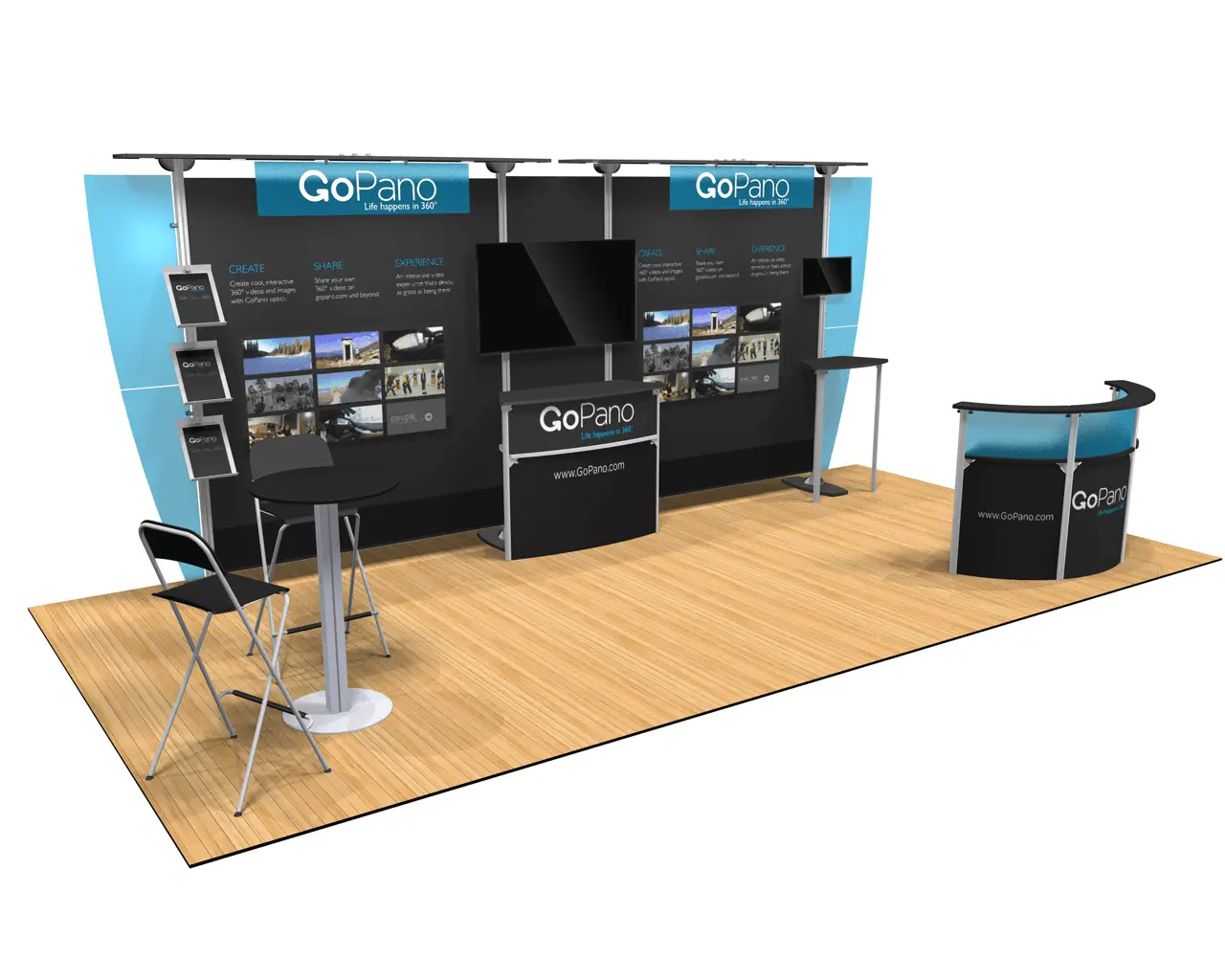
Charlotte has emerged as the Southeast’s leading destination for meetings and conventions, led by the Charlotte Convention Center’s 280,000 square feet of exhibit space, 154,000 square feet of breakout rooms, and more than 6,400 walkable hotel rooms in the Uptown core. With 19 Fortune 1000 headquarters in sectors including banking, advanced manufacturing, life sciences, logistics, motorsports, and technology, the market generates sustained demand for professional displays that can scale from intimate executive briefings at the Ballantyne or Harris Conference Center to full-scale product showcases at the Cabarrus Arena or Charlotte Motor Speedway.
Modular display rentals deliver the flexibility required in a region experiencing 13 percent five-year workforce growth and strong foreign direct investment. These systems allow exhibitors to reconfigure footprints, update graphics, and adjust messaging between events without the overhead of ownership, storage, or obsolescence. Planners benefit from alignment with Charlotte Douglas International Airport’s 53.6 million passengers and nonstop service to 188 destinations, which simplifies inbound logistics for national and international teams.
As a planning and coordination resource, Trade Show Services of Charlotte guides exhibitors through selection, integration, and execution strategies that match modular assets to specific venue requirements across Uptown, Concord, SouthPark, University City, and surrounding counties. Early coordination ensures displays complement AV, lighting, staging, and lounge elements while supporting the distinct needs of finance-led conferences, supplier expos, medical congresses, and enthusiast brand activations.
Charlotte’s Convention Infrastructure and Modular Display Fit
The Charlotte Convention Center serves as the primary platform for citywide trade shows and multi-track conferences with its substantial exhibit footprint and adjacent facilities including the NASCAR Hall of Fame. Modular display systems enable exhibitors to adjust their presence according to hall assignments, neighboring booths, and daily traffic flows without redesigning from scratch. This adaptability proves especially valuable given the CRVA’s coordinated management of Uptown venues and the concentration of 200-plus restaurants within walking distance.
Secondary corridors such as Concord’s Embassy Suites and Cabarrus Arena expand options for regional events and consumer shows, while adaptive-reuse spaces like Camp North End and the Fillmore suit creative activations. Modular components can transition between these environments by modifying height, lighting channels, and storage elements, allowing one rental investment to serve multiple stops on a Southeast tour.
Planners must account for ceiling heights, power drops, and floor load capacities published in official floor plans. Early review of these specifications during the coordination phase prevents on-site adjustments and supports smooth installation sequences that align with show move-in schedules.
- 280,000 square feet of exhibit space at the Charlotte Convention Center
- Uptown walkable hotel inventory exceeding 6,400 rooms
- Concord corridor venues for drive-in and regional attendance
- Adaptive venues for sponsor and hospitality programs
Sector-Specific Applications Across Charlotte’s Demand Drivers
Banking and financial services represent a foundational pillar, with Charlotte ranked as the second-largest financial center in the United States. Modular displays for these conferences emphasize clean lines, digital integration points, and secure meeting pods that reinforce brand authority while allowing quick updates to reflect quarterly messaging or regulatory topics.
Advanced manufacturing and logistics sectors benefit from rugged, reconfigurable towers and demonstration stations that accommodate heavy product samples and interactive stations. The region’s top-10 manufacturing ranking and more than 1,000 international businesses create frequent supplier expos and distributor gatherings where modular systems streamline setup across recurring annual events.
Motorsports and automotive programs tied to Charlotte Motor Speedway require dynamic, experiential configurations that support VIP hospitality and interactive zones. Modular frames accept large-format graphics, LED accents, and accessory mounting points that can be refreshed between race weekends and corporate partner days. Life-sciences and technology events similarly utilize modular backwalls and demo kiosks that maintain compliance standards while facilitating educational content delivery.
Venue Matching and Configuration Strategies
Successful modular display coordination begins with precise venue mapping. The Uptown cluster including the Westin Charlotte, Hilton Charlotte Uptown, and Omni Charlotte Hotel often hosts breakout sessions and smaller exhibits where 20-by-30 configurations with integrated storage work best. In contrast, the Charlotte Convention Center’s larger halls support 30-by-50 island setups that incorporate multiple conversation areas and digital touchpoints.
Concord and Cabarrus County venues such as the Great Wolf Lodge and Ten Tenths Motor Club favor more open, drive-in friendly layouts. Modular systems can incorporate extended sightlines and taller towers that remain visible across arena floors or outdoor-adjacent spaces. South Charlotte executive corridors around Ballantyne and SouthPark call for premium finishes and subtle branding that align with high-end hospitality expectations.
Planners reference official venue guides and floor plans to verify dimensional clearances, electrical access, and rigging points. This data-driven approach ensures the selected modular rental package maximizes visibility while respecting each location’s unique architectural and operational constraints.
- Uptown Convention Core for headquarters and ballroom programs
- Concord Corridor for arena-scale and speedway-adjacent events
- South Charlotte venues for polished executive and client events
- Adaptive-reuse spaces for experiential brand activations
Integration with Complementary Rental Services
Modular displays achieve greatest impact when coordinated with supporting rental categories available in the Charlotte market. Pairing with LED wall rentals creates compelling visual backdrops that reinforce key messages in financial services or technology launches. Trade show lighting rentals add layered illumination that highlights product features and graphic details without requiring permanent modifications to the modular frames.
Furniture and lounge rentals extend the exhibit into hospitality zones where attendees can engage in deeper conversations. Conference stage rentals and AV systems further complete the environment, enabling smooth product demonstrations or panel discussions within the same footprint. This integrated planning reduces vendor fragmentation and ensures visual and functional consistency across all elements.
Coordination timelines should begin eight to twelve weeks prior to move-in to allow for renderings, approvals, and any custom graphic production. The process includes confirmation of utility requirements and alignment with general service contractor timelines published by the Charlotte Convention Center and partner venues.
Logistics Planning for Exhibitors Accessing the Charlotte Region
Charlotte Douglas International Airport’s extensive nonstop network and cargo capabilities simplify inbound freight for modular display components. Rental programs typically ship via consolidated carriers, reducing both cost and handling compared to owned inventory that must be stored between regional shows. The airport’s 53.6 million passenger volume in 2025 underscores the market’s accessibility for field teams and executive participants arriving from across the country.
Regional routing between Uptown, University City, Huntersville, Monroe, Gastonia, and Rock Hill benefits from interstate connectivity that supports efficient drayage of modular crates. Planning resources help map these movements against event calendars so that the same display assets can be refreshed and redeployed with minimal downtime.
Exhibitors should factor in the labor environment formed by North Carolina’s statutes and the region’s 1.7 million labor force when scheduling installation and dismantle. Early coordination with experienced partners helps sequence these activities to align with venue load-in windows and avoid peak conflicts during major conventions.
- Nonstop air service to 188 destinations through CLT
- Interstate access supporting multi-venue schedules
- Consolidated shipping advantages of rental models
- Alignment with regional workforce and venue calendars
ROI Optimization and Measurement for Modular Programs
Rental of modular displays in a high-growth market like Charlotte delivers measurable advantages in capital preservation and adaptability. Companies can allocate budget toward updated graphics, technology integrations, and staff training rather than depreciating assets. With the metro’s second-place national ranking for job growth at the end of 2025, exhibitors frequently encounter new audiences and opportunities that reward fresh, current presentation environments.
Performance tracking should include lead volume, engagement duration, and follow-up conversion rates tied to specific configurations. Modular systems allow A-B testing of layouts across consecutive days or adjacent shows, generating data that informs future coordination decisions. Integration with digital capture tools and CRM platforms available through AV partners further strengthens ROI calculations.
Long-term planning also considers the region’s expanding international business footprint. Modular displays that accommodate multilingual graphics and universal design elements position exhibitors to capitalize on foreign direct investment programs and multi-city event series that route through Charlotte.
Coordinating Modular Rentals Within a Comprehensive Event Strategy
The most effective Charlotte programs treat modular displays as one element within a broader rental ecosystem. Early strategy sessions map exhibit objectives against overall event goals, whether recruiting at technology conferences, launching products at manufacturing expos, or building hospitality platforms at motorsports events. This holistic view prevents siloed decisions and ensures every rental component reinforces the same narrative.
Venue clusters throughout the 15-county region present distinct opportunities. Programs centered on the Uptown core benefit from proximity to hotels and nightlife, while Concord activations leverage the speedway’s enthusiast draw. Planning resources help select modular specifications that travel efficiently between these zones while maintaining brand standards.
Final coordination includes on-site supervision checklists, contingency options for last-minute adjustments, and post-show debriefs that capture lessons for subsequent events. This disciplined approach maximizes the value of modular flexibility in one of the Southeast’s fastest-evolving event markets.
- Align rental choices with specific sector objectives
- Sequence deployments across Uptown and secondary corridors
- Capture performance data to refine future configurations
- Maintain narrative consistency across all rented elements
Frequently Asked Questions About Modular Display Rentals in Charlotte
How do modular display rentals support events at the Charlotte Convention Center?
Modular systems can be configured to fit within the facility’s 280,000 square feet of exhibit space, allowing exhibitors to scale from standard inline booths to large island presentations while maintaining compatibility with published floor plans and utility specifications.
Which Charlotte industries benefit most from this work?
Banking and financial services, advanced manufacturing, life sciences, motorsports, logistics, and technology sectors all utilize modular displays. The region’s 19 Fortune 1000 headquarters and strong job growth create recurring demand for adaptable, professional exhibit solutions.
Can the same modular display be used across multiple Charlotte-area venues?
Yes. Reconfigurable components work effectively in Uptown hotels, the Concord Convention Center, Ballantyne properties, Cabarrus Arena, and adaptive venues. Coordination ensures dimensional and aesthetic consistency while respecting each location’s unique requirements.
What planning timeline is recommended for the program in Charlotte?
Eight to twelve weeks allows sufficient time for configuration review, graphic production, integration with AV and lighting rentals, and alignment with venue move-in schedules and general service contractor deadlines.
How does Charlotte’s airport access influence modular rental decisions?
CLT’s service to 188 nonstop destinations and 53.6 million annual passengers simplifies inbound logistics for rental components and event teams. Rental programs reduce shipping volume and eliminate long-term storage needs between regional shows.
Do modular displays integrate with other rental categories?
Integration with LED wall rentals, trade show lighting, conference staging, and lounge furniture creates comprehensive environments. Coordinated planning ensures all elements share power requirements, visual language, and installation sequencing.